• Fri frakt över 249 kr
  • •
  • Snabba leveranser
  • •
  • Billiga böcker
Kundservice

Du är på sajten för privatpersoner.

Företag, bibliotek eller offentlig verksamhet?

Du handlar på classic.bokus.com, där alla dina funktioner finns intakta.
Till classic.bokus.com
Bokus logotyp. Gå till startsidan.
  • Erbjudanden
  • Nyheter
  • Student
  • Topplistor
  • Barn & ungdom
  • Bokus Play
  • E-böcker
  • Pocketböcker
  • Spel & pussel

10% rabatt på allt med kod NYSTART10 →

Sidfot

Mina sidor

    Hjälp

    • Kundservice
    • Vanliga frågor och svar
    • Frakt och leverans
    • Retur vid ångerrätt
    • Reklamera vara
    • Betalning
    • Köpvillkor
    • Allmänna villkor
    • Information om webbplatsens tillgänglighet

    Om Bokus

    • Om oss
    • Pressrum
    • För studenter
    • För företag
    • För bibliotek och offentlig verksamhet
    • För leverantörer
    • Hållbarhet

    Populärt

    • Aktuella erbjudanden
    • Presentkort
    • Studentlitteratur
    • Nya böcker
    • Topplistor
    • Signerade böcker
    • Engelska böcker

    Inspiration

    • Boktips
    • BookTok
    • Populära bokserier
    • Barnbokskaraktärer
    • Populära författare
    Logotyp för Bokus
    Följ oss på Facebook (extern länk)Följ oss på Instagram (extern länk)Följ oss på YouTube (extern länk)Följ oss på TikTok (extern länk)
    bokus @ CookiesAnpassa cookiesIntegritetspolicyKöpvillkor
    Till Citymail hemsida (extern länk)Till Budbee hemsida (extern länk)Till Postnord hemsida (extern länk)Till Schenker hemsida (extern länk)Till Early Bird hemsida (extern länk)Till Walleys hemsida (extern länk)
    1. Filosofi och religion
    2. Filosofi
    3. Filosofiska discipliner

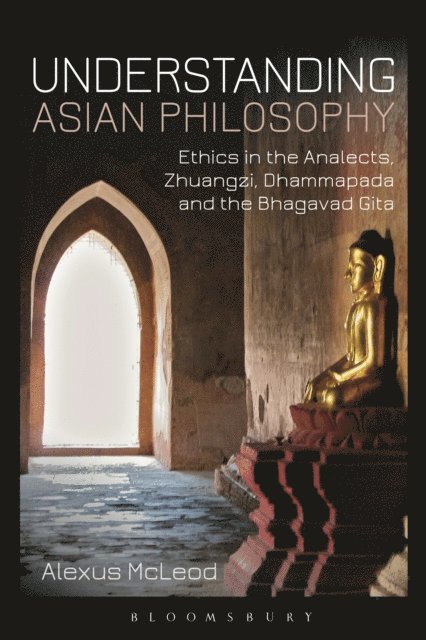
    Understanding Asian Philosophy

    Ethics in the Analects, Zhuangzi, Dhammapada and the Bhagavad Gita

    AvAlexus McLeod

    Häftad, Engelska, 2014

    410 kr

    Beställningsvara. Skickas inom 10-15 vardagar. Fri frakt över 249 kr.

    Fler format och utgåvor

    E-bok

    439 kr

    E-bok

    438 kr

    Beskrivning

    Understanding Asian Philosophy introduces the four major Asian traditions through their key texts and thinkers: the Analects of Confucius, the Daoist text Zhuangzi, the early Buddhist Suttas, and the Bhagavad Gita. Approached through the central issue of ethical development, this engaging introduction reveals the importance of moral self-cultivation and provides a firm grounding in the origins of Asian thought. Leading students confidently through complex texts, Understanding Asian Philosophy includes a range of valuable features: brief biographies of main thinkers such as Confucius and Zhuangzi primary source material and translationsmaps and timelinescomprehensive lists of recommended reading and links to further study resourcesrelevant philosophical questions at the end of each chapterAs well as sections on other texts and thinkers in the tradition, there are frequent references to contemporary examples and issues. Each chapter also discusses other thinkers in different traditions in the West, presenting various comparative approaches. With its clear focus on thinkers and texts, Understanding Asian Philosophy is an ideal undergraduate introduction to Chinese, Indian, Buddhist and Daoist thought.

    Produktinformation

    • Utgivningsdatum:2014-09-25
    • Mått:152 x 232 x 14 mm
    • Vikt:320 g
    • Format:Häftad
    • Språk:Engelska
    • Antal sidor:208
    • Förlag:Bloomsbury Publishing PLC
    • ISBN:9781780935737

    Utforska kategorier

    • Filosofiska discipliner inom Filosofi och religion

    Mer om författaren

    Alexus McLeod is Assistant Professor of Philosophy at Colorado State University, USA.

    Recensioner i media

    By focusing on transformative personal cultivation as the axis shared by these canonical Asian texts, McLeod makes a persuasive argument that while these texts certainly provide a framework for the ethical life, they are much more, demanding as they do different regimens of assiduous practice and the nurturing of profound religious sensibilities. Highly recommended for classroom use.

    Innehållsförteckning

    • Introduction: Ethical Philosophy in Asian TraditionsKinds of philosophyEthical theoriesAsian traditionsSelf-cultivation in Asian philosophical traditions—the layout of the bookPart I: Ethics and Self-Cultivation in Ancient ChinaEarly Chinese Philosophy: Map and Timeline1. The Analects of Confucius1.1The Life and Legacy of Confucius and the Analects1.2 Social Harmony1.3 The “Humane” Person and the “Rites”1.4 The Virtues of the Family and Community1.5 A Life of Learning 1.6 The Ideal Person1.7- Later Confucianism1.8 Further Resources on Confucianism and Self-Cultivation1.9 A Short Biography of ConfuciusRelevant Questions2. Zhuangzi and the Daoist Tradition2.1 Yangism, the Daodejing, Zhuang Zhou, and the Retreat from Society2.2 The perspective of the dao2.3 “Fasting of the mind” and “listening ridiculously”2.4 The use of the useless2.5 Delighting in “The transformation of the myriad things,” what we truly are, and freedom from suffering2.6 Later Daoism 2.6 Further resources on Zhuangzi and self-cultivation2.7 A Short Biography of ZhuangziRelevant QuestionsPart II: Ethics and Self-Cultivation in Ancient IndiaEarly Indian Philosophy: Map and Timeline3. The Suttas, Dhammapada, and the Early Buddhist Tradition3.1 The Buddha and the Early Buddhist tradition3.2 Suffering and the eightfold path3.3 Controlling the mind3.4 The role of compassion and moral conduct3.5 The role of wisdom and the insubstantiality of the “self”3.6 The enlightened person and nirvana3.7 Later Buddhism a. Early Mahayanab. Madhyamakac. Chan/Zend. Pure Lande. Tantrayana3.8 Further resources on Buddhism and self-cultivation3.9 A Short Biography of Siddhartha Gautama, The BuddhaRelevant Questions4. The Message of the Bhagavad Gita4.1 The Background--Vedas, Vedanta, and the Mahabharata4.2 The crisis of choice4.3 Sacred duty and the fruits of action4.4 Discipline--knowledge, action, and devotion4.5 The living universe--Krishna’s revelation and its impact4.6 The yogi, the realized soula. Advaita and Dvaitab. Devotional schools; Vaishnavac. Gandhi’s allegorical reading4.7 Further resources on the Gita and self-cultivation4.8 A Short Biography of Vyasa and ShankaraRelevant QuestionsConclusion: New Directions in ScholarshipAnnotated BibliographyIndex