• Fri frakt över 249 kr
  • •
  • Snabba leveranser
  • •
  • Billiga böcker
Kundservice

Du är på sajten för privatpersoner.

Företag, bibliotek eller offentlig verksamhet?

Du handlar på classic.bokus.com, där alla dina funktioner finns intakta.
Till classic.bokus.com
Bokus logotyp. Gå till startsidan.
  • Erbjudanden
  • Nyheter
  • Student
  • Topplistor
  • Barn & ungdom
  • Bokus Play
  • E-böcker
  • Pocketböcker
  • Spel & pussel

10% rabatt på allt med kod: NYSTART10 →

Sidfot

Mina sidor

    Hjälp

    • Kundservice
    • Vanliga frågor och svar
    • Frakt och leverans
    • Retur vid ångerrätt
    • Reklamera vara
    • Betalning
    • Köpvillkor
    • Allmänna villkor
    • Information om webbplatsens tillgänglighet

    Om Bokus

    • Om oss
    • Pressrum
    • För studenter
    • För företag
    • För bibliotek och offentlig verksamhet
    • För leverantörer
    • Hållbarhet

    Populärt

    • Aktuella erbjudanden
    • Presentkort
    • Studentlitteratur
    • Nya böcker
    • Topplistor
    • Signerade böcker
    • Engelska böcker

    Inspiration

    • Boktips
    • BookTok
    • Populära bokserier
    • Barnbokskaraktärer
    • Populära författare
    Logotyp för Bokus
    Följ oss på Facebook (extern länk)Följ oss på Instagram (extern länk)Följ oss på YouTube (extern länk)Följ oss på TikTok (extern länk)
    bokus @ CookiesAnpassa cookiesIntegritetspolicyKöpvillkor
    Till Citymail hemsida (extern länk)Till Budbee hemsida (extern länk)Till Postnord hemsida (extern länk)Till Schenker hemsida (extern länk)Till Early Bird hemsida (extern länk)Till Walleys hemsida (extern länk)
    1. Psykologi och pedagogik
    2. Psykologi
    3. Psykologiska teorier och skolor
    4. Freudiansk psykologi

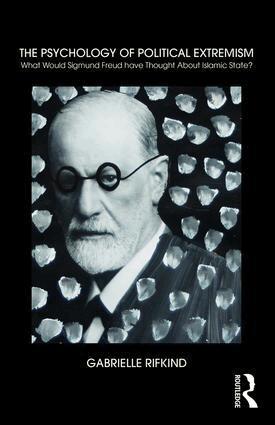
    Psychology of Political Extremism

    What Would Sigmund Freud have Thought About Islamic State?

    AvGabrielle Rifkind

    Häftad, Engelska, 2018

    416 kr

    Beställningsvara. Skickas inom 10-15 vardagar. Fri frakt över 249 kr.

    Fler format och utgåvor

    E-bok

    489 kr

    E-bok

    489 kr

    Beskrivning

    Recent terrorist attacks have left the UK (and Europe) genuinely at sea as to how to respond to these distressing events. There are the predictable interpretations with politicians on the right talking about counter-terrorism, harsher punishments and tightening up on the internet, whilst on the political left there is talk about blaming foreign wars. All this analysis is relevant, but insufficient. Politicians are not talking enough about why so many young people are sufficiently angry and alienated that they are prepared to be seduced by the toxic and poisonous ideology of Islamic State. The Psychology of Political Extremism examines both the politics and the psychology, as well as what motivates people to behave in ways that are so disturbing. Freud is the hook as the founding father of the talking cure. A radical and subversive theorist in his time, he claimed that mankind was influenced more by the inner workings of the mind and internal conflicts than by rational thought.

    Produktinformation

    • Utgivningsdatum:2018-02-12
    • Mått:129 x 198 x 12 mm
    • Vikt:120 g
    • Format:Häftad
    • Språk:Engelska
    • Antal sidor:100
    • Förlag:Taylor & Francis Ltd
    • ISBN:9781782206637

    Utforska kategorier

    • Freudiansk psykologi inom Psykologi och pedagogik

    Mer om författaren

    Gabrielle Rifkind is a practicing psychotherapist and group analyst, and a specialist in conflict resolution. She has spent the past two decades working in conflict resolution in the Middle East.

    Recensioner i media

    'Politics and Psychology have much to say to each other about public and private life. Gabrielle Rifkind follows in the tradition of enhancing both in her illuminating study.’-Susie Orbach‘An insightful new look at why people might join Islamic State by a true professional.’-Richard Barrett, Former head of the United Nations Al Qaeda /Taliban Monitoring Team‘We live in a world full of terror and destruction; consequently, very few human beings feel safe. Fortunately, Gabrielle Rifkind’s magnificent new book explores the deep psychology of political extremism and terrorism and helps us to acquire a profound insight into the origin of warfare and its possible cure. Rifkind’s ground-breaking and pioneering work as a psychotherapist in international politics serves as a truly creative inspiration, demonstrating the ways in which one can introduce humanity and understanding into a seemingly hopeless situation.’-Professor Brett Kahr, Senior Fellow at Tavistock Relationships, Tavistock Institute of Medical Psychology, London, and Senior Clinical Research Fellow at the Centre for Child Mental Health‘Rifkind's writing has a lightness of touch that only the most thoughtful author in full command of her subject can master. To try to imagine a conversation with Freud about IS is no mean feat. It calls for a playful and bold imagination rooted in an exhaustive grasp of Freud's work both of which Rifkind has in abundance.’-Nicola Glucksmann, psychotherapist /analytical psychologist‘Politics and Psychology have much to say to each other about public and private life. Gabrielle Rifkind follows in the tradition of enhancing both in her illuminating study.’-Susie Orbach‘An insightful new look at why people might join Islamic State by a true professional.’-Richard Barrett, Former head of the United Nations Al Qaeda /Taliban Monitoring Team‘We live in a world full of terror and destruction; consequently, very few human beings feel safe. Fortunately, Gabrielle Rifkind’s magnificent new book explores the deep psychology of political extremism and terrorism and helps us to acquire a profound insight into the origin of warfare and its possible cure. Rifkind’s ground-breaking and pioneering work as a psychotherapist in international politics serves as a truly creative inspiration, demonstrating the ways in which one can introduce humanity and understanding into a seemingly hopeless situation.’-Professor Brett Kahr, Senior Fellow at Tavistock Relationships, Tavistock Institute of Medical Psychology, London, and Senior Clinical Research Fellow at the Centre for Child Mental Health‘Rifkind's writing has a lightness of touch that only the most thoughtful author in full command of her subject can master. To try to imagine a conversation with Freud about IS is no mean feat. It calls for a playful and bold imagination rooted in an exhaustive grasp of Freud's work, both of which Rifkind has in abundance.’-Nicola Glucksmann, psychotherapist /analytical psychologist

    Innehållsförteckning

    • About the author -- One Freud, the father of psychoanalysis -- Two Can war be avoided? -- Three Religion: the search for a powerful father? -- Four The psychology of terrorism -- Five What can we do? -- References -- Index