• Fri frakt över 249 kr
  • •
  • Snabba leveranser
  • •
  • Billiga böcker
Kundservice

Du är på sajten för privatpersoner.

Företag, bibliotek eller offentlig verksamhet?

Du handlar på classic.bokus.com, där alla dina funktioner finns intakta.
Till classic.bokus.com
Bokus logotyp. Gå till startsidan.
  • Erbjudanden
  • Nyheter
  • Student
  • Topplistor
  • Barn & ungdom
  • Bokus Play
  • E-böcker
  • Pocketböcker
  • Spel & pussel

10% rabatt på allt med kod: NYSTART10 →

Sidfot

Mina sidor

    Hjälp

    • Kundservice
    • Vanliga frågor och svar
    • Frakt och leverans
    • Retur vid ångerrätt
    • Reklamera vara
    • Betalning
    • Köpvillkor
    • Allmänna villkor
    • Information om webbplatsens tillgänglighet

    Om Bokus

    • Om oss
    • Pressrum
    • För studenter
    • För företag
    • För bibliotek och offentlig verksamhet
    • För leverantörer
    • Hållbarhet

    Populärt

    • Aktuella erbjudanden
    • Presentkort
    • Studentlitteratur
    • Nya böcker
    • Topplistor
    • Signerade böcker
    • Engelska böcker

    Inspiration

    • Boktips
    • BookTok
    • Populära bokserier
    • Barnbokskaraktärer
    • Populära författare
    Logotyp för Bokus
    Följ oss på Facebook (extern länk)Följ oss på Instagram (extern länk)Följ oss på YouTube (extern länk)Följ oss på TikTok (extern länk)
    bokus @ CookiesAnpassa cookiesIntegritetspolicyKöpvillkor
    Till Citymail hemsida (extern länk)Till Budbee hemsida (extern länk)Till Postnord hemsida (extern länk)Till Schenker hemsida (extern länk)Till Early Bird hemsida (extern länk)Till Walleys hemsida (extern länk)
    1. Juridik
    2. Särskilda rättsområden
    3. Författningsrätt och förvaltningsrätt
    4. Mänskliga och medborgerliga rättigheter

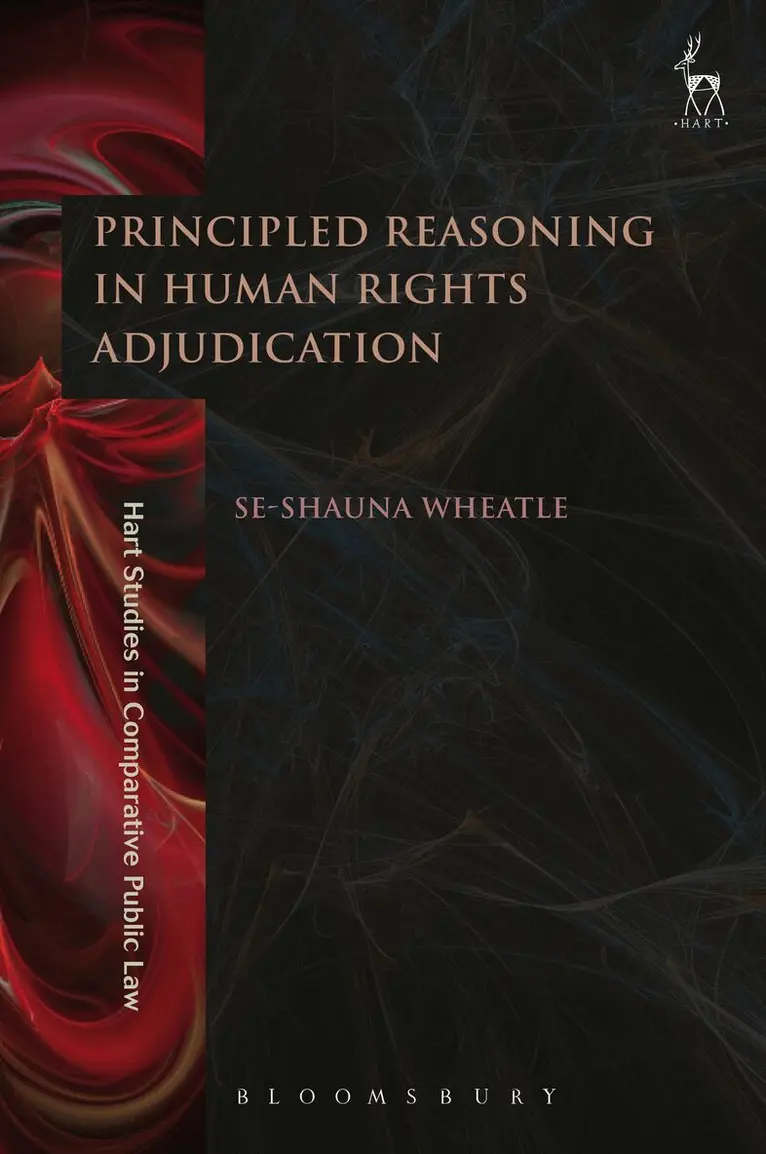
    Principled Reasoning in Human Rights Adjudication

    AvSe-shauna Wheatle

    Inbunden, Engelska, 2017

    1 284 kr

    Beställningsvara. Skickas inom 10-15 vardagar. Fri frakt över 249 kr.

    Fler format och utgåvor

    Häftad

    543 kr

    E-bok

    583 kr

    E-bok

    583 kr

    Beskrivning

    Implied constitutional principles form part of the landscape of the development of fundamental rights in common law jurisdictions, affecting issues ranging from the remuneration of judges to the appropriation of property by the state. Principled Reasoning in Human Rights Adjudication offers thematic analysis of the use of the implied constitutional principles of the rule of law and separation of powers in human rights cases. The book examines the functions played by those principles in rights adjudication in Australia, Canada, the Commonwealth Caribbean, and the United Kingdom. It argues that a complete understanding of implied constitutional principles requires thoroughgoing analysis of the sources and methods of implication and of the specific roles played by such principles in the adjudicative process. By disaggregating particular functions and placing those functions within their respective institutional contexts, this book develops an understanding of the features of cases in which implied constitutional principles are invoked and the work done by those principles.

    Produktinformation

    • Utgivningsdatum:2017-04-20
    • Mått:156 x 234 x 22 mm
    • Vikt:531 g
    • Format:Inbunden
    • Språk:Engelska
    • Antal sidor:256
    • Förlag:Bloomsbury Publishing PLC
    • ISBN:9781782259817

    Utforska kategorier

    • Mänskliga och medborgerliga rättigheter inom Juridik
    • Komparativ rätt inom Juridik

    Mer om författaren

    Se-shauna Wheatle is an Assistant Professor in Law in the Durham Law School, University of Durham.

    Recensioner i media

    Se-Shauna Wheatle’s Principled Reasoning in Human Rights Adjudication is a valuable addition to the academic discussion on common law constitutionalism, its main contribution being the teasing out of the mechanisms and functions of implied principles in public law cases with a clearly positioned initial normative assessment.

    Innehållsförteckning

    • 1. Introduction: The Doctrinal and Institutional Context I. Map of the Book II. Recurring Themes Part I: The Conceptual Context and the Meanings of the Implied Constitutional Principles2. Implied Principles and Constitutionalism I. Introduction II. On Implied Principles III. Separation of Powers and the Rule of Law in Constitutionalism IV. Conclusion 3. Judicial Conceptions of the Rule of Law I. Introduction II. Conceptions of the Rule of Law III. Development of Heads of Judicial Review IV. Explicit References to the Rule of Law in Applying a Constitution or Bill of Rights V. Conflicts Within the Rule of Law: Equality as an Application of the Rule of Law VI. Conclusion 4. Applications of the Separation of PowersI. Introduction II. Varying Separations of Powers III. Practical Application of the Separation of Powers Principle in Courts in the Westminster-style System IV. Effect of the Separation of Powers on Human Rights V. The Separation of Powers in UK Courts post-HRA VI. Conclusion Part II: Functions Played by the Implied Constitutional Principles of the Rule of Law and Separation of Powers5. Implied Principles as Interpretative Aids I. Introduction II. Distancing Devices in Hard Cases III. Common Ground IV. Institutional Respect V. Conclusion 6. Implied Principles as Grounds for Invalidating Legislation I. Introduction II. The Practice of Invoking Implied Principles as Grounds for Invalidating Legislation III. Trends and Fault Lines IV. Conclusion 7. Implied Principles as Gateways to Comparative Law I. Introduction II. Comparativism in Constitutional Law and Human Rights III. Inheritance from Former Colonial Power IV. Principled Borrowing and a Colonial Legacy V. Developing Common Approaches to Common Problems VI. Cyclical Borrowing VII. Conclusion 8. The Legitimacy of Reliance on Implied Constitutional Principles in Fundamental Rights AdjudicationI. Introduction II. Process of Implication of the Implied Constitutional Principle III. The Type of Use Involved IV. Determinacy V. The Road to Defeat of Constitutional Amendments? VI. Conclusion 9. Conclusion I. Decisional Flexibility II. Distancing Devices and Institutional Defence III. Invitations IV. Continuity and Transition V. Autochthony VI. Concluding Thoughts