• Fri frakt över 249 kr
  • •
  • Snabba leveranser
  • •
  • Billiga böcker
Kundservice

Du är på sajten för privatpersoner.

Företag, bibliotek eller offentlig verksamhet?

Du handlar på classic.bokus.com, där alla dina funktioner finns intakta.
Till classic.bokus.com
Bokus logotyp. Gå till startsidan.
  • Erbjudanden
  • Nyheter
  • Student
  • Topplistor
  • Barn & ungdom
  • Bokus Play
  • E-böcker
  • Pocketböcker
  • Spel & pussel

10% rabatt på allt med kod NYSTART10 →

Sidfot

Mina sidor

    Hjälp

    • Kundservice
    • Vanliga frågor och svar
    • Frakt och leverans
    • Retur vid ångerrätt
    • Reklamera vara
    • Betalning
    • Köpvillkor
    • Allmänna villkor
    • Information om webbplatsens tillgänglighet

    Om Bokus

    • Om oss
    • Pressrum
    • För studenter
    • För företag
    • För bibliotek och offentlig verksamhet
    • För leverantörer
    • Hållbarhet

    Populärt

    • Aktuella erbjudanden
    • Presentkort
    • Studentlitteratur
    • Nya böcker
    • Topplistor
    • Signerade böcker
    • Engelska böcker

    Inspiration

    • Boktips
    • BookTok
    • Populära bokserier
    • Barnbokskaraktärer
    • Populära författare
    Logotyp för Bokus
    Följ oss på Facebook (extern länk)Följ oss på Instagram (extern länk)Följ oss på YouTube (extern länk)Följ oss på TikTok (extern länk)
    bokus @ CookiesAnpassa cookiesIntegritetspolicyKöpvillkor
    Till Citymail hemsida (extern länk)Till Budbee hemsida (extern länk)Till Postnord hemsida (extern länk)Till Schenker hemsida (extern länk)Till Early Bird hemsida (extern länk)Till Walleys hemsida (extern länk)
    1. Historia och arkeologi
    2. Historia
    3. Europas historia

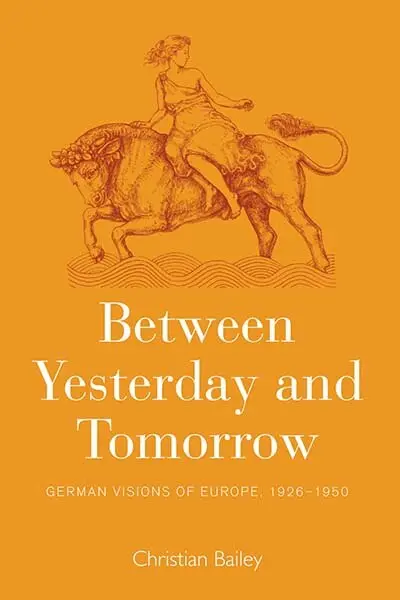
    Between Yesterday and Tomorrow

    German Visions of Europe, 1926-1950

    AvChristian Bailey

    Inbunden, Engelska, 2013

    1 916 kr

    Beställningsvara. Skickas inom 5-8 vardagar. Fri frakt över 249 kr.

    Fler format och utgåvor

    E-bok

    326 kr

    Häftad

    526 kr

    Beskrivning

    An intellectual and cultural history of mid-twentieth century plans for European integration, this book calls into question the usual pre- and post-war periodizations that have structured approaches to twentieth-century European history. It focuses not simply on the ideas of leading politicians but analyses debates about Europe in “civil society” and the party-political sphere in Germany, asking if, and how, a “permissive consensus” was formed around the issue of integration. Taking Germany as its case study, the book offers context to the post-war debates, analysing the continuities that existed between interwar and post-war plans for European integration. It draws attention to the abiding scepticism of democracy displayed by many advocates of integration, indeed suggesting that groups across the ideological spectrum converged around support for European integration as a way of constraining the practice of democracy within nation-states.

    Produktinformation

    • Utgivningsdatum:2013-10-01
    • Mått:152 x 229 x 20 mm
    • Vikt:535 g
    • Format:Inbunden
    • Språk:Engelska
    • Antal sidor:274
    • Förlag:Berghahn Books
    • ISBN:9781782381396

    Utforska kategorier

    • Europas historia inom Historia och arkeologi
    • Internationella relationer inom Samhälle och politik

    Mer om författaren

    Christian Bailey is Assistant Professor of History at Purchase College, State University of New York. After having completed his PhD at Yale University, he was appointed Max Kade Fellow at the Free University in Berlin and has worked as a postdoctoral researcher at the History of Emotions Research Center in the Max Planck Institute for Human Development, Berlin.

    Recensioner i media

    “Bailey's approach adds a thorough analysis of journals, clubs, and organizations that functioned as important intermediaries between the private and public spheres…his refreshing, well-written, and convincingly argued intellectual history complements traditional historiography.” · Choice“Bailey’s book opens long-term perspectives, and offers a thorough analysis of selected non-dominant ideas about Europe in Germany in the 1940s and 1950s.” · European History Quarterly“The great merit of Bailey’s study is that he has recovered the pre-1945 Central European foundations of a European integration process that has too often been conceived as a purely post-1945 West European development. It represents a significant contribution to the intellectual history of twentieth-century Europe and should be read by anyone interested in the genesis of the European Union.” · Journal of European Studies“In his fascinating political history of German visions of Europe from the 1920s through to the 1950s, Christian Bailey sets out to complicate the history of European unity…All told, there is much to admire in this book. It is well-researched, tightly argued, and ambitiously constructed, which allows Bailey to address several important topics.” · Canadian Journal of History“Christopher Bailey’s study of German ideas of Europe between 1926 and 1950 is a detailed and very readable work about the variety of German thought about Europe.” · H-Net Review“The book contains a valuable contribution to our knowledge of the creation of a ‘permissive consensus’ around ideas of European cooperation in Germany, the connections between these ideas, their development before and after World War II and particularly the regionalist interpretations of European integration that they open up.” · German History“Bailey has contributed an important book. Its main strengths lie in confirming the persistence of inter-war, often anti-liberal, ideas of Europe in the early German Federal Republic and in the striking similarities of European thought between left-wing and right-wing groups…The fact that the book is well written and has a very detailed index will make it even more useful to anyone interested in the intellectual history of the European idea and of German political culture in the first half of the twentieth century.” · Bulletin of the German Historical Institute, Londonldquo;By looking at political and intellectual discourses from a wide array of political perspectives (conservative, Catholic, regional, social democratic), this book makes several important points in discussing various rival conceptions of 'Europes that never happened' but that allowed a diverse array of political groupings to converge on support for European integration. This book will resonate not just with historians but also political scientists and sociologists.” · Eric Langenbacher, Georgetown University“This is a fluently written and clearly argued text, well researched and neatly organized in terms of logical structure and narrative delivery…It is fresh and original, and offers new views of intellectual life in the early years of the fledgling Bonn Republic and will no doubt attract a good amount of attention in the field of post-1945 German and European History.” · Paul Betts, University of Oxford

    Innehållsförteckning

    • AcknowledgementsAbbreviationsIntroductionChapter 1. Making the Case for Europe: Transnational Organizations and Cultural JournalsChapter 2. The defence of Europe in Merkur: Deutsche Zeitschrift für Europäisches DenkenChapter 3. The Internationaler Sozialistischer Kampfbund: From World Revolution to European FederalismChapter 4. The Rise and Fall of a Socialist Europe: The ISK and the SPD in OppositionChapter 5. An island surrounded by land: Das Demokratische Deutschland in SwitzerlandChapter 6. ‘Europe our Fatherland, Bavaria our Heimat!’ Das Demokratische Deutschland and the Post-War Trajectories of European FederalismConclusionsBibliography