• Fri frakt över 249 kr
  • •
  • Snabba leveranser
  • •
  • Billiga böcker
Kundservice

Du är på sajten för privatpersoner.

Företag, bibliotek eller offentlig verksamhet?

Du handlar på classic.bokus.com, där alla dina funktioner finns intakta.
Till classic.bokus.com
Bokus logotyp. Gå till startsidan.
  • Erbjudanden
  • Nyheter
  • Student
  • Topplistor
  • Barn & ungdom
  • Bokus Play
  • E-böcker
  • Pocketböcker
  • Spel & pussel

10% rabatt på allt med kod: NYSTART10 →

Sidfot

Mina sidor

    Hjälp

    • Kundservice
    • Vanliga frågor och svar
    • Frakt och leverans
    • Retur vid ångerrätt
    • Reklamera vara
    • Betalning
    • Köpvillkor
    • Allmänna villkor
    • Information om webbplatsens tillgänglighet

    Om Bokus

    • Om oss
    • Pressrum
    • För studenter
    • För företag
    • För bibliotek och offentlig verksamhet
    • För leverantörer
    • Hållbarhet

    Populärt

    • Aktuella erbjudanden
    • Presentkort
    • Studentlitteratur
    • Nya böcker
    • Topplistor
    • Signerade böcker
    • Engelska böcker

    Inspiration

    • Boktips
    • BookTok
    • Populära bokserier
    • Barnbokskaraktärer
    • Populära författare
    Logotyp för Bokus
    Följ oss på Facebook (extern länk)Följ oss på Instagram (extern länk)Följ oss på YouTube (extern länk)Följ oss på TikTok (extern länk)
    bokus @ CookiesAnpassa cookiesIntegritetspolicyKöpvillkor
    Till Citymail hemsida (extern länk)Till Budbee hemsida (extern länk)Till Postnord hemsida (extern länk)Till Schenker hemsida (extern länk)Till Early Bird hemsida (extern länk)Till Walleys hemsida (extern länk)
    1. Kultur
    2. Scenkonst och film
    3. Film

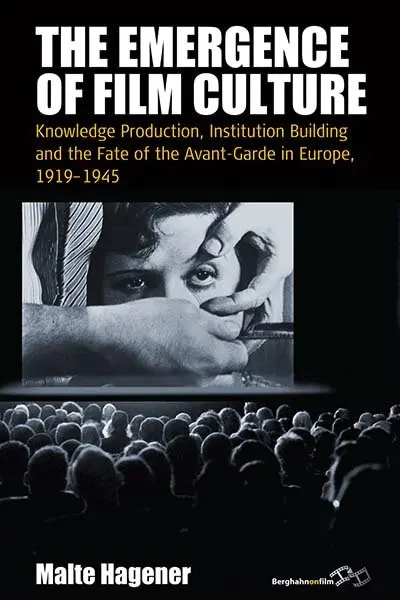
    Emergence of Film Culture

    Knowledge Production, Institution Building, and the Fate of the Avant-Garde in Europe, 1919–1945

    AvMalte Hagener

    Inbunden, Engelska, 2014

    Del i serien Film Europa

    2 183 kr

    Beställningsvara. Skickas inom 5-8 vardagar. Fri frakt över 249 kr.

    Beskrivning

    Between the two world wars, a distinct and vibrant film culture emerged in Europe. Film festivals and schools were established; film theory and history was written that took cinema seriously as an art form; and critical writing that created the film canon flourished. This scene was decidedly transnational and creative, overcoming traditional boundaries between theory and practice, and between national and linguistic borders. This new European film culture established film as a valid form of social expression, as an art form, and as a political force to be reckoned with. By examining the extraordinarily rich and creative uses of cinema in the interwar period, we can examine the roots of film culture as we know it today.

    Produktinformation

    • Utgivningsdatum:2014-09-01
    • Mått:152 x 229 x 30 mm
    • Vikt:694 g
    • Format:Inbunden
    • Språk:Engelska
    • Serie:Film Europa
    • Antal sidor:390
    • Förlag:Berghahn Books
    • ISBN:9781782384236

    Utforska kategorier

    • Film inom Kultur

    Mer om författaren

    Malte Hagener is Professor of Media Studies at Philipps Universität Marburg. He is the author of Moving Forward, Looking Back: The European Avant-garde and the Invention of Film Culture, 1919-1939 (Amsterdam UP 2007) and with Thomas Elsaesser of Film Theory: An Introduction through the Senses (Routledge 2010).

    Recensioner i media

    2014 PREMIO LIMINA PRIZE FOR BEST FILM STUDIES BOOK (IN A LANGUAGE OTHER THAN ITALIAN) “…the book offers a rich and articulated picture of the organization and building of film culture in interwar Europe, and proves to be very keen in disclosing unexplored corners of well-known national film histories (as the Italian and German ones), but also of little explored scenarios (such as Swedish film culture or the Yugoslavian case).” · Historical Journal of Film, Radio and Television“[C]ontributes significantly to...a welcome turn among film historians who increasingly inscribe individual films, directors, and national practices within transnational, regional, and global film cultures...has the potential to become a key reference for critical approaches to film cultures in interwar Europe.”  ·  Steven Ungar, University of Iowa“This newest anthology is a wonderful contribution to the field...offer[ing] valuable takes on the development of European film culture in the interwar period...[I]t goes beyond the usual suspects (say, France and Germany) to examine the flourishing of a new film culture in many other contexts throughout Europe.  There is an opening up of film historiography here in a way that is quite exciting and quite productive.”  ·  Dana Polan, New York University

    Innehållsförteckning

    • List of FiguresAcknowledgementsIntroduction: The Emergence of Film CultureMalte HagenerPART I: FORMATIONS OF KNOWLEDGEChapter 1. Policing Race. Postcolonial Critique, Censorship and Regulatory Responses to the Cinema in Weimar Film CultureTobias NaglChapter 2. The Visible Woman in and against Béla BalázsErica CarterChapter 3. Encounters in Darkened Rooms: Alternative Programming of the Dutch Filmliga, 1927-1931Tom Gunning Chapter 4. When Was Soviet Cinema Born? The Institututionalization of Soviet Film Studies and the Problems of PeriodizationNatalya RyabchikovaPART II: NETWORKS OF EXCHANGE Chapter 5. Eastern Avatars. Russian Influence on European Avant-gardesIan ChristieChapter 6. Early Yugoslav ciné-amateurism: Cinéphilia and the institutionalization of film culture in the Kingdom of Yugoslavia during the interwar periodGreg DeCuir, Jr.Chapter 7. Soviet-Italian Cinematic Exchanges. Transnational Film Education in the 1930sMasha SalazkinaChapter 8. The Avant-garde, Education and Marketing: The Making of Non-Theatrical Film Culture in Interwar SwitzerlandYvonne ZimmermannPART III: EMERGENCE OF INSTITUTIONS Chapter 9. Interwar Film Culture in Sweden. Avant-Garde Transactions in the Emergent Welfare StateLars Gustaf AnderssonChapter 10. Building the Institution. Luigi Chiarini and Italian Film Culture in the 1930sFrancesco Pitassio and Simone VenturiniChapter 11. A New Art for a New Society? The Emergence and Development of Film Schools in EuropeDuncan PetrieChapter 12. Institutions of Film Culture. Festivals and Archives as Network NodesMalte HagenerChapter 13. The German Reichsfilmarchiv in an International ContextRolf AurichNotes on ContributorsBibliographyIndex