• Fri frakt över 249 kr
  • •
  • Snabba leveranser
  • •
  • Billiga böcker
Kundservice

Du är på sajten för privatpersoner.

Företag, bibliotek eller offentlig verksamhet?

Du handlar på classic.bokus.com, där alla dina funktioner finns intakta.
Till classic.bokus.com
Bokus logotyp. Gå till startsidan.
  • Erbjudanden
  • Student
  • Topplistor
  • Barn & ungdom
  • Bokus Play
  • E-böcker
  • Ljudböcker
  • Pocketböcker
  • Spel & pussel

10% rabatt på allt med kod NYSTART10 →

Sidfot

Mina sidor

    Hjälp

    • Kundservice
    • Vanliga frågor och svar
    • Frakt och leverans
    • Retur vid ångerrätt
    • Reklamera vara
    • Betalning
    • Köpvillkor
    • Allmänna villkor
    • Information om webbplatsens tillgänglighet

    Om Bokus

    • Om oss
    • Pressrum
    • För studenter
    • För företag
    • För bibliotek och offentlig verksamhet
    • För leverantörer
    • Hållbarhet

    Populärt

    • Aktuella erbjudanden
    • Presentkort
    • Studentlitteratur
    • Nya böcker
    • Topplistor
    • Signerade böcker
    • Engelska böcker

    Inspiration

    • Boktips
    • BookTok
    • Populära bokserier
    • Barnbokskaraktärer
    • Populära författare
    Logotyp för Bokus
    Följ oss på Facebook (extern länk)Följ oss på Instagram (extern länk)Följ oss på YouTube (extern länk)Följ oss på TikTok (extern länk)
    bokus @ CookiesAnpassa cookiesIntegritetspolicyKöpvillkor
    Till Citymail hemsida (extern länk)Till Budbee hemsida (extern länk)Till Postnord hemsida (extern länk)Till Schenker hemsida (extern länk)Till Early Bird hemsida (extern länk)Till Walleys hemsida (extern länk)
    1. Språk och ordböcker
    2. Språk: referensverk och allmänt
    3. Språk: historia och allmänt

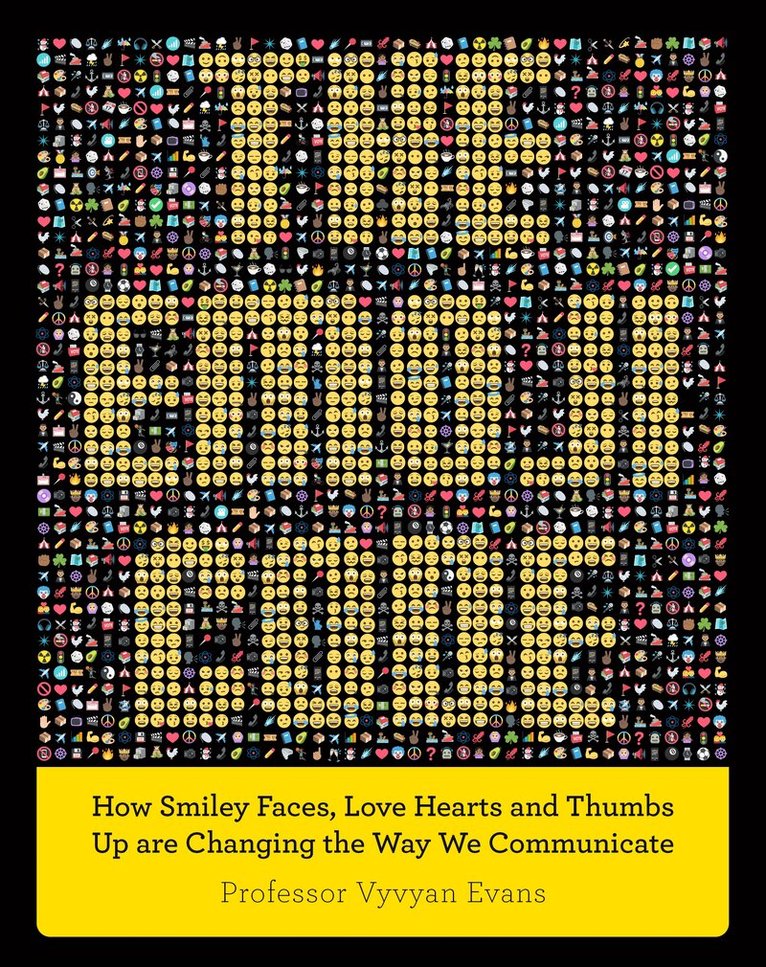
    Emoji Code

    How Smiley Faces, Love Hearts and Thumbs Up are Changing the Way We Communicate

    AvVyvyan Evans

    E-bok
    Engelska, 2017

    73 kr

    Läs direkt i Bokus Reader – eller ladda ned till din enhet

    Beskrivning

    Since 2011, the use of emoji – deriving from the Japanese, meaning picture character – has become a global phenomenon. We send over 6 billion emoji every day and regularly send emoji-only messages, and, when Oxford Dictionaries named the ‘Face with Tears of Joy’ emoji as their ‘Word of the Year 2015’, it received an enormous amount of criticism.Whenever emoji are covered in the popular media the same burning questions come up: Can an emoji really be a word? How language-like is it? Will emoji make us dumber? Or more lazy? Will they make us less adept at communicating with our nearest and dearest? And does this signal the death knell for language as we know it? Drawing on findings from disciplines as diverse as linguistics, cognitive science, psychology, neuroscience, archaeology and anthropology, this groundbreaking book explores human capacity to communicate, and addresses these questions in the process. The Emoji Code sheds light on emoji's vital role in the expression of emotion in digital communication and more, pointing the way for the future of international communication in a provocative and entertaining way.

    Produktinformation

    • Utgivningsdatum:2017-05-18
    • Språk:Engelska
    • Filformat:EPUB
    • Kopieringsskydd:LCP
    • ISBN:9781782437888
    • Förlag:Michael O'Mara Books Ltd

    Utforska kategorier

    • Språk: historia och allmänt inom Språk och ordböcker
    • Referensverk och tvärvetenskap inom Samhälle och politik

    Mer om författaren

    Professor Vyvyan Evans is an internationally renowned expert on language and communication. He received his PhD in Linguistics from Georgetown University, Washington DC., and has taught at the University of Sussex, Brighton University and Bangor University. He has published 14 books on language, meaning and mind, including The Language Myth: Why Language is Not an Instinct (2014) and The Crucible of Language: How Language and Mind Create Meaning (2015). Evans is a much sought-after public speaker, and frequently provides expert opinion on language to the written and broadcast media. His writing has been featured in The Guardian, Newsweek, New Scientist, and Psychology Today, among other publications.