• Fri frakt över 249 kr
  • •
  • Snabba leveranser
  • •
  • Billiga böcker
Kundservice

Du är på sajten för privatpersoner.

Företag, bibliotek eller offentlig verksamhet?

Du handlar på classic.bokus.com, där alla dina funktioner finns intakta.
Till classic.bokus.com
Bokus logotyp. Gå till startsidan.
  • Erbjudanden
  • Nyheter
  • Student
  • Topplistor
  • Barn & ungdom
  • Bokus Play
  • E-böcker
  • Pocketböcker
  • Spel & pussel

10% rabatt på allt med kod NYSTART10 →

Sidfot

Mina sidor

    Hjälp

    • Kundservice
    • Vanliga frågor och svar
    • Frakt och leverans
    • Retur vid ångerrätt
    • Reklamera vara
    • Betalning
    • Köpvillkor
    • Allmänna villkor
    • Information om webbplatsens tillgänglighet

    Om Bokus

    • Om oss
    • Pressrum
    • För studenter
    • För företag
    • För bibliotek och offentlig verksamhet
    • För leverantörer
    • Hållbarhet

    Populärt

    • Aktuella erbjudanden
    • Presentkort
    • Studentlitteratur
    • Nya böcker
    • Topplistor
    • Signerade böcker
    • Engelska böcker

    Inspiration

    • Boktips
    • BookTok
    • Populära bokserier
    • Barnbokskaraktärer
    • Populära författare
    Logotyp för Bokus
    Följ oss på Facebook (extern länk)Följ oss på Instagram (extern länk)Följ oss på YouTube (extern länk)Följ oss på TikTok (extern länk)
    bokus @ CookiesAnpassa cookiesIntegritetspolicyKöpvillkor
    Till Citymail hemsida (extern länk)Till Budbee hemsida (extern länk)Till Postnord hemsida (extern länk)Till Schenker hemsida (extern länk)Till Early Bird hemsida (extern länk)Till Walleys hemsida (extern länk)
    1. Kultur
    2. Arkitektur
    3. Arkitekturhistoria

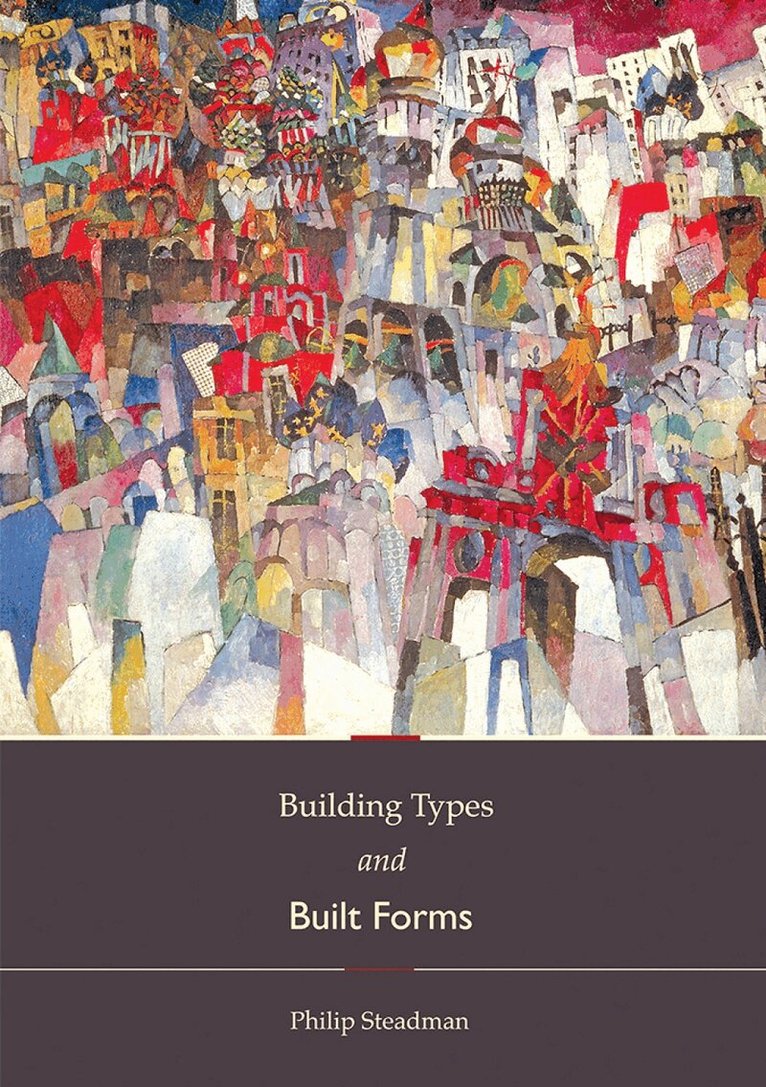
    Building Types and Built Forms

    AvPhilip Steadman

    Inbunden, Engelska, 2014

    429 kr

    Beställningsvara. Skickas inom 11-20 vardagar. Fri frakt över 249 kr.

    Beskrivning

    Building Types and Built Forms weaves two books together in alternating chapters: one about the history of building types, the other about their geometry.The first book follows the histories of some common types of building: houses, hospitals, schools, offices and prisons. Examples are drawn from the 19th and early 20th centuries in France, America and Britain, with the central focus on London. They include the ‘pavilion hospitals’ associated with the name of Florence Nightingale, English Board and Modernist schools of the 1920s and 30s, tall office buildings in Chicago and New York, Jeremy Bentham’s Panopticon penitentiary, and ‘radial prisons’ on the model of Cherry Hill and Pentonville. The second book takes these histories and uses them to explore how the forms of these buildings are constrained by some of the basic functions of architecture: to provide daylight and ventilation to the interior, to provide access to all rooms, or to allow occupants to see from one part of a building to another. A new way of thinking about these ‘worlds of geometrical possibility’ is introduced, in which the forms of many buildings can be catalogued and laid out systematically in ‘morphospaces’, or theoretical spaces of forms. As building types change over time, they come to occupy different positions within the worlds of possible forms. Building Types and Built Forms is filled with over 400 illustrations, many drawn especially for the book. It offers a new theoretical approach, combined with a series of historical accounts of building types, some well known, some less familiar. It should appeal to academics, practitioners, historians and students of architecture.

    Produktinformation

    • Utgivningsdatum:2014-02-28
    • Mått:210 x 297 x undefined mm
    • Format:Inbunden
    • Språk:Engelska
    • Förlag:Troubador Publishing
    • ISBN:9781783062591

    Utforska kategorier

    • Arkitekturhistoria inom Kultur

    Mer om författaren

    Philip Steadman was born in 1942. He studied architecture at Cambridge University in the 1960s and has remained in academic life ever since, first at Cambridge, then at the Open University, and now at University College London. He has studied geometry and the forms of buildings thoughout his life, and has published two previous books on the subject, The Geometry of Environment (with Lionel March, 1971) and Architectural Morphology (1983).