• Fri frakt över 249 kr
  • •
  • Snabba leveranser
  • •
  • Billiga böcker
Kundservice

Du är på sajten för privatpersoner.

Företag, bibliotek eller offentlig verksamhet?

Du handlar på classic.bokus.com, där alla dina funktioner finns intakta.
Till classic.bokus.com
Bokus logotyp. Gå till startsidan.
  • Erbjudanden
  • Nyheter
  • Student
  • Topplistor
  • Barn & ungdom
  • Bokus Play
  • E-böcker
  • Pocketböcker
  • Spel & pussel

10% rabatt på allt med kod: NYSTART10 →

Sidfot

Mina sidor

    Hjälp

    • Kundservice
    • Vanliga frågor och svar
    • Frakt och leverans
    • Retur vid ångerrätt
    • Reklamera vara
    • Betalning
    • Köpvillkor
    • Allmänna villkor
    • Information om webbplatsens tillgänglighet

    Om Bokus

    • Om oss
    • Pressrum
    • För studenter
    • För företag
    • För bibliotek och offentlig verksamhet
    • För leverantörer
    • Hållbarhet

    Populärt

    • Aktuella erbjudanden
    • Presentkort
    • Studentlitteratur
    • Nya böcker
    • Topplistor
    • Signerade böcker
    • Engelska böcker

    Inspiration

    • Boktips
    • BookTok
    • Populära bokserier
    • Barnbokskaraktärer
    • Populära författare
    Logotyp för Bokus
    Följ oss på Facebook (extern länk)Följ oss på Instagram (extern länk)Följ oss på YouTube (extern länk)Följ oss på TikTok (extern länk)
    bokus @ CookiesAnpassa cookiesIntegritetspolicyKöpvillkor
    Till Citymail hemsida (extern länk)Till Budbee hemsida (extern länk)Till Postnord hemsida (extern länk)Till Schenker hemsida (extern länk)Till Early Bird hemsida (extern länk)Till Walleys hemsida (extern länk)
    1. Kultur
    2. Scenkonst och film
    3. Skådespelare och artister

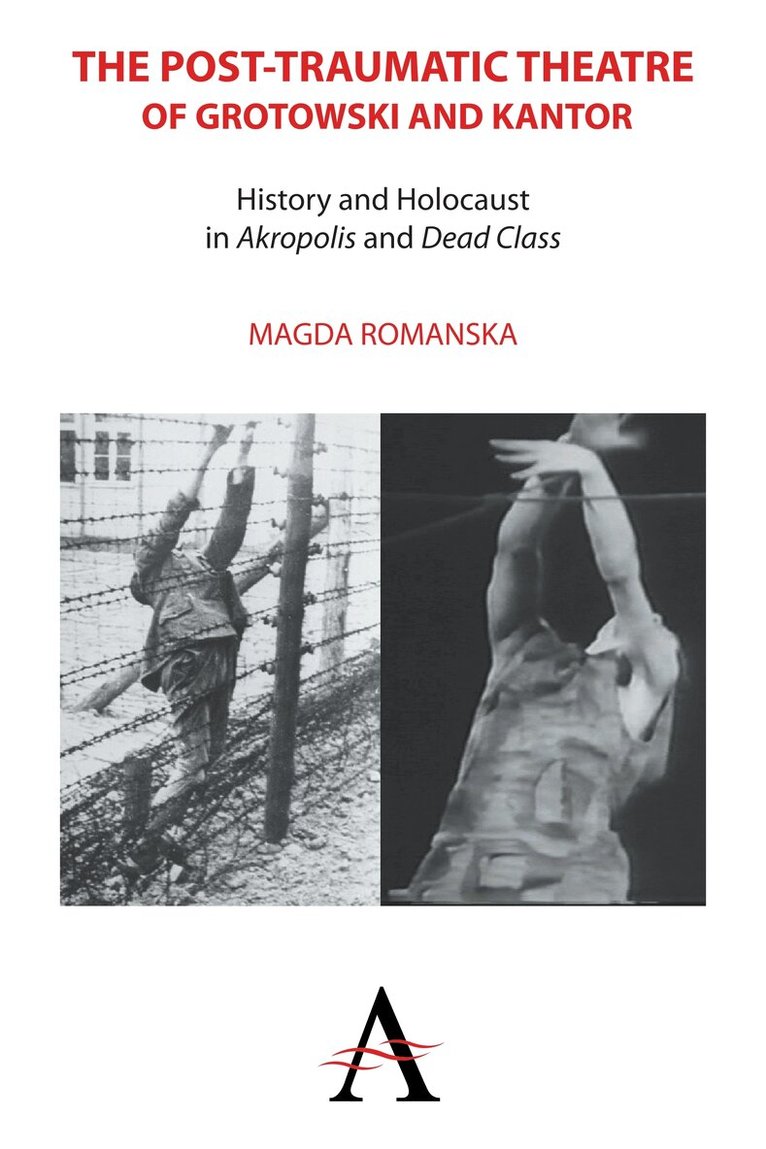
    Post-traumatic Theatre of Grotowski and Kantor

    History and Holocaust in ‘Akropolis’ and ‘Dead Class’

    AvMagda Romanska

    Häftad, Engelska, 2014

    Del 2 i serien Anthem European Studies

    422 kr

    Beställningsvara. Skickas inom 5-8 vardagar. Fri frakt över 249 kr.

    Fler format och utgåvor

    Inbunden

    1 153 kr

    Beskrivning

    Despite its international influence, Polish theatre remains a mystery to many Westerners. This volume attempts to fill in current gaps in English-language scholarship by offering a historical and critical analysis of two of the most influential works of Polish theatre: Jerzy Grotowski’s ‘Akropolis’ and Tadeusz Kantor’s ‘Dead Class’. By examining each director’s representation of Auschwitz, this study provides a new understanding of how translating national trauma through the prism of performance can alter and deflect the meaning and reception of theatrical works, both inside and outside of their cultural and historical contexts.

    Produktinformation

    • Utgivningsdatum:2014-10-01
    • Mått:153 x 229 x 25 mm
    • Vikt:679 g
    • Format:Häftad
    • Språk:Engelska
    • Serie:Anthem European Studies
    • Antal sidor:420
    • Förlag:Anthem Press
    • Medarbetare:Kathleen Cioffi
    • ISBN:9781783083213

    Utforska kategorier

    • Skådespelare och artister inom Kultur
    • Teater inom Kultur

    Mer om författaren

    Magda Romanska is an award-winning writer, theatre scholar and dramaturg. Educated at Stanford, Yale and Cornell, she is currently Associate Professor of Theatre and Dramaturgy at Emerson College in Boston, and a research associate at Harvard University’s Minda de Gunzburg Center for European Studies.

    Recensioner i media

    The task, which the author sets out and performs, starting from such a clearly defined research perspective, is both remarkable and impressive in its momentum and size.—Performer

    Innehållsförteckning

    • Foreword by Kathleen Cioffi; Preface; Acknowledgments; List of Illustrations; Introduction; PART I: OUR AUSCHWITZ: GROTOWSKI’S “AKROPOLIS”; Chapter 1: Jerzy Grotowski: A Very Short Introduction; Chapter 2: Native Son: Grotowski in Poland; Chapter 3: Grotowski: The Polish Context; Chapter 4: Grotowski, the Messiah: Coming to America; Chapter 5: The Making of an Aura; Chapter 6: On Not Knowing Polish; Chapter 7: “In Poland: That is to Say, Nowhere”; Chapter 8: “Akropolis”/Necropolis; Chapter 9: The Vision and the Symbol; Chapter 10: “This Drama as Drama Cannot Be Staged”; Chapter 11: Two National Sacrums; Chapter 12: “Hollow Sneering Laughter”: Mourning the Columbuses; Chapter 13: Against Heroics; Chapter 14: Representing the Unrepresentable; Chapter 15: Trip to the Museum; Chapter 16: Bearing the Unbearable; Chapter 17: The Living and the Dead; Chapter 18: Jacob’s Burden; Chapter 19: The Final Descent; Chapter 20: Textual Transpositions; Chapter 21: “Akropolis” After Grotowski; ILLUSTRATIONS; PART II: OUR MEMORY: KANTOR’S “DEAD CLASS”; Chapter 22: Tadeusz Kantor: A Very Short Introduction; Chapter 23: “Dead Class”: The Making of the Legend; Chapter 24: “Dead Class” in Poland; Chapter 25: The Polish History Lesson; Chapter 26: “Dead Class” Abroad; Chapter 27: On Not Knowing Polish, Again; Chapter 28: The Visual and the Puerile; Chapter 29: The National and the Transnational; Chapter 30: Witkiewicz’s Tumor; Chapter 31: An Age of Genius: Bruno Schulz and the Return to Childhood; Chapter 32: Conversing with Gombrowicz: The Dead, the Funny, the Sacred and the Profane; Chapter 33: Panirony: “A pain with a smile and a shrug”; Chapter 34: Raising the Dead; Chapter 35: “Dead Class” as Kaddish…; Chapter 36: “Dead Class” as “Dybbuk,” or the Absence; Chapter 37: The Dead and the Marionettes; Chapter 38: Men and Objects; Chapter 39: “Dead Class” as “Forefathers’ Eve”; Chapter 40: “Dead Class”: The Afterlife; Postscript; Appendix: Table 1. Chronology of Events; Table 2. Comparison between Wyspiański’s “Akropolis” and “Genesis”; Table 3. Comparison between Grotowski and Kantor; Notes; Bibliography; Index