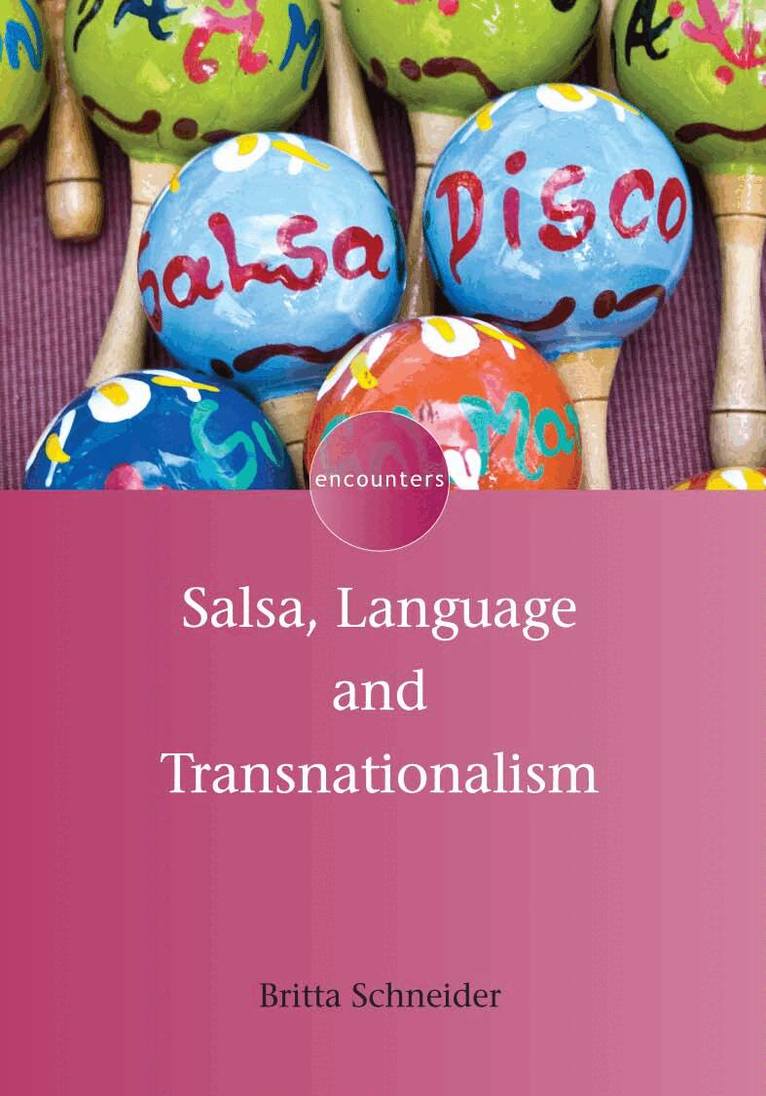
Häftad, Engelska, 2014
Salsa, Language and Transnationalism
Del 3 i serien Encounters
564 kr
Beställningsvara. Skickas inom 5-8 vardagar. Fri frakt över 249 kr.
Beskrivning
Produktinformation
- Utgivningsdatum: 2014-05-29
- Mått: 148 x 210 x 9 mm
- Vikt: 216 g
- Format: Häftad
- Språk: Engelska
- Serie: Encounters
- Antal sidor: 160
- Förlag: Channel View Publications Ltd
- ISBN: 9781783091881
Utforska kategorier
Mer om författaren
Britta Schneider is Lecturer in the Department for English Language and Literature at Freie Universität Berlin, Germany. Her research interests include sociolinguistics of globalisation, language ideology, language policy, epistemology of language and multilingualism, and superdiversity.
Recensioner i media
Salsa, Language and Transnationalism is a unique and complex study about the deconstruction of the relationship between language ideologies and a cultural practice in transnational contexts. The novelty of this book lies in the object of study: while most studies have placed the center of attention on certain ethnic/national groups, Britta Schneider focuses on communities based on a Latin or Hispanic cultural practice – salsa dance in Germany and Australia. The research in these transnational salsa communities successfully stays away from the essentialist approach and abstains from the traditional “one-to-one” mapping of language and identity. At the same time, with the use of ethnographic observation and discourse analysis, the author moves beyond the national language discourses and offers an insightful discussion of the co-constitution of societal and cultural discourses and language ideologies in transnational salsa communities.
Betyg & recensioner
0 recensioner
Inga recensioner tillgängliga.