• Fri frakt över 249 kr
  • •
  • Snabba leveranser
  • •
  • Billiga böcker
Kundservice

Du är på sajten för privatpersoner.

Företag, bibliotek eller offentlig verksamhet?

Du handlar på classic.bokus.com, där alla dina funktioner finns intakta.
Till classic.bokus.com
Bokus logotyp. Gå till startsidan.
  • Erbjudanden
  • Nyheter
  • Student
  • Topplistor
  • Barn & ungdom
  • Bokus Play
  • E-böcker
  • Pocketböcker
  • Spel & pussel

Må bättre, för mindre! Upp till 50% rabatt på hälsoböcker

Sidfot

Mina sidor

    Hjälp

    • Kundservice
    • Vanliga frågor och svar
    • Frakt och leverans
    • Retur vid ångerrätt
    • Reklamera vara
    • Betalning
    • Köpvillkor
    • Allmänna villkor
    • Information om webbplatsens tillgänglighet

    Om Bokus

    • Om oss
    • Pressrum
    • För studenter
    • För företag
    • För bibliotek och offentlig verksamhet
    • För leverantörer
    • Hållbarhet

    Populärt

    • Aktuella erbjudanden
    • Presentkort
    • Studentlitteratur
    • Nya böcker
    • Topplistor
    • Signerade böcker
    • Engelska böcker

    Inspiration

    • Boktips
    • BookTok
    • Populära bokserier
    • Barnbokskaraktärer
    • Populära författare
    Logotyp för Bokus
    Följ oss på Facebook (extern länk)Följ oss på Instagram (extern länk)Följ oss på YouTube (extern länk)Följ oss på TikTok (extern länk)
    bokus @ CookiesAnpassa cookiesIntegritetspolicyKöpvillkor
    Till Citymail hemsida (extern länk)Till Budbee hemsida (extern länk)Till Postnord hemsida (extern länk)Till Schenker hemsida (extern länk)Till Early Bird hemsida (extern länk)Till Walleys hemsida (extern länk)
    1. Kultur
    2. Scenkonst och film
    3. Film

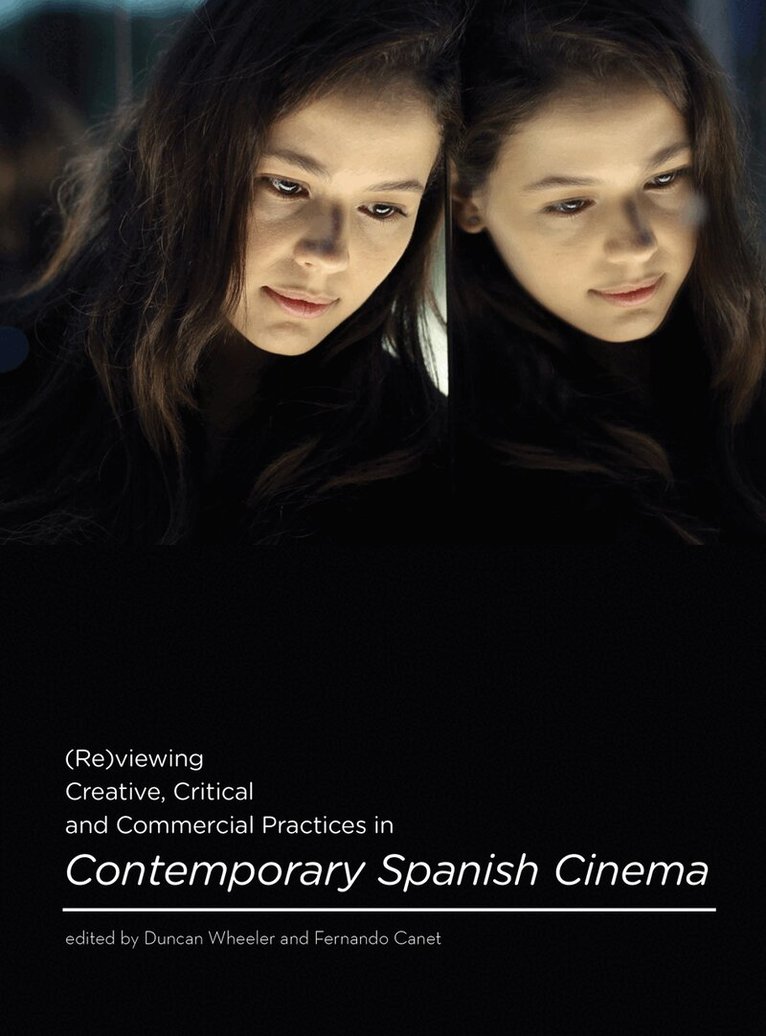
    (Re)viewing Creative, Critical and Commercial Practices in Contemporary Spanish Cinema

    AvDuncan Wheeler,Fernando Canet

    Inbunden, Engelska, 2014

    1 305 kr

    Beställningsvara. Skickas inom 5-8 vardagar. Fri frakt över 249 kr.

    Beskrivning

    Formulated around a number of key thematic concerns – including new creative trends; the politics and practices of memory; auteurship, genre and stardom in a transnational age – this reassessment of contemporary Spanish cinema from 1992 to 2012 brings leading academics from a broad range of disciplinary and geographical backgrounds into dialogue with critically and commercially successful practitioners to suggest the need to redefine the parameters of one of the world’s most creative national cinemas. This volume will appeal not only to students and scholars of Spanish films, but also to anyone with an interest in contemporary world cinema.

    Produktinformation

    • Utgivningsdatum:2014-12-15
    • Mått:178 x 229 x 27 mm
    • Vikt:993 g
    • Format:Inbunden
    • Språk:Engelska
    • Antal sidor:420
    • Förlag:Intellect
    • ISBN:9781783204069

    Utforska kategorier

    • Film inom Kultur

    Mer om författaren

    Dr Fernando Canet is associate professor in film and media studies at the Fine Arts College (Polytechnic University of Valencia, Spain). He has been a visiting research fellow at the Goldsmiths College (University of London), at New York University and at the University of Kent. He is the author of two books, co-author of another about film narrative and co-editor of three books, special mention to his co-edited book titled (Re)viewing Creative, Critical and Commercial Practices in Contemporary Spanish Cinema (Duncan and Canet 2014, Intellect Ltd). He has been the guest editor of a special issue of Hispanic Research Journal on Contemporary Spanish Cinema and a special issue of L’Atalante on Cinephile Directors in Modern Time. When the Cinema Interrogates Itself. His latest articles have been published in Communication & Society, Studies in European Cinema, Studies in Documentary Films, The Journal of Popular Culture, Popular Communication, Bulletin of Spanish Studies, Journal of Film and Video, Journal of Screenwriting and International Journal of Cultural Studies.Duncan Wheeler is Associate Professor in Spanish studies at the University of Leeds, where he is also a member of the Executive Committee for the Centre for World Cinemas.

    Recensioner i media

    'The tome is a must-read for all scholars and serious students of contemporary Spanish cinema.'

    Innehållsförteckning

    • Editorial NoteChapter 1: Introduction: How and Why This Book Came into Being – Fernando Canet and Duncan WheelerChapter 2: Spanish Films, 1992–2012: Two Decades of Cinematic Production and Critical Discourse – Duncan WheelerChapter 3: From the Past to the Present: Contemporising Trends that Define Spanish Cinema – Fernando CanetPart 1: Sense and Sensibility: New Forms of Being and Seeing in Recent Spanish Cinema Chapter 4: Back to Africa? Colonial History and Postcolonial Dynamics in Recent Spanish Cinema – Alberto ElenaChapter 5: The New Ethos of Gay Culture and the Limits of Normalization – Helio San MiguelChapter 6: Behind the Enigma Construct: A Certain Trend in Spanish Cinema – Javier MoralChapter 7: Reproduction and Rhetorical Processes in the Construction of Reality: En Construcción and La leyenda del tiempo as Case Studies – Fernando CanetChapter 8: Art and Ethnography: Miquel Barceló and Isaki Lacuesta – Earth Magicians? – Wenceslao García Puchades and Miguel Corella LacasaChapter 9: The Everyday Affect: Isabel Coixet and the Five Senses – Jennie RothwellPart 2: Revisiting the Past: The Politics of Memory and the Transition’s Cinematic Legacy Chapter 10: Ana Torrent as Palimpsest in Elio Quiroga’s No-Do (The Haunting) – Sarah WrightChapter 11: Victimhood in Contemporary Spanish Documentary: The Politics of Agency in Jaime Camino’s La vieja memoria and Los niños de Rusia – Isabel Estrada and Melissa M. GonzálezChapter 12: New Bodies, New Sounds: Rediscovering the Eroticism of the Transition – Alejandro MeleroChapter 13: Blood and Unfulfilled Promises: Representations of Terrorism and the Transition – Concepción Cascajosa VirinoChapter 14: Back to the Future: Repackaging Spain’s Troublesome Past for Local and Global Audiences – Duncan WheelerChapter 15: Clowns, Goats, Music and the Comedic Violent: Late Francoism and the Transition to Democracy in Álex de la Iglesia’s Films – Vicente Rodríguez OrtegaPart 3: Redefining Auteurship, Genre and Stardom in a Transnational Age Chapter 16: Almodóvar in the USA/The USA in Almodóvar – Cristina Martínez-CarazoChapter 17: Acting and Directing in Spain: Historicizing Stardom and the Author Function – Duncan WheelerChapter 18: Sex, Art and Commerce: Penélope Cruz and Isabel Coixet Tackle Philip Roth in Elegy – Duncan WheelerChapter 19: Deadly Hybridity: Sexykiller, the Female Serial Killer and the New Spanish Horror Film – Shelagh Rowan-LeggChapter 20: Flexing Generic Boundaries: Torrente, [REC] and Adolescent Cinema in Spain – Agustín Rico-AlberoChapter 21: The Torrente Tetralogy: A Homegrown Saga – Lidia MerásChapter 22: Hybrid Models: Auteurism and Genre in Contemporary Spanish Crime Thrillers – Carmen HerreroChapter 23: Planet 51 and Spanish Animation: The Risks and Attractions of Globalization – Maria Soler Campillo, Marta Martín Núñez and Javier Marzal FeliciCoda: Backstage Pass – Engaging with Practitioners and Cinematic InstitutionsChapter 24: How to Make Arty Films Now – Luis MiñarroChapter 25: How to Make Commercial Films Now – Mercedes Gamero and Duncan WheelerChapter 26: San Sebastián: A Film Festival of Contrasts – Mar Diestro-DópidoChapter 27: The Art Director as Architect: The Reconstruction of Deconstructed Memories – Sandra MartorellChapter 28: The Films of Isaki Lacuesta: Hidden Portraits, Multiple Lives – Linda C. EhrlichChapter 29: Color perro que huye: An Audio-visual Prosumer versus the Institutional Cinematic Model – Elena López RieraChapter 30: New Tendencies in Contemporary Cinema: Round Table Discussion with José Luis Guerin, Isaki Lacuesta and Luis Miñarro – Fernando Canet and Duncan Wheeler