• Fri frakt över 249 kr
  • •
  • Snabba leveranser
  • •
  • Billiga böcker
Kundservice

Du är på sajten för privatpersoner.

Företag, bibliotek eller offentlig verksamhet?

Du handlar på classic.bokus.com, där alla dina funktioner finns intakta.
Till classic.bokus.com
Bokus logotyp. Gå till startsidan.
  • Erbjudanden
  • Student
  • Topplistor
  • Barn & ungdom
  • Bokus Play
  • E-böcker
  • Ljudböcker
  • Pocketböcker
  • Spel & pussel

Upp till 25% på utvalda nyheter →

Sidfot

Mina sidor

    Hjälp

    • Kundservice
    • Vanliga frågor och svar
    • Frakt och leverans
    • Retur vid ångerrätt
    • Reklamera vara
    • Betalning
    • Köpvillkor
    • Allmänna villkor
    • Information om webbplatsens tillgänglighet

    Om Bokus

    • Om oss
    • Pressrum
    • För studenter
    • För företag
    • För bibliotek och offentlig verksamhet
    • För leverantörer
    • Hållbarhet

    Populärt

    • Aktuella erbjudanden
    • Presentkort
    • Studentlitteratur
    • Nya böcker
    • Topplistor
    • Signerade böcker
    • Engelska böcker

    Inspiration

    • Boktips
    • BookTok
    • Populära bokserier
    • Barnbokskaraktärer
    • Populära författare
    Logotyp för Bokus
    Följ oss på Facebook (extern länk)Följ oss på Instagram (extern länk)Följ oss på YouTube (extern länk)Följ oss på TikTok (extern länk)
    bokus @ CookiesAnpassa cookiesIntegritetspolicyKöpvillkor
    Till Citymail hemsida (extern länk)Till Budbee hemsida (extern länk)Till Postnord hemsida (extern länk)Till Schenker hemsida (extern länk)Till Early Bird hemsida (extern länk)Till Walleys hemsida (extern länk)
    1. Samhälle och politik
    2. Samhälle och kultur
    3. Kultur och medier
    4. Referensverk och tvärvetenskap

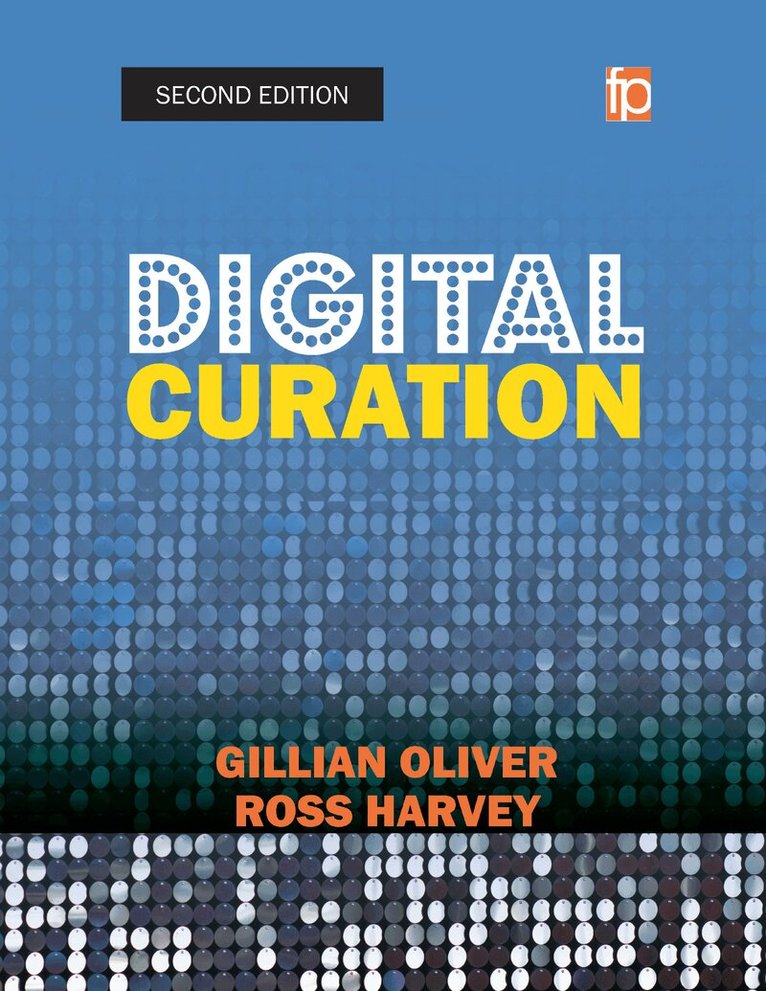
    Digital Curation

    AvGillian Oliver,Ross Harvey

    Häftad, Engelska, 2016

    1 055 kr

    Beställningsvara. Skickas inom 5-8 vardagar. Fri frakt över 249 kr.

    Fler format och utgåvor

    Häftad

    1 333 kr

    Beskrivning

    This second edition of Digital Curation outlines the essential concepts and techniques that are crucial to preserving the longevity of digital resources. The first edition of this textbook provided in-depth explanation of the entire digital curation lifecycle, from creation to appraisal to preservation to organization/access to transformation and set a benchmark for both thoroughness and clarity. In this revamped and expanded second edition, international authorities Gillian Oliver and Ross Harvey have widened the scope the scope to address continuing developments in the strategies, technological approaches, and activities that are part of this rapidly changing field. Useful as both a teaching text and day-to-day working guide, this book outlines the essential concepts and techniques that are crucial to preserving the longevity of digital resources and covers topics including: • the scope and incentives of digital curation, detailing Digital Curation Centre’s (DCC) lifecycle model as well as the Data Curation Continuum • key requirements for digital curation, from description and representation to planning and collaboration • the value and utility of metadata • creating an appraisal and selection policy for digital objects that considers the needs of producers and consumers when • the paradigm shift by institutions towards cloud computing and its impact on costs, storage, and other key aspects of digital curation • the quality and security of data • new and emerging data curation resources, including innovative digital repository software and digital forensics tools • mechanisms for sharing and reusing data, with expanded sections on open access, open data, and open standards initiatives • processes to ensure that data are preserved and remain usable over time. This book will be essential reading for any information professional, records manager or archivists who appraises, selects, organizes, or maintains digital resources and has responsibilities as a digital curator.

    Produktinformation

    • Utgivningsdatum:2016-04-22
    • Mått:215 x 279 x 13 mm
    • Vikt:279 g
    • Format:Häftad
    • Språk:Engelska
    • Antal sidor:256
    • Upplaga:2
    • Förlag:Facet Publishing
    • ISBN:9781783300976

    Utforska kategorier

    • Referensverk och tvärvetenskap inom Samhälle och politik

    Mer om författaren

    Gillian Oliver is an academic at the School of Information Management, Victoria University of Wellington, New Zealand. Her PhD is from Monash University, Melbourne, Australia. Her research interests centre on organisational culture, and the influences this has on the way that information is managed. She is the co-author of Records Management and Information Culture (Facet 2014) and a Co-editor in Chief of Archival Science. Ross Harvey is Adjunct Professor at RMIT University and the University of South Australia.

    Recensioner i media

    For the archival generalists in small shops facing their first accession of born-digital records, this is an excellent introduction to what is required.Experienced digital archivists will also welcome how this updated reference source sets out current and emerging practices in this field. For educators preparing students for a career in this emerging profession and for students considering this career, this volume sets out the skills needed and the potential for a challenging and satisfying career (pp. 24–29). Regardless of the reader’s motivation, Oliver and Harvey have provided an essential resource for anyone interested in digital curation. And we can hope that, by the time the third edition appears, “curation” will be a recognized word, no longer singled out by spellcheck.

    Innehållsförteckning

    • PART I - DIGITAL CURATION: SCOPE AND INCENTIVES 1. Introduction 2. The Changing Landscape 3. Conceptual Models 4. Defining Data PART II - KEY REQUIREMENTS FOR DIGITAL CURATION 5. Curation and Curators 6. Description and Representation Information 7. Preservation Planning and Policy 8. Sharing Knowledge and Collaborating PART III - THE DIGITAL CURATION LIFECYCLE IN ACTION 9. Designing Data 10. Creating Data 11. Deciding What Data to Keep 12. Ingesting Data 13. Preserving Data 14. Storing Data 15. Using and Reusing Data