• Fri frakt över 249 kr
  • •
  • Snabba leveranser
  • •
  • Billiga böcker
Kundservice

Du är på sajten för privatpersoner.

Företag, bibliotek eller offentlig verksamhet?

Du handlar på classic.bokus.com, där alla dina funktioner finns intakta.
Till classic.bokus.com
Bokus logotyp. Gå till startsidan.
  • Erbjudanden
  • Nyheter
  • Student
  • Topplistor
  • Barn & ungdom
  • Bokus Play
  • E-böcker
  • Pocketböcker
  • Spel & pussel

10% rabatt på allt med kod NYSTART10 →

Sidfot

Mina sidor

    Hjälp

    • Kundservice
    • Vanliga frågor och svar
    • Frakt och leverans
    • Retur vid ångerrätt
    • Reklamera vara
    • Betalning
    • Köpvillkor
    • Allmänna villkor
    • Information om webbplatsens tillgänglighet

    Om Bokus

    • Om oss
    • Pressrum
    • För studenter
    • För företag
    • För bibliotek och offentlig verksamhet
    • För leverantörer
    • Hållbarhet

    Populärt

    • Aktuella erbjudanden
    • Presentkort
    • Studentlitteratur
    • Nya böcker
    • Topplistor
    • Signerade böcker
    • Engelska böcker

    Inspiration

    • Boktips
    • BookTok
    • Populära bokserier
    • Barnbokskaraktärer
    • Populära författare
    Logotyp för Bokus
    Följ oss på Facebook (extern länk)Följ oss på Instagram (extern länk)Följ oss på YouTube (extern länk)Följ oss på TikTok (extern länk)
    bokus @ CookiesAnpassa cookiesIntegritetspolicyKöpvillkor
    Till Citymail hemsida (extern länk)Till Budbee hemsida (extern länk)Till Postnord hemsida (extern länk)Till Schenker hemsida (extern länk)Till Early Bird hemsida (extern länk)Till Walleys hemsida (extern länk)
    1. Ekonomi och Ledarskap
    2. Nationalekonomi
    3. Mikroekonomi

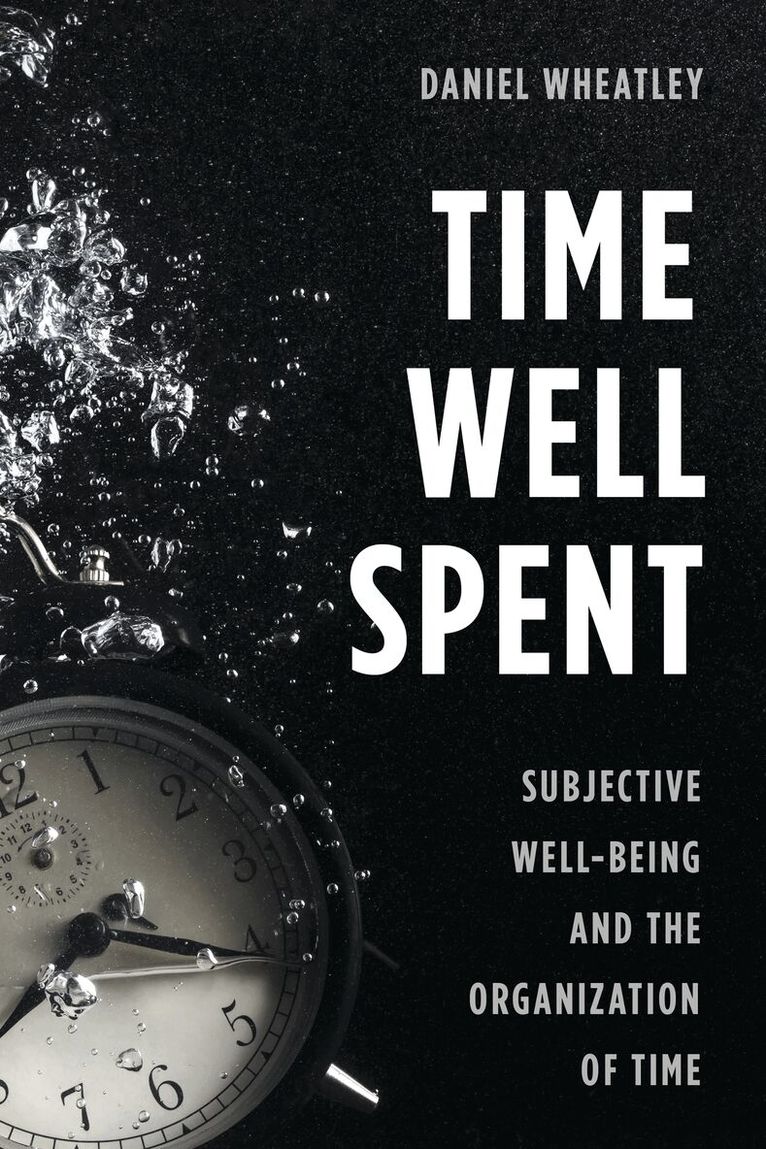
    Time Well Spent

    Subjective Well-Being and the Organization of Time

    AvDaniel Wheatley

    Inbunden, Engelska, 2017

    2 009 kr

    Beställningsvara. Skickas inom 10-15 vardagar. Fri frakt över 249 kr.

    Fler format och utgåvor

    Häftad

    579 kr

    E-bok

    622 kr

    Beskrivning

    Measuring quality of life has been identified as fundamental in assessing the relative progress of societies and as having relevance for both monitoring and policy-making purposes. Self-reported measures of well-being, referred to as subjective well-being, have become increasingly topical given the growing awareness of the limitations of existing measures of well-being including gross domestic product (GDP). In the UK, the ONS’s ‘Happiness Index’ was launched in 2010 by Prime Minister David Cameron. This book aims to improve our understanding of well-being through an analysis of time-use in a post-industrial society, the UK, drawing on empirical data from large-scale surveys such as Understanding Society and smaller-scale case study evidence. It uses a plurality of theoretical perspectives to explore the relationship between our use of time and our reported levels of satisfaction, and considers the policy lessons that we can take from our organization of time.

    Produktinformation

    • Utgivningsdatum:2017-05-02
    • Mått:156 x 240 x 26 mm
    • Vikt:581 g
    • Format:Inbunden
    • Språk:Engelska
    • Antal sidor:272
    • Förlag:Bloomsbury Publishing PLC
    • ISBN:9781783484256

    Utforska kategorier

    • Mikroekonomi inom Ekonomi och Ledarskap
    • Nationalekonomi inom Ekonomi och Ledarskap

    Mer om författaren

    Daniel Wheatley is Senior Lecturer in Business and Labour Economics in the Department of Management at University of Birmingham Business School.

    Recensioner i media

    Combining both new empirical evidence and a mix of different theories, this book offers a unique insight into the relationship between subjective well-being and time use. The book contributes positively to an important debate on how we might lead better and more fulfilled lives inside and outside work. Reading it is time well-spent.

    Innehållsförteckning

    • 1. Subjective well-being and time-use: An introduction / 2. A pluralist perspective on time-use / 3. Time-use: The historical and policy context / 4. Work-time, the quality of work and well-being / 5. The household division of labour and flexibility in paid work / 6. Care and volunteering: The (feel) good Samaritan (with Irene Hardill) / 7. Where to next? Travel-to-work and travel-for-work / 8. Leisure time: The pursuit of happiness (with Craig Bickerton) / 9. The organization of time and subjective well-being: Key findings and implications for public and organizational policy