• Fri frakt över 249 kr
  • •
  • Snabba leveranser
  • •
  • Billiga böcker
Kundservice

Du är på sajten för privatpersoner.

Företag, bibliotek eller offentlig verksamhet?

Du handlar på classic.bokus.com, där alla dina funktioner finns intakta.
Till classic.bokus.com
Bokus logotyp. Gå till startsidan.
  • Erbjudanden
  • Nyheter
  • Student
  • Topplistor
  • Barn & ungdom
  • Bokus Play
  • E-böcker
  • Pocketböcker
  • Spel & pussel

10% rabatt på allt med kod NYSTART10 →

Sidfot

Mina sidor

    Hjälp

    • Kundservice
    • Vanliga frågor och svar
    • Frakt och leverans
    • Retur vid ångerrätt
    • Reklamera vara
    • Betalning
    • Köpvillkor
    • Allmänna villkor
    • Information om webbplatsens tillgänglighet

    Om Bokus

    • Om oss
    • Pressrum
    • För studenter
    • För företag
    • För bibliotek och offentlig verksamhet
    • För leverantörer
    • Hållbarhet

    Populärt

    • Aktuella erbjudanden
    • Presentkort
    • Studentlitteratur
    • Nya böcker
    • Topplistor
    • Signerade böcker
    • Engelska böcker

    Inspiration

    • Boktips
    • BookTok
    • Populära bokserier
    • Barnbokskaraktärer
    • Populära författare
    Logotyp för Bokus
    Följ oss på Facebook (extern länk)Följ oss på Instagram (extern länk)Följ oss på YouTube (extern länk)Följ oss på TikTok (extern länk)
    bokus @ CookiesAnpassa cookiesIntegritetspolicyKöpvillkor
    Till Citymail hemsida (extern länk)Till Budbee hemsida (extern länk)Till Postnord hemsida (extern länk)Till Schenker hemsida (extern länk)Till Early Bird hemsida (extern länk)Till Walleys hemsida (extern länk)
    1. Samhälle och politik
    2. Samhälle och kultur
    3. Kultur och medier
    4. Referensverk och tvärvetenskap

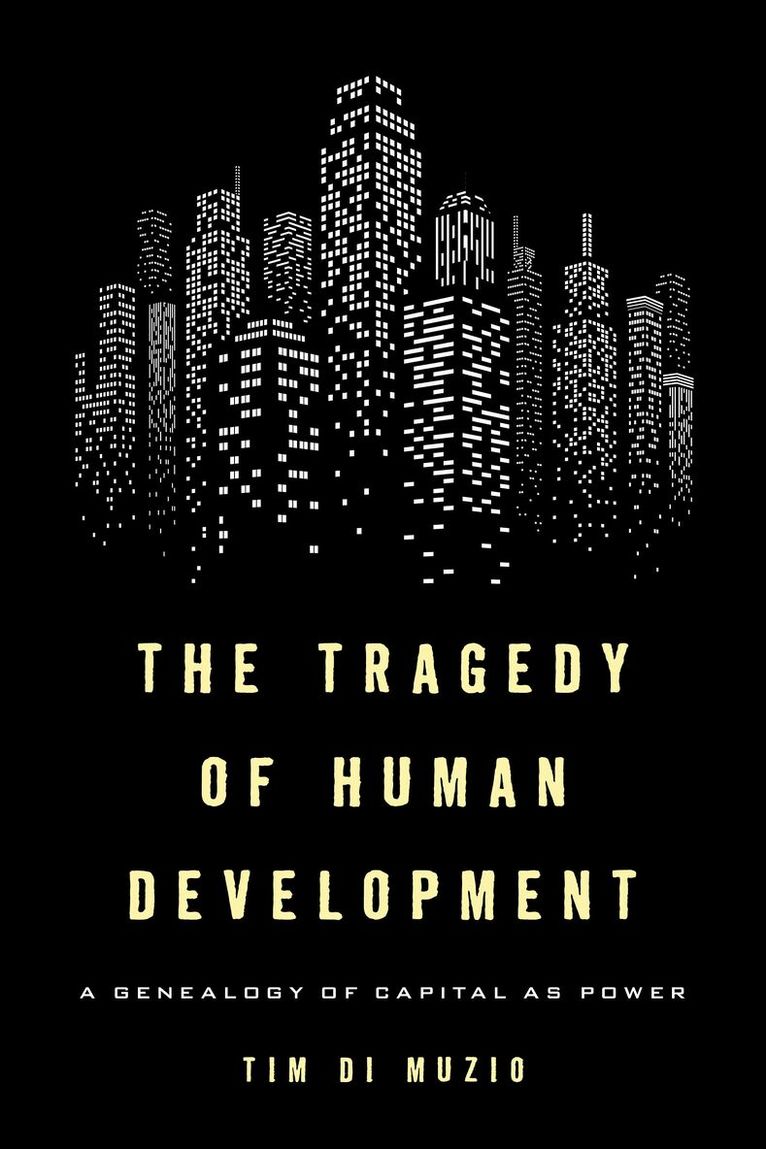
    Tragedy of Human Development

    A Genealogy of Capital as Power

    AvTim Di Muzio

    Häftad, Engelska, 2017

    590 kr

    Beställningsvara. Skickas inom 10-15 vardagar. Fri frakt över 249 kr.

    Fler format och utgåvor

    Inbunden

    1 673 kr

    E-bok

    634 kr

    Beskrivning

    How might an objective observer conceive of what humans have accomplished as a species over its brief history? Benjamin argues that history can be judged as one giant catastrophe. Liberals suggest that this is to sombre an assessment and that human history can be read as a story of greater and greater progress in human rights, prosperity and the decrease of arbitrary and extra-judicial violence. But is there a third reading of history, one that neither interprets human history as a giant catastrophe or endless progress? Could we not say that human development has been a tragedy? This book explores the idea of human development as a tragedy from the perspective of capitalist power. Although the argument of this book draws heavily on critical political economy, the analysis considers interdisciplinary literature in an effort to explore how major revolutions have transformed human social relations of power and created certain path dependencies that may ultimately lead to our downfall as a species. Intellectually sophisticated and readable, this book offers a provocative genealogy of capitalist power and the tragedy of human development.

    Produktinformation

    • Utgivningsdatum:2017-12-12
    • Mått:152 x 229 x 15 mm
    • Vikt:304 g
    • Format:Häftad
    • Språk:Engelska
    • Antal sidor:200
    • Förlag:Bloomsbury Publishing PLC
    • ISBN:9781783487141

    Utforska kategorier

    • Referensverk och tvärvetenskap inom Samhälle och politik
    • Internationella relationer inom Samhälle och politik

    Mer om författaren

    Tim Di Muzio is a Senior Lecturer in International Relations and Global Political Economy in the School of Humanities and Social Inquiry at the University of Wollongong, Australia. He is author of Carbon Capitalism (Rowman & Littlefield International, 2015), The 1% and the Rest of Us (Zed, 2015), and with Richard H. Robbins, Debt as Power (2016) and An Anthropology of Money (2017).

    Recensioner i media

    Di Muzio (Univ. of Wollongong, Australia) examines the history of human development in an attempt to understand how the world got to the point where “our main operating system is geared towards differential capitalization and the accumulation of social power rather than the enhancement of life and the protection of our environments that sustain it.” The latter he calls the “logic of livelihood,” and the former is the “logic of differential accumulation.” He attributes this to the power of capital and, in five "acts," he examines its history from early civilization through the present day. Act 1 looks at the agricultural revolution and the invention of money, the beginning of minority domination of the masses. Act 2 considers colonialism and the transatlantic slave trade, its contribution to increased inequality. Act 3 is the fossil fuel revolution. Act 4 examines the current system of corporate capitalism and its effects on labor and the natural environment. In Act 5, the author questions the conventional wisdom of economic growth, debt, and the global capitalist system. The book raises thought-provoking questions from start to finish. Summing Up: Recommended. Upper-division undergraduates through faculty.

    Innehållsförteckning

    • Prologue: The Planet of the Apes Hypothesis / Act I: The First Power Civilizations / Act II: Western Colonialism and the Transatlantic Slave Trade / Act III: The Fossil Fuel Revolution and the Rise of Military-Industrial Complexes / Act IV: The Rise of Corporate Capitalism / Act V: The Birth of Human Development / Epilogue: To be or Not to Be