• Fri frakt över 249 kr
  • •
  • Snabba leveranser
  • •
  • Billiga böcker
Kundservice

Du är på sajten för privatpersoner.

Företag, bibliotek eller offentlig verksamhet?

Du handlar på classic.bokus.com, där alla dina funktioner finns intakta.
Till classic.bokus.com
Bokus logotyp. Gå till startsidan.
  • Erbjudanden
  • Nyheter
  • Student
  • Topplistor
  • Barn & ungdom
  • Bokus Play
  • E-böcker
  • Pocketböcker
  • Spel & pussel

10% rabatt på allt med kod: NYSTART10 →

Sidfot

Mina sidor

    Hjälp

    • Kundservice
    • Vanliga frågor och svar
    • Frakt och leverans
    • Retur vid ångerrätt
    • Reklamera vara
    • Betalning
    • Köpvillkor
    • Allmänna villkor
    • Information om webbplatsens tillgänglighet

    Om Bokus

    • Om oss
    • Pressrum
    • För studenter
    • För företag
    • För bibliotek och offentlig verksamhet
    • För leverantörer
    • Hållbarhet

    Populärt

    • Aktuella erbjudanden
    • Presentkort
    • Studentlitteratur
    • Nya böcker
    • Topplistor
    • Signerade böcker
    • Engelska böcker

    Inspiration

    • Boktips
    • BookTok
    • Populära bokserier
    • Barnbokskaraktärer
    • Populära författare
    Logotyp för Bokus
    Följ oss på Facebook (extern länk)Följ oss på Instagram (extern länk)Följ oss på YouTube (extern länk)Följ oss på TikTok (extern länk)
    bokus @ CookiesAnpassa cookiesIntegritetspolicyKöpvillkor
    Till Citymail hemsida (extern länk)Till Budbee hemsida (extern länk)Till Postnord hemsida (extern länk)Till Schenker hemsida (extern länk)Till Early Bird hemsida (extern länk)Till Walleys hemsida (extern länk)
    1. Medicin
    2. Andra medicinska specialiteter
    3. Neurologi och klinisk neurofysiologi
    4. Autism och Aspergers syndrom

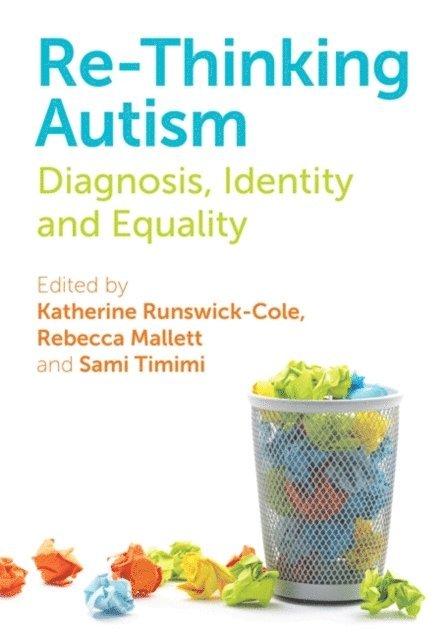
    Re-Thinking Autism

    Diagnosis, Identity and Equality

    AvSami Timimi,Rebecca Mallett

    E-bok
    Engelska, 2016

    407 kr

    Läs direkt i Bokus Reader – eller ladda ned till din enhet

    Beskrivning

    Challenging existing approaches to autism that limit, and sometimes damage, the individuals who attract and receive the label, this book questions the lazy prejudices and assumptions that can surround autism as a diagnosis in the 21st Century.Arguing that autism can only be understood through examining 'it' as a socially or culturally produced phenomenon, the authors offer a critique of the medical model that has produced a perpetually marginalising approach to autism, and explain the contradictions and difficulties inherent in existing attitudes. They examine and dispute the scientific validity of diagnosis and 'treatment', asking whether autism actually exists at the biological level, and question the value of diagnosis in the lives of those labelled with autism. The book recognises that there are no easy answers but encourages engagement with these essential questions, and looks towards service provision and practice that moves beyond a reliance on all-encompassing labels.This unique contribution to the growing field of critical autism studies brings together authors from clinical psychiatry, clinical and community psychology, social sciences, disability studies, education and cultural studies, as well as those with personal experiences of autism. It is essential and challenging reading for anyone with a personal, professional or academic interest in 'autism'.

    Produktinformation

    • Utgivningsdatum:2016-05-05
    • Språk:Engelska
    • Filformat:EPUB
    • Kopieringsskydd:LCP
    • ISBN:9781784500276
    • Förlag:Jessica Kingsley Publishers

    Utforska kategorier

    • Autism och Aspergers syndrom inom Medicin

    Mer om författaren

    Katherine Runswick-Cole is a Senior Research Fellow in Disability Studies and Psychology at The Research Centre for Social Change: Community Wellbeing, Manchester Metropolitan University, UK. She locates her work in the field of critical disability studies. She is co-editor of Disabled Children's Childhood Studies and co-author of Approaching Disability: Critical Issues and Perspectives.Rebecca Mallett is Principal Lecturer in Education and Disability Studies at Sheffield Hallam University, UK. She has a background in Social and Cultural Geography and is interested in the cultural aspects of disability. She is co-author of Approaching Disability: Critical Issues and Perspectives.Sami Timimi is a Consultant Child and Adolescent Psychiatrist and Visiting Professor of Child and Adolescent Psychiatry at the University of Lincoln, UK. He writes from a critical psychiatry perspective on topics related to mental health and has authored, co-edited and co-authored many books, including The Myth of Autism: Medicalising Boys' and Men's Social and Emotional Competence.

    Recensioner i media

    Impressive! This book inaugurates both Critical Autism Studies and a crucial unsettling of all previous accounts of the meaning of autism. In chapters that unpack the label, its diagnosis and use, autism treatments, politics, identities, Re-Thinking Autism vibrantly demonstrates that it is time to begin our lives with autism as an integral part of human life rather than treating it as an unnatural condition. This book is an antidote to the normative violence that regularly surrounds lives lived with the label of autism, inviting all people to affirm a more complex version of humanity.

    Innehållsförteckning

    • Introduction. Katherine Runswick-Cole, Rebecca Mallett and Sami Timimi. Part 1. What is autism? 1. Understanding this thing called autism. Katherine Runswick-Cole. 2. What have we learned from the science of autism? Sami Timimi and Brian McCabe. 3. Does everybody with autism have the same underlying condition? Richard Hassall. 4. The Biopolitics of autism in Brazil. Francisco Ortega, Rafaela Zorzanelli and Clarice Rios. Part 2. Deconstructing autism. 5. Life without autism: A cultural logic of violence. Anne McGuire. 6. The commodification of autism: What's at stake? Rebecca Mallett and Katherine Runswick-Cole. 7. How rude! Autism as a study in ability. Kim Davies. 8. Autism and the human. Dan Goodley. 9. Autism screening and diagnostic tools. Sami Timimi and Brian McCabe. Part 3. Changing practice. 10. Schools without labels. Nick Hodge. 11. Questions of treatment: Does a diagnosis of Autistic Spectrum Disorder help us to help a person with Intellectual Disabilities? Graham Collins. 12. Critical Systemic Therapy: Autism stories and disabled people with learning difficulties. Mark Haydon Laurelut. 13. Critical autism and critical neuroscience: Towards a science of research and practice. Tom Billington. 14. Early diagnosis of autism: Is earlier always better? Ginny Russell. 15. Thinking systems: Mind as a relational activity. Gail Simon. 16. The ethics and consequences of making Autism Spectrum diagnosis. Saqib Latif. 17. Examining language and communication in Autism Spectrum Disorder. Tom Muskett.