• Fri frakt över 249 kr
  • •
  • Snabba leveranser
  • •
  • Billiga böcker
Kundservice

Du är på sajten för privatpersoner.

Företag, bibliotek eller offentlig verksamhet?

Du handlar på classic.bokus.com, där alla dina funktioner finns intakta.
Till classic.bokus.com
Bokus logotyp. Gå till startsidan.
  • Erbjudanden
  • Nyheter
  • Student
  • Topplistor
  • Barn & ungdom
  • Bokus Play
  • E-böcker
  • Pocketböcker
  • Spel & pussel

10% studentrabatt med kod TERM26

Sidfot

Mina sidor

    Hjälp

    • Kundservice
    • Vanliga frågor och svar
    • Frakt och leverans
    • Retur vid ångerrätt
    • Reklamera vara
    • Betalning
    • Köpvillkor
    • Allmänna villkor
    • Information om webbplatsens tillgänglighet

    Om Bokus

    • Om oss
    • Pressrum
    • För studenter
    • För företag
    • För bibliotek och offentlig verksamhet
    • För leverantörer
    • Hållbarhet

    Populärt

    • Aktuella erbjudanden
    • Presentkort
    • Studentlitteratur
    • Nya böcker
    • Topplistor
    • Signerade böcker
    • Engelska böcker

    Inspiration

    • Boktips
    • BookTok
    • Populära bokserier
    • Barnbokskaraktärer
    • Populära författare
    Logotyp för Bokus
    Följ oss på Facebook (extern länk)Följ oss på Instagram (extern länk)Följ oss på YouTube (extern länk)Följ oss på TikTok (extern länk)
    bokus @ CookiesAnpassa cookiesIntegritetspolicyKöpvillkor
    Till Citymail hemsida (extern länk)Till Budbee hemsida (extern länk)Till Postnord hemsida (extern länk)Till Schenker hemsida (extern länk)Till Early Bird hemsida (extern länk)Till Walleys hemsida (extern länk)
    1. Historia och arkeologi
    2. Arkeologi
    3. Arkeologiska perioder och områden

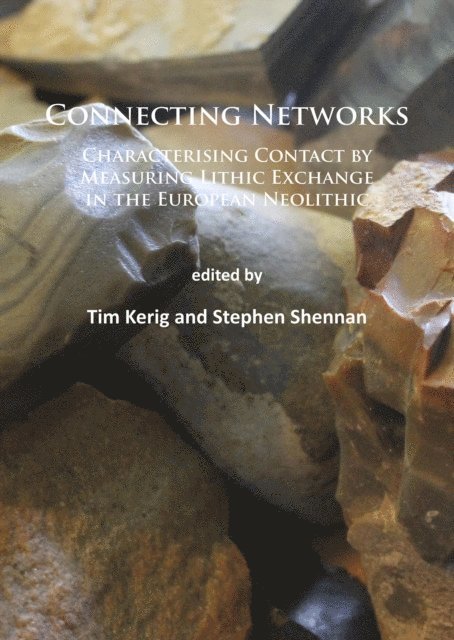
    Connecting Networks: Characterising Contact by Measuring Lithic Exchange in the European Neolithic

    AvTim Kerig,Stephen Shennan

    Häftad, Engelska, 2015

    525 kr

    Skickas . Fri frakt över 249 kr.

    Beskrivning

    This volume brings together a group of peer reviewed papers, most of them presented at a workshop held at the Institute of Archaeology, University College London. The event took place on 15–17 October 2011 and was part of the European Research Council (ERC) funded project Cultural Evolution of Neolithic Europe (EUROEVOL 2010-2015). The aim of the EUROEVOL project is to contribute to the new interdisciplinary field of cultural evolution that has developed over the last 30 years, and at the same time use these ideas and methods to address specific questions concerning the links between demographic, economic, social and cultural patterns and processes in the first farming societies of temperate Europe. The aim of the EUROEVOL project is to do that for the first time, and in doing so to provide the basis for a new account of the role of farming in transforming early European societies, c.6000-2000 cal BCE.

    Produktinformation

    • Utgivningsdatum:2015-07-31
    • Mått:210 x 297 x 8 mm
    • Vikt:1 110 g
    • Format:Häftad
    • Språk:Engelska
    • Antal sidor:182
    • Förlag:Archaeopress
    • ISBN:9781784911416

    Utforska kategorier

    • Arkeologiska perioder och områden inom Historia och arkeologi

    Innehållsförteckning

    • Introduction Key raw materials for Neolithic shoe-last celts and axes in Central Europe: their sources and distribution (Antonín Přichystal) Long-distance distribution of raw materials for chipped stone artefacts in the Neolithic of Central Europe (Moravia and eastern Austria) in the 6th and 5th millennia BC (Inna Mateiciucová and Gerhard Trnka) Raw materials exchange as part of a network: the case study of the LBK Middle Mosel area (Anne Hauzeur) The ‘Rijckholt’ Connection: Neolithic extraction and circulation of Lanaye flints (Marjorie E.Th. de Grooth) Flint exchange in time and space: a study of Middle Neolithic assemblages from Western Germany and beyond (Kathrin Nowak) Stones on the move: the contribution of microwear analysis for understanding the Neolithisation process (Annelou van Gijn) The circulation of flint raw materials in northern France and Belgium during the Early Neolithic (Pierre Allard and Solène Denis) Flint productions and distribution networks at the end of the 5th and the beginning of the 4th millennia BC in north-western France and western Belgium (Françoise Bostyn) Projet JADE 2. ‘Object-signs’ and social interpretations of Alpine jade axeheads in the European Neolithic: theory and methodology (Pierre Pétrequin, Alison Sheridan, Estelle Gauthier, Serge Cassen, Michel Errera and Lutz Klassen) Chert from the Rein Basin (Styria, Austria): Prehistoric use and distribution (Michael Brandl, Maria M. Martinez, Daniel Modl and Estella Weiss-Krejci) A radiocarbon chronology of European flint mines suggests a link to population patterns (Tim Kerig, Kevan Edinborough, Sean Downey and Stephen Shennan)