Häftad, Engelska, 2016
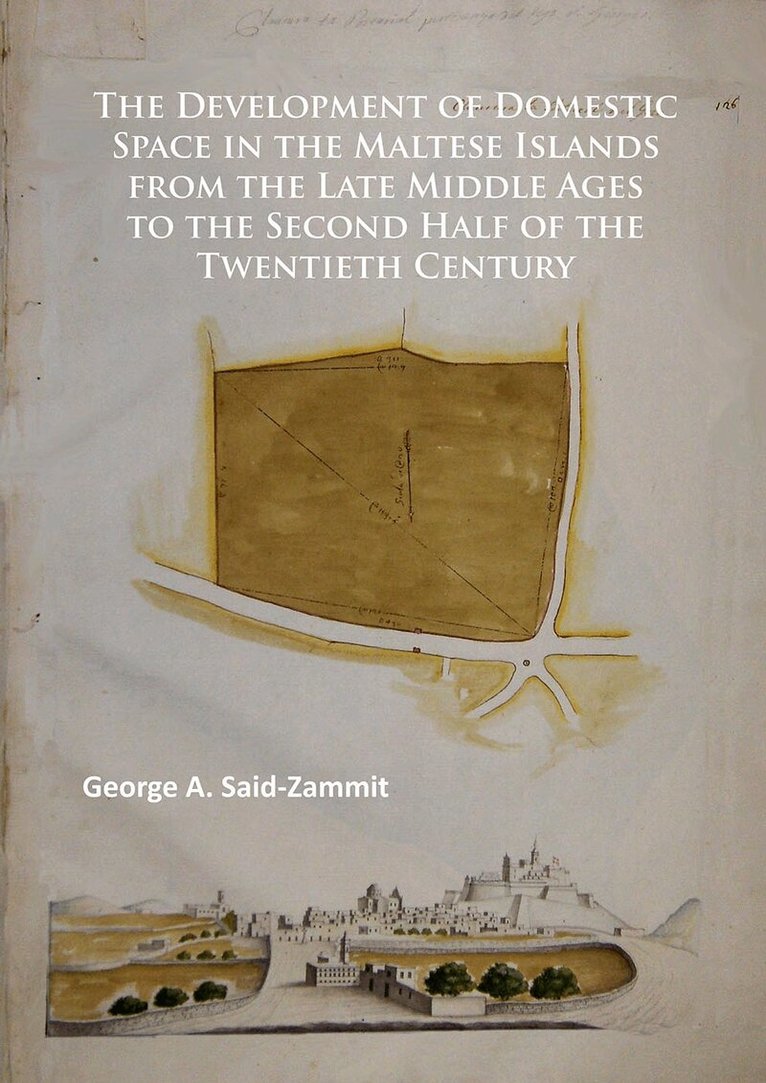
Development of Domestic Space in the Maltese Islands from the Late Middle Ages to the Second Half of the Twentieth Century
1030 kr
Skickas onsdag 28/10. Fri frakt över 249 kr.
Beskrivning
This study traces and analyses the evolution of domestic space in Maltese vernacular and ‘polite’ houses from medieval to contemporary times. The houses under review range from humble buildings of modest size, materials and design, like farmhouses or those for the less affluent towndwellers, to buildings of grand design, like townhouses and palazzi. Owing to the complex nature of the Maltese houses a combination of enquires and a variety of sources was necessary to achieve a holistic picture. This included fieldwork in different parts of the islands, extensive research work in local archives, libraries and museums, an analysis of a sample of literary sources, national censuses and works-of-art, as well as methods of spatial analysis (Space Syntax). One of the major achievements obtained in this research concerns the development of the native dwelling. The field surveys and archival research have demonstrated that the evolution of the native dwelling was very much influenced by the political, social and economic changes that occurred locally during the period under review. In particular, it was observed that architectural and stylistic changes in the elite houses occurred at a faster rate to suit fashion, in line with what occurred in other European countries, while changes in peasant houses were slower and more sporadic as these adhered to their vernacular idiom for a longer time. Houses often served as a symbol of class and social status. The dwelling’s size and architectural style, the configuration of domestic space as well as the house furniture and contents were among the main indicators which, between the late Medieval Period and the first half of the 20th century, distinguished a wealthy from a poor dwelling. Class distinction did not occur only between houses, but also within the same building, especially in the elite dwellings. Gender was also another important aspect which directly affected the upper middle and elite Maltese houses, particularly at a time when men and women had fixed roles in society. However, the restricted space by which the lower class houses were normally characterized permitted instead the mixing of genders in work and leisure. A major shift in the relationship between the family and the house occurred in the second half of the 20th century, when the social and demographic changes of this period brought more balance between the social classes. Through the available evidence, particularly the national censuses, works-of-art, literary sources and travelogues, it was also possible to acquire knowledge about various aspects related to dining fashions, dress code, health and education in the Maltese houses. The results obtained from our Space Syntax investigations have been instrumental to acquire new knowledge and to understand better the social logic of space underpinning Maltese dwellings and settlements.
Produktinformation
- Utgivningsdatum: 2016-08-15
- Mått: 205 x 290 x 21 mm
- Vikt: 1 880 g
- Format: Häftad
- Språk: Engelska
- Antal sidor: 392
- Förlag: Archaeopress
- ISBN: 9781784913915
Utforska kategorier
Betyg & recensioner
0 recensioner
Inga recensioner tillgängliga.