George A. Said-Zammit - Böcker
Visar alla böcker från författaren George A. Said-Zammit. Handla med fri frakt och snabb leverans.
4 produkter
4 produkter
Houses and Domestic Space in Seventeenth and Eighteenth Century Hospitaller Malta
Inbunden, Engelska, 2020
2 166 kr
Skickas inom 10-15 vardagar
Houses and Domestic Space in Seventeenth and Eighteenth Century Hospitaller Malta is a study concerned with a wide spectrum of early modern dwellings in Malta, ranging from palazzi and affluent residences to peasant dwellings, troglodyte houses, and hovels. The multifaceted approach adopted in this book allows houses and domestic networks to be studied not only in terms of architecture and construction materials, but also as places of human habitation where house dwellers act, react and interact in different contexts and circumstances. Dwellings are places that permit different social and economic activities, whilst providing shelter and security to the household members. Through the available sources, the houses of Hospitaller Malta are analysed in terms of their spatial properties and how they generate privacy, interaction and communication, identity, accessibility, security, visibility, movement and encounters, and, equally important, how domestic space relates to gender roles, status, and class. This work, therefore, seeks to reach a deep and nuanced understanding of domestic space and how it relates to the islands’ history and the development of their society during the seventeenth and eighteenth centuries.
Houses and Domestic Space in Seventeenth and Eighteenth Century Hospitaller Malta
Häftad, Engelska, 2022
648 kr
Skickas inom 10-15 vardagar
Houses and Domestic Space in Seventeenth and Eighteenth Century Hospitaller Malta is a study concerned with a wide spectrum of early modern dwellings in Malta, ranging from palazzi and affluent residences to peasant dwellings, troglodyte houses, and hovels. The multifaceted approach adopted in this book allows houses and domestic networks to be studied not only in terms of architecture and construction materials, but also as places of human habitation where house dwellers act, react and interact in different contexts and circumstances. Dwellings are places that permit different social and economic activities, whilst providing shelter and security to the household members. Through the available sources, the houses of Hospitaller Malta are analysed in terms of their spatial properties and how they generate privacy, interaction and communication, identity, accessibility, security, visibility, movement and encounters, and, equally important, how domestic space relates to gender roles, status, and class. This work, therefore, seeks to reach a deep and nuanced understanding of domestic space and how it relates to the islands’ history and the development of their society during the seventeenth and eighteenth centuries.
Population Land Use and Settlement on Punic Malta
A contextual analysis of the burial evidence
Häftad, Engelska, 1997
701 kr
Skickas inom 5-8 vardagar
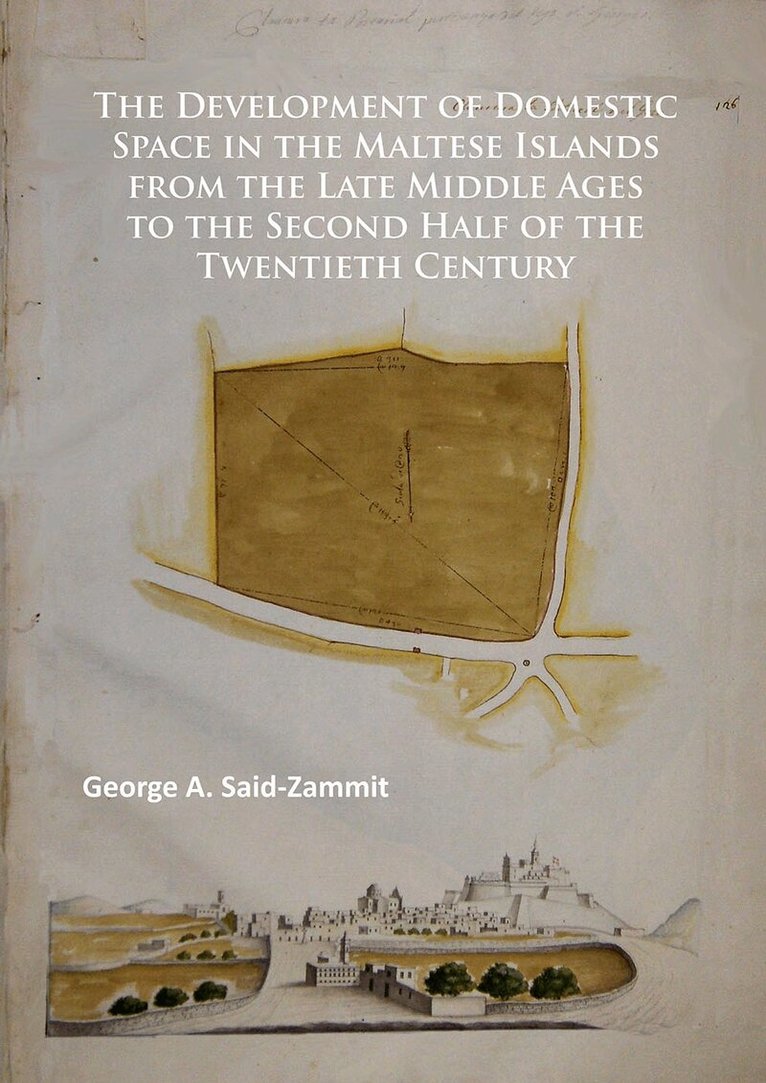
Development of Domestic Space in the Maltese Islands from the Late Middle Ages to the Second Half of the Twentieth Century
Häftad, Engelska, 2016
946 kr
Skickas
This study traces and analyses the evolution of domestic space in Maltese vernacular and ‘polite’ houses from medieval to contemporary times. The houses under review range from humble buildings of modest size, materials and design, like farmhouses or those for the less affluent towndwellers, to buildings of grand design, like townhouses and palazzi. Owing to the complex nature of the Maltese houses a combination of enquires and a variety of sources was necessary to achieve a holistic picture. This included fieldwork in different parts of the islands, extensive research work in local archives, libraries and museums, an analysis of a sample of literary sources, national censuses and works-of-art, as well as methods of spatial analysis (Space Syntax). One of the major achievements obtained in this research concerns the development of the native dwelling. The field surveys and archival research have demonstrated that the evolution of the native dwelling was very much influenced by the political, social and economic changes that occurred locally during the period under review. In particular, it was observed that architectural and stylistic changes in the elite houses occurred at a faster rate to suit fashion, in line with what occurred in other European countries, while changes in peasant houses were slower and more sporadic as these adhered to their vernacular idiom for a longer time. Houses often served as a symbol of class and social status. The dwelling’s size and architectural style, the configuration of domestic space as well as the house furniture and contents were among the main indicators which, between the late Medieval Period and the first half of the 20th century, distinguished a wealthy from a poor dwelling. Class distinction did not occur only between houses, but also within the same building, especially in the elite dwellings. Gender was also another important aspect which directly affected the upper middle and elite Maltese houses, particularly at a time when men and women had fixed roles in society. However, the restricted space by which the lower class houses were normally characterized permitted instead the mixing of genders in work and leisure. A major shift in the relationship between the family and the house occurred in the second half of the 20th century, when the social and demographic changes of this period brought more balance between the social classes. Through the available evidence, particularly the national censuses, works-of-art, literary sources and travelogues, it was also possible to acquire knowledge about various aspects related to dining fashions, dress code, health and education in the Maltese houses. The results obtained from our Space Syntax investigations have been instrumental to acquire new knowledge and to understand better the social logic of space underpinning Maltese dwellings and settlements.