• Fri frakt över 249 kr
  • •
  • Snabba leveranser
  • •
  • Billiga böcker
Kundservice

Du är på sajten för privatpersoner.

Företag, bibliotek eller offentlig verksamhet?

Du handlar på classic.bokus.com, där alla dina funktioner finns intakta.
Till classic.bokus.com
Bokus logotyp. Gå till startsidan.
  • Erbjudanden
  • Nyheter
  • Student
  • Topplistor
  • Barn & ungdom
  • Bokus Play
  • E-böcker
  • Pocketböcker
  • Spel & pussel

10% rabatt på allt med kod: NYSTART10 →

Sidfot

Mina sidor

    Hjälp

    • Kundservice
    • Vanliga frågor och svar
    • Frakt och leverans
    • Retur vid ångerrätt
    • Reklamera vara
    • Betalning
    • Köpvillkor
    • Allmänna villkor
    • Information om webbplatsens tillgänglighet

    Om Bokus

    • Om oss
    • Pressrum
    • För studenter
    • För företag
    • För bibliotek och offentlig verksamhet
    • För leverantörer
    • Hållbarhet

    Populärt

    • Aktuella erbjudanden
    • Presentkort
    • Studentlitteratur
    • Nya böcker
    • Topplistor
    • Signerade böcker
    • Engelska böcker

    Inspiration

    • Boktips
    • BookTok
    • Populära bokserier
    • Barnbokskaraktärer
    • Populära författare
    Logotyp för Bokus
    Följ oss på Facebook (extern länk)Följ oss på Instagram (extern länk)Följ oss på YouTube (extern länk)Följ oss på TikTok (extern länk)
    bokus @ CookiesAnpassa cookiesIntegritetspolicyKöpvillkor
    Till Citymail hemsida (extern länk)Till Budbee hemsida (extern länk)Till Postnord hemsida (extern länk)Till Schenker hemsida (extern länk)Till Early Bird hemsida (extern länk)Till Walleys hemsida (extern länk)
    1. Historia och arkeologi
    2. Arkeologi

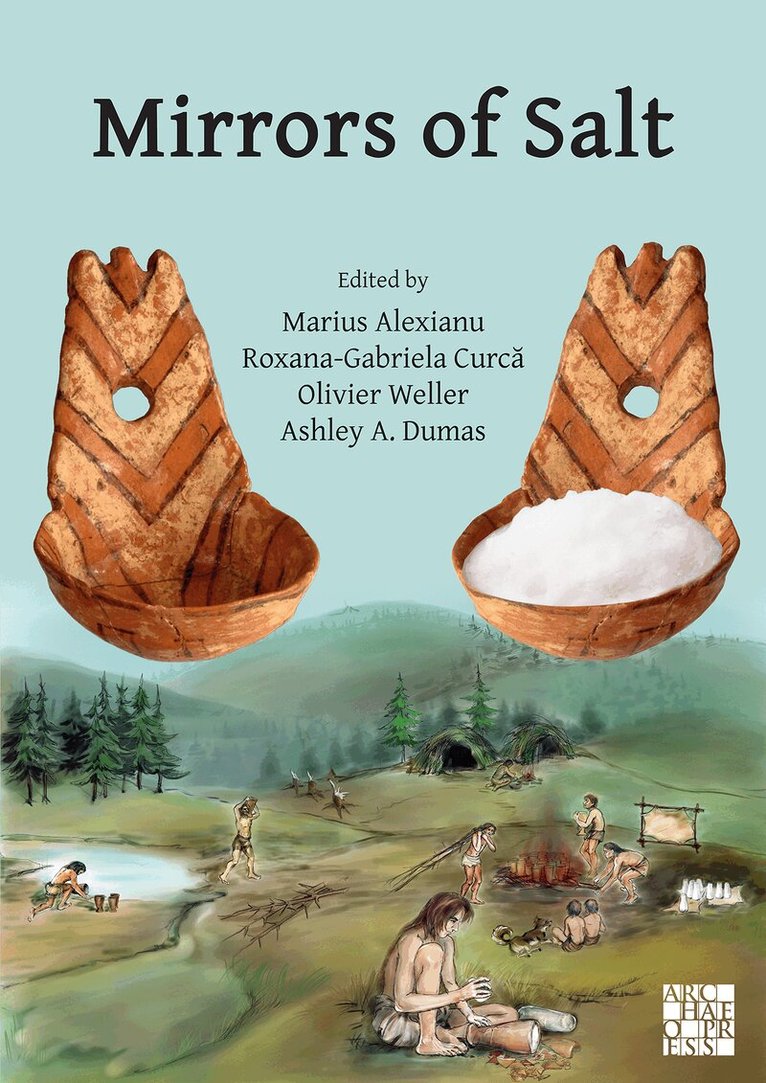
    Mirrors of Salt

    Proceedings of the First International Congress on the Anthropology of Salt: 20-24 August 2015, 'Al. I. Cuza' University, Iasi, Romania

    AvMarius Alexianu,Roxana-Gabriela Curcă

    Häftad, Engelska, 2023

    1 077 kr

    Skickas . Fri frakt över 249 kr.

    Beskrivning

    Mirrors of Salt publishes the proceedings of the First International Congress on the Anthropology of Salt, which took place at the Alexandru Ioan Cuza University in Iasi (Romania). The impact of salt on the development of human communities, from the Neolithic to the present, has generated a huge number of specialized studies. However, scientific research has become so atomized that the primordial importance of the mineral has been lost, creating a need for a holistic, comprehensive vision of the dimensions generated by salt. This can only be achieved through anthropology. The anthropology of salt encompasses the entirety of human behavior, i.e. cognitive, spiritual, pragmatic, and social reactions to salt, and provides a holistic view of its role in the evolution of human communities. The anthropology of salt thus brings salt studies from an ancillary position to an autonomous discipline. The papers in this volume are organized into six sections: theory, archaeology, history, ethnography/ ethnoarchaeology/ethnohistory, linguistics, and literature. Topics include salt in Greek and Roman antiquity, as well as from Cameroon, Georgia, Ireland, Italy, Mexico, Moldova, Mongolia, Nigeria, Peru, Romania, Spain, Sudan, Syria, Ukraine, the USA and Venezuela. The congress was organized within the project The Ethnoarchaeology of the Salt Springs and Salt Mountains from the Extra-Carpathian Areas of Romania, financed by the Government of Romania (CNCS – UEFISCDI) (2011-2016). Its theoretical novelty and geographical range render Mirrors of Salt a unique study of the world’s most-used non-metallic mineral.

    Produktinformation

    • Utgivningsdatum:2023-07-13
    • Mått:292 x 205 x 28 mm
    • Vikt:594 g
    • Format:Häftad
    • Språk:Engelska
    • Antal sidor:478
    • Förlag:Archaeopress
    • ISBN:9781784914561

    Utforska kategorier

    • Arkeologi inom Historia och arkeologi
    • Antropologi inom Samhälle och politik

    Mer om författaren

    Marius Alexianu is Senior researcher at Alexandru Ioan Cuza University of Iasi, Romania. His research interests encompass ethnoarchaeology and the anthropology of salt. He has published the first study on the concept of the anthropology of salt and is the author of the book chapter Ethnoarchaeology of Salt in Romania, published in the Encyclopedia of Global Archaeology, edited by Claire Smith (2nd ed. 2020).Roxana-Gabriela Curcă is Associate Professor at Alexandru Ioan Cuza University of Iasi, Romania. She specializes in ancient history, Classical philology and the ethnography of salt. She has published on the correlation between ancient Greek/Latin texts and current practices in Moldova in the field of halotherapy.Olivier Weller is a researcher at the CNRS (UMR 8215 Trajectoires, CNRS-Université Panthéon-Sorbonne, Paris, France). His research concerns the archaeology of salt and the origins of its production in Europe, from the Neolithic period onwards, through exploitation techniques, uses and socio-economic issues. The approaches developed are technological (ceramics), ethnoarchaeological, paleoenvironmental, physicochemical and geomatic. His studies have been developed from Europe (France, Spain, Germany, Poland, Romania, Moldavia, Bulgaria) to Oceania (New Guinea, Tonga). He is currently director of the Trajectories laboratory (2019-2024).Ashley A. Dumas is Associate Professor of Anthropology at the University of West Alabama. She is a specialist in the late precolonial period of the Southeastern USA. She is the editor, with Paul N. Eubanks of Salt in Eastern North America and the Caribbean: History and Archaeology (2021).

    Innehållsförteckning

    • Foreword – Marius Alexianu ; Theoretical ApproachesSalt: Anthropology of a Quasi Amethodic Topic. Some Thoughts – Marius AlexianuThe ‘Sapientia’ of Salt – Michele Zuppi, Paolo Zuppi, Elisabetta Rossi ArchaeologyThe Qraya Salt Experiment. Reenacting Salt Production Processes of Protohistoric Mesopotamia – Beatrice Hopkinson, Giorgio BuccellatiResearch on the use of Hallstatt’s stone axes: Study of mechanics – Alfons Fíguls, Kerstin Kowarik, Hans ReschreiterConsiderations on Salt Exploitation in Bukovina, from Prehistory to Modern Times – Mugur Andronic, Bogdan P. NiculicăUnique Cucuteni Artefacts Used in the Salt Recrystallization Process – Constantin PreoteasaThe Exploitation and Control of Salt Sources from the Early Neolithic to Late Antiquity. Case study: Oglinzi - Băi area (Neamț County, Romania) – Vasile Diaconu, Gheorghe Dumitroaia(†)A Tiny Story About Salt, Herding and Landscape in Chalcolithic and Late Bronze Age Eastern Romania – Neculai Bolohan, Luminița BejenaruA Technological Approach to the Production Sequence at the Beaker Brine-Boiling Site of Molino Sanchón II (Villafáfila, Zamora, Spain): Some Hypotheses about the Moulding of Salt using Organic Containers – Elisa Guerra-Doce, Francisco Javier Abarquero-Moras, Germán Delibes-de CastroAssessing the Role of Salt in the Spread of the Beaker Phenomenon across Western Europe during the Third Millennium BC – Elisa Guerra-Doce‘Reddish olle’ and Production and Use of Salt: an Open Question – Tomaso Di FraiaSalt in Southwest Germany at the End of the Iron Age – Martin HeesSalt Control and Distribution in the Southern Part of Eastern Carpathians. A Story of a Lost Dacian Hillfort – Dan Ștefan, Bogdan CiupercăGeophysical Prospections in the Area of the Salt Mine at Sânpaul – Alexandru PopaSalt Production as a Reflection of Inter-Ethnic Contact and Culture Change during Late Prehistory (AD 800-1100) in South Alabama, United States – Ashley A. DumasRecent Archaeology of Salt in Southeastern North America – Ashley A. DumasTowards an Archaeology of Salt Production in Ireland – Wes Forsythe, Rosemary McConkey, Colin BreenThe Vall Salina: More than 6500 years of Halite Exploitation. Cardona, the Salt of History – Alfons Fíguls, Olivier Weller, Thomas Xaver Schuhmacher, Mireia Martínez, Raül Segarra, Rosa M. Lanaspa, Marc Cots, Aitor HenestrosaWhere the Salt ‘Kerns’: Historical Archaeological Investigations at the Saltpans of the Venezuelan Islands, 17th–19th Century – Konrad A. Antczak HistorySalt Outlets: Which Statistical Profiles in the Roman Empire? – Bernard M. MoinierUnderground Waters as a Source of Salt: Reflections on the Technological Variations of their Use in the South of Mexico – Blas R. Castellón HuertaSalt ‘Roads’ in Moldavia by the 18th Century: Production, Transportation and Consumption – Mihai-Cristian Amăriuţei, Ludmila Bacumenco-Pîrnău, Luminița BejenaruA Less Known Practice: Making Salt Cakes in Wooden Vessels. The Testimony of a Foreign Traveller to Moldavia – Vasile Diaconu, Roxana DiaconuOrganization and Functioning of the Salt Extracting Industry in Bessarabia (1812-1850) – Andrei EmilciucFrom Blessing to Punishment: The Salt Issue within the Romanian Landscape in the 19th Century as Seen by Foreign Travellers – Mircea-Cristian GhengheaUse of Salt in the Christian Church of Late Antiquity: Literary and Archaeological Evidence – Ioan IaţcuThe First Systematic Research on the Salt Springs of Bukovina: an Austrian Report from 1783 – Vasile Diacon Ethnography, Ethnoarchaeology, EthnohistoryAnthropological Studies of Salt in Mexico in the Last 20 Years: An Overview – Blas R. Castellón HuertaHuixtocíhuatl. Goddess of Salt – Martha Monzón FloresMaking Salt in Maras (Cusco, Peru): Traditional Salt Production Systems in the Context of Heritage Economy – Oriol BeltranSalt: a Crucial Feature of Mongolian Nomadism Success – Francesca LugliThe Role of the Oasis of Selima (Sudan) in the Long Distance Trade of Salty Rocks in the Sudanese Western Desert in the 19th and 20th Centuries – Franck Derrien, Coralie GradelUsage of Salt in Therapy and as a Magical Cure among Mongolian Ethnic Groups – Dulam SendenjavSalt in Georgia – Manana OdisheliSalt, History and Culture in the Western Grasslands of Cameroon – Henry Kam KahUnity of Sacred and Profane in the Traditional Salt Industry of the Okposi Igbo of South-Eastern Nigeria – Peter-Jazzy EzehSalt in the Traditions of the Romanians. Notes for the Intangible Heritage in Dâmbovița County – Ana IlieTraditional Use of Natural Brine. Ethnoarchaeological Research in the Subcarpathian Area of Romania – Felix-Adrian Tencariu, Andrei Asăndulesei, Marius AlexianuSalt Symbolism in the Work of Elena Niculiță-Voronca – Mihaela AsănduleseiUkrainian Traditional Salt Traders (‘Chumaks’) in the North of the Sea of Azov (Case Study of Berdyansk Area) – Igor Lyman, Victoria Konstantinova LinguisticsGermanic Lexical Evidence that Clarifies the Multiple Meanings of the Old European Root *sal- – Adrian Poruciuc, Norbert PoruciucImagery of Salt in Romanian Phraseology. Cultural Aspects (Romania) – Petronela SavinThe Morphosyntax of Salt-Related Words, Idioms, Similes and Proverbs in English and Romanian – Ileana Oana MacariMorphonyms Related to ‘Slatină’ and ‘Slătioară’ in Eastern Romania – Mihaela AsănduleseiThe Biography of the Romanian Expression a făgădui marea cu sarea (Romania) – Petronela Savin LiteratureBlack Sea Salinity as a Reflection of Environmental and Climate Conditions in Ovid’s Poems During the Exile Period in Tomis (SE Romania) – Roxana-Gabriela Curcă, Alin Mihu-PintilieSalt in Ancient Opsartytikón Literature – Mihaela ParaschivLatin Testimonies on the Exploitation of Salt in 17th–18th Century Moldavia – Claudia Tărnăuceanu