• Fri frakt över 249 kr
  • •
  • Snabba leveranser
  • •
  • Billiga böcker
Kundservice

Du är på sajten för privatpersoner.

Företag, bibliotek eller offentlig verksamhet?

Du handlar på classic.bokus.com, där alla dina funktioner finns intakta.
Till classic.bokus.com
Bokus logotyp. Gå till startsidan.
  • Erbjudanden
  • Student
  • Topplistor
  • Barn & ungdom
  • Bokus Play
  • Bokus Play
  • E-böcker
  • Ljudböcker
  • Pocketböcker
  • Spel & pussel

10% rabatt på allt med kod NYSTART10 →

Sidfot

Mina sidor

    Hjälp

    • Kundservice
    • Vanliga frågor och svar
    • Frakt och leverans
    • Retur vid ångerrätt
    • Reklamera vara
    • Betalning
    • Köpvillkor
    • Allmänna villkor
    • Information om webbplatsens tillgänglighet

    Om Bokus

    • Om oss
    • Pressrum
    • För studenter
    • För företag
    • För bibliotek och offentlig verksamhet
    • För leverantörer
    • Hållbarhet

    Populärt

    • Aktuella erbjudanden
    • Presentkort
    • Studentlitteratur
    • Nya böcker
    • Topplistor
    • Signerade böcker
    • Engelska böcker

    Inspiration

    • Boktips
    • BookTok
    • Populära bokserier
    • Barnbokskaraktärer
    • Populära författare
    Logotyp för Bokus
    Följ oss på Facebook (extern länk)Följ oss på Instagram (extern länk)Följ oss på YouTube (extern länk)Följ oss på TikTok (extern länk)
    bokus @ CookiesAnpassa cookiesIntegritetspolicyKöpvillkor
    Till Citymail hemsida (extern länk)Till Budbee hemsida (extern länk)Till Postnord hemsida (extern länk)Till Schenker hemsida (extern länk)Till Early Bird hemsida (extern länk)Till Walleys hemsida (extern länk)
    1. Naturvetenskap och teknik
    2. Geovetenskap
    3. Miljövetenskap och miljöpolitik

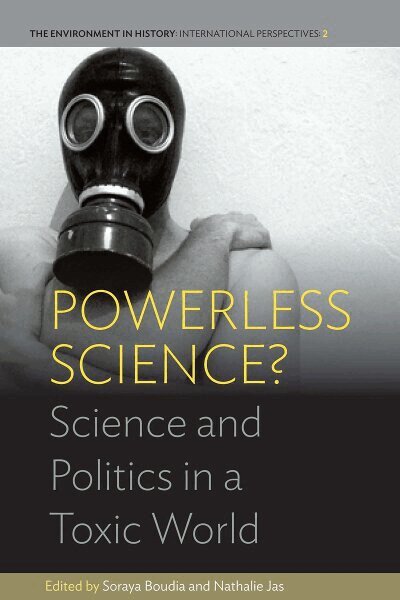
    Powerless Science?

    Science and Politics in a Toxic World

    AvSoraya Boudia,Nathalie Jas

    Häftad, Engelska, 2016

    Del i serien Environment in History: International Perspectives

    499 kr

    Beställningsvara. Skickas inom 3-6 vardagar. Fri frakt över 249 kr.

    Beskrivning

    In spite of decades of research on toxicants, along with the growing role of scientific expertise in public policy and the unprecedented rise in the number of national and international institutions dealing with environmental health issues, problems surrounding contaminants and their effects on health have never appeared so important, sometimes to the point of appearing insurmountable. This calls for a reconsideration of the roles of scientific knowledge and expertise in the definition and management of toxic issues, which this book seeks to do. It looks at complex historical, social, and political dynamics, made up of public controversies, environmental and health crises, economic interests, and political responses, and demonstrates how and to what extent scientific knowledge about toxicants has been caught between scientific, economic, and political imperatives.

    Produktinformation

    • Utgivningsdatum:2016-01-01
    • Mått:152 x 229 x 18 mm
    • Vikt:395 g
    • Format:Häftad
    • Språk:Engelska
    • Serie:Environment in History: International Perspectives
    • Antal sidor:290
    • Förlag:Berghahn Books
    • ISBN:9781785331985

    Utforska kategorier

    • Miljövetenskap och miljöpolitik inom Naturvetenskap och teknik

    Mer om författaren

    Soraya Boudia is Professor of Sociology at Université Paris Descartes (Sorbonne Paris Cité). Her scholarly work focuses on the transnational government of technological and health environmental risks. She has co-authored a special issue of History and Technology, “Risk and risk Society in Historical Perspective” (2007), and Toxicants, Health and Regulations Since 1945 (Pickering & Chatto, 2013), both with Nathalie Jas.

    Recensioner i media

    “Each chapter is written by an authority on the topic and contains primary bibliographic sources.  Overall, the scientific content is accurate and free of obvious partiality.” · Choice“The editors did a heroic job of assembling and connecting a group of articles from contributors active in interdisciplinary research and studies. They span multiple disciplines (sociology, history, philosophy, economics, and political science), assorted methodologies, different time frames, venues, and geographies… In summary, the absence of knowledge has powerfully shaped the history and social organization of our toxic world. And for this reason, Powerless Science? merits reading and reflective rereading.” · International Social Science Review“The book will be of interest to the new wave of anthropological studies on toxic contamination and will open the door for researchers and practitioners to actively reimagine what a regulatory apparatus that is de-centered from science might look like.” · Medical Anthropology Quarterly“The editors of Powerless Science? were successful in overcoming the problem of disparate narratives, ever present in edited collections, especially those dealing with interdisciplinary themes. Although the book embraces different approaches… the diverse perspectives offer different faces of a common research object… [and] provides an extremely rich introduction… The book has also benefited from… the proven professional skills of the authors, all of whom are renowned scholars with successful careers in their respective perspectives on regulatory science.” · AMBIX“This volume makes a useful companion for  understanding the institutional histories and practices that assist in limiting or allowing, ignoring or acknowledging, toxic exposures.” · Medicine Anthropology Theory“…the empirical payload of the collection…is substantial. The book will be of interest to the new wave of anthropological studies on toxic contamination and will open the door for researchers and practitioners to actively reimagine what a regulatory apparatus that is de-centered from science might look like.” · Medical Anthropology Journal“This is an innovative, very well organized and overall well written book on one of the most pressing issues of today’s society: the way chemicals contaminate the environment, and how we deal with it… most of the chapters cleverly combine the case study approach with universal features. It is surprising how well this works, both in the chapters and in the book at large.” · Carsten Reinhardt, CEO and President of the Chemical Heritage Foundation, Philadelphia

    Innehållsförteckning

    • List of FiguresAcknowledgementsIntroduction: Greatness and Misery of Science in a Toxic WorldSoraya Boudia and Nathalie JasPART I: KNOWLEDGE, EXPERTISE AND THE TRANSFORMATIONS IN REGULATORY SYSTEMSChapter 1. Precaution and the History of Endocrine DisruptorsNancy LangstonChapter 2. The Political Life of Mutagens: A History of the Ames TestAngela N. H. CreagerChapter 3. DES, Cancer and Endocrine Perturbation: Ways of Regulating, Chemical Risks and Public Expertise in the United StatesJean-Paul GaudillièreChapter 4. Managing Scientific and Political Uncertainty. Environmental Risk Assessment in an Historical PerspectiveSoraya BoudiaPART II: ACTIVISM AND NON-ACTIVISM: ALTERNATIVE USES OF KNOWLEDGEChapter 5. Work, Bodies, Militancy: the “Class Ecology” Debate in 1970s ItalyStefania BarcaChapter 6. What Kind of Knowledge is Needed about Toxicant- Related Health Issues? Some Lessons Drawn from the Seveso DioxinLaura CentemeriChapter 7. From Suspicious Illness to Policy Change in Petrochemical Regions: Popular Epidemiology, Science and the Law in the U.S. and ItalyBarbara AllenChapter 8. Guinea Pigs go to Court. Epidemiology and Class Actions in TaiwanPaul Jobin and Yu-Hwei TsengPART III: PUTTING KNOWLEDGE, IGNORANCE, AND REGULATIONN INTO PERSPECTIVEChapter 9. Reckless Laws, Contaminated People: Science Reveals Legal Shortcomings in Public Health ProtectionsCarl CranorChapter 10. Untangling Ignorance in Environmental Risk AssessmentScott Frickel and Michelle EdwardsChapter 11. Low Dose Toxicology: Narratives from the Science-Transcience InterfaceSheldon KrimskyChapter 12. Unruly Technologies and Fractured Oversight: Towards a Model for Chemical Control for the Twenty First CenturyJody A. RobertsList of ContributorsIndex