• Fri frakt över 249 kr
  • •
  • Snabba leveranser
  • •
  • Billiga böcker
Kundservice

Du är på sajten för privatpersoner.

Företag, bibliotek eller offentlig verksamhet?

Du handlar på classic.bokus.com, där alla dina funktioner finns intakta.
Till classic.bokus.com
Bokus logotyp. Gå till startsidan.
  • Erbjudanden
  • Nyheter
  • Student
  • Topplistor
  • Barn & ungdom
  • Bokus Play
  • E-böcker
  • Pocketböcker
  • Spel & pussel

10% rabatt på allt med kod: NYSTART10 →

Sidfot

Mina sidor

    Hjälp

    • Kundservice
    • Vanliga frågor och svar
    • Frakt och leverans
    • Retur vid ångerrätt
    • Reklamera vara
    • Betalning
    • Köpvillkor
    • Allmänna villkor
    • Information om webbplatsens tillgänglighet

    Om Bokus

    • Om oss
    • Pressrum
    • För studenter
    • För företag
    • För bibliotek och offentlig verksamhet
    • För leverantörer
    • Hållbarhet

    Populärt

    • Aktuella erbjudanden
    • Presentkort
    • Studentlitteratur
    • Nya böcker
    • Topplistor
    • Signerade böcker
    • Engelska böcker

    Inspiration

    • Boktips
    • BookTok
    • Populära bokserier
    • Barnbokskaraktärer
    • Populära författare
    Logotyp för Bokus
    Följ oss på Facebook (extern länk)Följ oss på Instagram (extern länk)Följ oss på YouTube (extern länk)Följ oss på TikTok (extern länk)
    bokus @ CookiesAnpassa cookiesIntegritetspolicyKöpvillkor
    Till Citymail hemsida (extern länk)Till Budbee hemsida (extern länk)Till Postnord hemsida (extern länk)Till Schenker hemsida (extern länk)Till Early Bird hemsida (extern länk)Till Walleys hemsida (extern länk)
    1. Ekonomi och Ledarskap
    2. Företagsekonomi
    3. Affärsutveckling

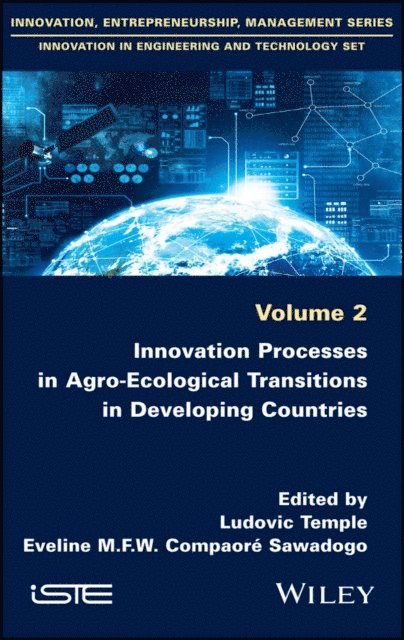
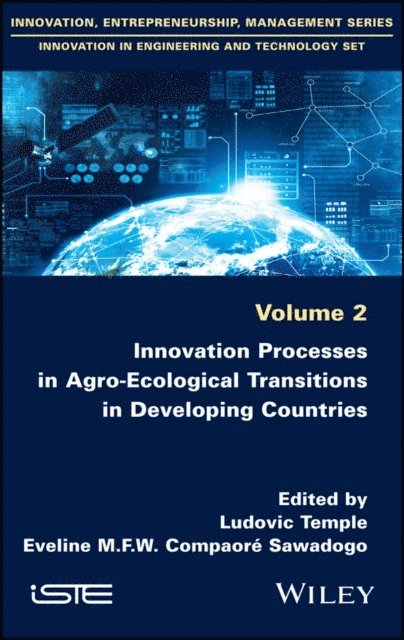
    Innovation Processes in Agro-Ecological Transitions in Developing Countries

    AvLudovic Temple,Eveline M. F. W. Compaore Sawadogo

    Inbunden, Engelska, 2018

    1 859 kr

    Beställningsvara. Skickas inom 5-8 vardagar. Fri frakt över 249 kr.

    Beskrivning

    This book investigates the interactions between different shifts in innovation models. It underlines ecological conditions and production intensification in the agriculture sector. In total six innovation processes were analyzed in different countries such as Burkina Faso, Cameroon, Haiti, Madagascar and Senegal. The similarities between these case studies are that they all demonstrate that sustainable and sufficient network between actors of the innovation are particularly useful for the development of agricultural innovation systems. The different papers demonstrate that there is a need for more commitment of public policy in innovation processes.

    Produktinformation

    • Utgivningsdatum:2018-03-28
    • Mått:163 x 239 x 18 mm
    • Vikt:431 g
    • Format:Inbunden
    • Språk:Engelska
    • Antal sidor:208
    • Förlag:ISTE Ltd and John Wiley & Sons Inc
    • ISBN:9781786302724

    Utforska kategorier

    • Affärsutveckling inom Ekonomi och Ledarskap

    Mer om författaren

    Ludovic Temple, Consultant. Eveline Compaoré Sawadogo, Institute for Environment and Agricultural Research (INERA Burkina Faso), Burkina Faso.

    Innehållsförteckning

    • Foreword xiMichel GRIFFONIntroduction xiiiLudovic TEMPLE and Eveline M.F.W COMPAORÉ SAWADOGOChapter 1 Innovation Platforms as a Tool to Support Technological Change in the Agri-Food Sector in Developing Countries:A Case Study of the Plantain Value Chain in Côte d'Ivoire 1Euphrasie C.M ANGBO-KOUAKOU, Ludovic TEMPLE, Syndhia MATHÉ and Alexandre ASSEMIEN1.1 Introduction 11.2 Technological innovations in the Ivorian plantain sector 41.2.1 Development of plantain cultivar transfers 41.2.2 History of the WAAPP plantain program 51.2.3 Innovation platform features: objectives, composition and governance 61.3 Conceptual and methodological framework 101.3.1 SIS: framework for analyzing technological changes based on the strategies of stakeholders in agri food chains 101.3.2 Conceptualization of the four components of an AIS 111.3.3 Methodological and analytical framework 131.4 Results 171.4.1 Functionality of Côte d'Ivoire's PIPs 171.4.2 Reorganization of the AIS components by PIPs 171.4.3 Redirecting technological trajectories in the plantain sector in Côte d'Ivoire 181.5 Discussion of the functionalities of the system and IAs 201.5.1 Functionalities of the agricultural SIS for the plantain sector in Côte d'Ivoire 201.5.2 IAs and changes 211.5.3 Renewal of technological innovation processes 211.6 Conclusion 221.7 Bibliography 23Chapter 2 Biotechnological Cotton in Burkina Faso:An Innovation Trajectory in a Development Context 29Eveline M.F.W COMPAORÉ SAWADOGO2.1 Introduction 292.2 The rise of biotechnological cotton within a context of persistent development problems 332.3 Institutional mechanisms that led to the adoption of biotechnological cotton innovation in Burkina Faso 342.4 Identification of the actors and their place in the Bt innovation trajectory 352.4.1 Cotton producers 352.4.2 Cotton industries 362.4.3 Cotton researchers 362.4.4 Civil society 372.4.5 The government of Burkina Faso 372.5 Stabilization of the Bt cotton adoption process 422.6 Discussion and conclusion on the failure of Bt cotton in Burkina Faso 432.7 Bibliography 45Chapter 3 Emergence of a Biofuel Innovation System and Production in Burkina Faso: An Analysis of the Determinants and Challenges for its Development 51Salif DERRA and Ludovic TEMPLE3.1 Introduction 513.2 Methodology 523.2.1 Analytical framework 523.2.2 Data collection 553.3 Defining the biofuel innovation and production system 563.4 Incentives for the emergence of the actor system 583.4.1 Biofuel support policies 583.4.2 Increased funding for biofuels research 593.4.3 Financing of biofuel production projects 603.5 Functional analysis of the biofuel innovation and production system 603.5.1 Creation of a platform for capacity-building 603.5.2 Functioning of the biofuels sector in Burkina Faso 613.5.3 Biofuel development models 623.6 The failures of the biofuel innovation and production system 633.6.1 Insufficient knowledge on the consequences of technological choices 633.6.2 Poor interaction within the actor network 643.6.3 Lack of regulatory frameworks and standards 643.6.4 Apprehension from national and international civil society 653.7 Conclusion 653.8 Bibliography 66Chapter 4 Trajectories of Innovation in Conservation Agriculture at Lake Alaotra in Madagascar 71Eric PENOT, Valentin FEVRE and Patricia FLODROPS4.1 Introduction 714.2 The problem 734.3 Methodology 754.4 Status report on the adoption of CA in 2013 764.5 Developments in farming practices and innovations in CA 794.6 A wide variety of growing systems among the early adopters 804.7 Learning, innovation co-design and IS 824.7.1 Learning and recombination of knowledge 824.7.2 Empirical example of an evolution towards co-construction of systems 824.7.3 Toward innovation comanagement 834.8 Contrasting behaviors after project shutdown 844.9 Conclusion 874.10 Bibliography 91Chapter 5 Ecological Transition of an Innovation Model: Yam Seed Production in Haiti 95James BOYER and Ludovic TEMPLE5.1 Introduction 955.2 Conceptual and methodological frameworks 975.2.1 Yam production in Haiti 975.2.2 Methodology and data collection 975.2.3 A three-phase mechanism for collecting data and validating results 985.3 The diffusionist attempt to transfer Miniset technology in Haiti 1005.3.1 Emergence of the Miniset technique in Haiti 1005.3.2 Orientation based on external research and exogenous elements 1005.3.3 The diffusionist model's failed attempt at adapting 1025.3.4 Co-constructing adoption: adapting the technology to green the process 1045.4 From adoption results to the socioeconomic impacts of Miniset 1075.4.1 Evolution of the adoption rate 1075.4.2 Impact on production 1075.5 Discussion of the conditions for changing an innovation model 1095.5.1 Miniset: the failure of linear and diffusionist innovation models 1095.5.2 Miniset: a positive contribution to agro-ecological innovation 1105.5.3 Miniset: a reaffirmation of the importance of action research 1115.6 Conclusion 1115.7 Appendix: characteristics of surveyed areas 1135.8 Bibliography 115Chapter 6 Diversity of Innovation Processes in the Niayes Market Gardening System (Senegal): Between Conventional Intensification and Agro-Ecological Transition 117Patrick DUGUÉ, Isabelle MICHEL, Victor KETTELA and Serge SIMON6.1 Introduction 1176.2 Theoretical position 1196.3 Methodology 1206.3.1 Context 1206.3.2 Combination of methods 1226.4 Results: diversity of technical innovation processes 1246.4.1 Adoption and adaptation of an innovation from large capital-intensive farms: drip irrigation and electric pumping 1246.4.2 An innovation process led by a development operator: the use of biopesticides and organic manure 1256.4.3 Poorly visible innovations carried forward by market gardeners 1286.5 Discussion 1316.5.1 Recognizing the innovation capacities of farmers 1316.5.2 Why should agronomists be interested in farming innovation? 1326.5.3 How to support innovation processes? 1356.6 Conclusion 1366.7 Bibliography 137Chapter 7 Food Challenges in Africa 141Jean-Marc BOUSSARD7.1 Food challenge in Africa 1417.2 How to improve the food production capacity of sub-Saharan Africa 1437.3 Difficulty in raising capital 1457.4 Agricultural prices south of the Sahara 1497.5 Reasons for agricultural price volatility in Africa 1527.6 The "endogenous" causes of price instability 1557.7 Conclusion and implications for agricultural policies 1597.7.1 Improving infrastructure 1607.7.2 Input subsidies 1617.7.3 Price stabilization 1637.8 Bibliography 165List of Authors 167Index 169