• Fri frakt över 249 kr
  • •
  • Snabba leveranser
  • •
  • Billiga böcker
Kundservice

Du är på sajten för privatpersoner.

Företag, bibliotek eller offentlig verksamhet?

Du handlar på classic.bokus.com, där alla dina funktioner finns intakta.
Till classic.bokus.com
Bokus logotyp. Gå till startsidan.
  • Erbjudanden
  • Nyheter
  • Student
  • Topplistor
  • Barn & ungdom
  • Bokus Play
  • E-böcker
  • Pocketböcker
  • Spel & pussel

10% rabatt på allt med kod NYSTART10 →

Sidfot

Mina sidor

    Hjälp

    • Kundservice
    • Vanliga frågor och svar
    • Frakt och leverans
    • Retur vid ångerrätt
    • Reklamera vara
    • Betalning
    • Köpvillkor
    • Allmänna villkor
    • Information om webbplatsens tillgänglighet

    Om Bokus

    • Om oss
    • Pressrum
    • För studenter
    • För företag
    • För bibliotek och offentlig verksamhet
    • För leverantörer
    • Hållbarhet

    Populärt

    • Aktuella erbjudanden
    • Presentkort
    • Studentlitteratur
    • Nya böcker
    • Topplistor
    • Signerade böcker
    • Engelska böcker

    Inspiration

    • Boktips
    • BookTok
    • Populära bokserier
    • Barnbokskaraktärer
    • Populära författare
    Logotyp för Bokus
    Följ oss på Facebook (extern länk)Följ oss på Instagram (extern länk)Följ oss på YouTube (extern länk)Följ oss på TikTok (extern länk)
    bokus @ CookiesAnpassa cookiesIntegritetspolicyKöpvillkor
    Till Citymail hemsida (extern länk)Till Budbee hemsida (extern länk)Till Postnord hemsida (extern länk)Till Schenker hemsida (extern länk)Till Early Bird hemsida (extern länk)Till Walleys hemsida (extern länk)
    1. Psykologi och pedagogik
    2. Pedagogik
    3. Pedagogisk teori och filosofi

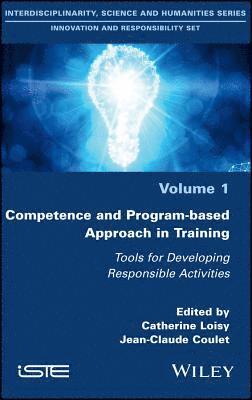
    Competence and Program-based Approach in Training

    Tools for Developing Responsible Activities

    AvCatherine Loisy,Jean-Claude Coulet

    Inbunden, Engelska, 2018

    1 750 kr

    Beställningsvara. Skickas inom 5-8 vardagar. Fri frakt över 249 kr.

    Beskrivning

    The controversies that have developed in recent years in the field of education and training around program and competency-based approaches are not without reminiscent of those which are at the origin of a reflection on the question of methods to monitor, control, organize and shape innovation in science and technology "and led to the emergence of the notion of responsibility for innovation and research "(Pellé & Reber, 2015). This book is clearly part of this type of approach. Starting from a current state of play on the issues and controversies raised by curricular and competency-based approaches (Chapters 1 and 2), this book aims at presenting new theoretical frameworks, allowing to account for the processes implied by the implementation of these pedagogical innovations and, in particular, those which, at the very heart of the skills mobilized, promote a "responsibility" dimension. Based on a developmental approach to individual and collective competencies and their evaluation (Chapters 3, 4 and 5), it attempts to show how this approach can mobilize educational practices on strong societal issues, such as "sustainable development "(Chapter 5). Lastly, it aims to provide theoretical and practical benchmarks to help engage educational teams and institutions in these innovative and responsible approaches by providing a coherent framework for doing so (Chapters 6, 7 and 8).

    Produktinformation

    • Utgivningsdatum:2018-09-21
    • Mått:155 x 236 x 23 mm
    • Vikt:590 g
    • Format:Inbunden
    • Språk:Engelska
    • Antal sidor:304
    • Förlag:ISTE Ltd and John Wiley & Sons Inc
    • ISBN:9781786303042

    Utforska kategorier

    • Pedagogisk teori och filosofi inom Psykologi och pedagogik

    Mer om författaren

    Catherine LOISY, Ecole normale supérieure de Lyon (ENSL), Institut français de l'éducation (IFÉ).Jean-Claude COULET, Chercheur associé, CRPCC Université Rennes 2 et Open Lab. Exploration Innovation, CRCGM Université d'Auvergne.

    Innehållsförteckning

    • Foreword xiBernard REBERPreamble xviiCatherine LOISY and Jean-Claude COULETIntroduction xixCatherine LOISY and Jean-Claude COULETChapter 1 Program-based Approach, Curriculum and Competency-based Approach: Sense and Nonsense in the Light of Neoliberalism 1Yves LENOIR1 1 Introduction 11 2 The program-based approach 21 2 1 Its origins and context of its deployment in international assistance 21 2 2 The transfer of the concept to education 51 3 The PBA, the course of study and curriculum: differences and similarities 61 3 1 The PBA: a rejection of the concept of course of study 61 3 2 The PBA and the curriculum 71 3 3 Two distinct socio-educational logics 101 4 Attributes of the program-based approach 151 4 1 Positive attributes 151 4 2 A program-based approach for what school education purposes? 211 5 Conclusion 341 6 References 36Chapter 2 Can a Competency-based Curriculum be a Humanistic Curriculum? 57Xavier ROEGIERS2 1 Introduction: challenges 572 2 Competency: a polysemic term 572 3 What is a humanistic curriculum? 592 3 1 Empowerment goals 612 3 2 Work for common good 632 4 What is a humanistic curriculum? 632 4 1 Awareness level of school challenges 632 4 2 Promotion of citizen awareness, rather than citizen submission 652 4 3 Progressive changes rather than radical changes 662 4 4 Explicit rather than implicit course of study 662 4 5 Choice, implicit or explicit, of graduate attributes 672 4 6 Prioritize the issue of meaning 672 4 7 Prioritize actions over speeches 682 4 8 Being clear with the status of innovations introduced 702 4 9 A consistent and long-term evaluation consideration for reform rather than a short-term, diffuse evaluation policy 712 5 Can a competency-based curriculum be humanistic? 722 5 1 Effectiveness at the benefit of meaning 732 5 2 Equity for itself, but also for more efficiency 752 5 3 What can be done for a humanistic curriculum? 772 6 Conclusion 782 7 References 78Chapter 3 Developing Competencies: Theoretical Detour in Favor of a Humanistic-based Competency Approach 81Jean-Claude COULET3 1 Introduction 813 2 A competency model 823 2 1 Main limitations of the literature data 823 2 2 Presentation of MADDEC 833 3 MADDEC's interest in the implementation of a CBA 853 3 1 Elucidating the relationships between competencies and knowledge 853 3 2 The formalization of competencies 863 3 3 Procedures for guiding the development of competencies 903 4 Towards the building of a collective competency 933 4 1 Implementation of the CBA: a productive activity 943 4 2 Implementation of the CBA: a constructive activity 963 5 Conclusion 963 6 References 97Chapter 4 A Developmental Perspective of Competency Assessment 101Christian CHAUVIGNÉ4 1 Introduction 1014 2 Competency: an assessment object that is difficult to grasp 1024 2 1 Convergence in the concepts of competency 1024 2 2 Scheme as a model of intelligibility 1034 2 3 Competency: its properties and resources 1044 2 4 Subtle assessment of an elusive and changing object 1054 3 The need for a reference system characterized by its incompleteness 1064 3 1 Identification and description of reference competencies 1074 3 2 Co-developed reference system 1104 3 3 Non-exhaustive and scalable reference system 1114 4 Building a cluster of relevant indicators 1124 4 1 Observable fields 1124 4 2 Methodological conjugation 1144 4 3 Qualitative approach 1154 5 Adaptability, main focus of competency assessment 1164 5 1 Adaptability assessment 1164 5 2 From the analysis of uncertainty to acceptability judgment 1174 6 Development, challenge and end purpose of assessment 1184 6 1 Classifying versus dynamic use of value attribution 1194 6 2 An assessment participating in learning 1204 7 Conclusion 1214 8 References 122Chapter 5 Anchoring Social and Environmental Responsibilities in Educational and Training Practices 125Jean-Claude COULET5 1 Introduction 1255 2 Reference theoretical models 1285 2 1 Need to define the concept of competency 1285 2 2 Modeling the dynamics of the evolution of competencies within organizations and territories 1345 3 Operational tools 1385 3 1 Implementing change within the activity of organizations and territories 1385 3 2 Initiating change within education and training activities 1455 4 Conclusion 1515 5 References 153Chapter 6 Program-based Approach in Teacher Development Perspective 157Catherine LOISY6 1 Introduction 1576 2 Implementation of the PBA in France 1596 2 1 The Bologna process and its translation into French national politics 1606 2 2 Pedagogical transformation in educational policy discourses 1616 2 3 DevSup: case study of a training system 1636 3 Potential learning and development of teachers involved in the PBA clarification based on development theories 1676 3 1 What do teachers involved in a PBA do? 1676 3 2 Learning made possible for teachers 1696 3 3 Potential development of teachers involved in a PBA 1726 4 Research watch points and perspectives 1766 4 1 Watch points 1766 4 2 Research perspectives 1796 5 Conclusion 1816 6 References 182Chapter 7 Implementing the Program-based Approach: a Development Perspective of the Quality of University Education 189Mariane FRENAY, Philippe PARMENTIER, Léticia WARNIER and Pascale WOUTERS7 1 Introduction 1897 2 PBA at UCL: presentation and context 1907 2 1 Bologna phase (2004–2010) 1917 2 2 EQF phase – adoption of the European qualifications framework (2011–2014) 1927 2 3 “Paysage” decree phase (since 2014) 1937 3 What institutional levers supported PBA implementation? 1947 4 Supporting PBA as a strategy for educational development at the institutional level? 1977 5 PBA involved in the current trends of curriculum models? 1987 6 The Louvain-Laval Collaborative Research Project on PBA, or how to view the project through a sustainability perspective 1997 7 Conclusion 2017 8 References 202Chapter 8 Benchmarks for Operationalizing Program-based and Competency-based Approaches in Universities 205Catherine LOISY, Émilie CAROSIN and Jean-Claude COULET8 1 Introduction 2058 2 Benchmarking between program-based and competency-based approaches 2068 2 1 Transition to an articulation between program-based and competency-based approaches 2078 2 2 Some pitfalls to be avoided 2118 3 Articulating program-based and competency-based approaches from the diachronic perspective of competency 2138 3 1 Targeted, effective and explicated competencies 2148 3 2 The backbone of the articulation between program-based and competency-based approaches 2208 4 General approach to be implemented 2228 5 References 223Conclusion 227Catherine LOISY and Jean-Claude COULETPostface 233Jean-Paul BRONCKARTList of Authors 249Index 251