• Fri frakt över 249 kr
  • •
  • Snabba leveranser
  • •
  • Billiga böcker
Kundservice

Du är på sajten för privatpersoner.

Företag, bibliotek eller offentlig verksamhet?

Du handlar på classic.bokus.com, där alla dina funktioner finns intakta.
Till classic.bokus.com
Bokus logotyp. Gå till startsidan.
  • Erbjudanden
  • Nyheter
  • Student
  • Topplistor
  • Barn & ungdom
  • Bokus Play
  • E-böcker
  • Pocketböcker
  • Spel & pussel

10% rabatt på allt med kod: NYSTART10 →

Sidfot

Mina sidor

    Hjälp

    • Kundservice
    • Vanliga frågor och svar
    • Frakt och leverans
    • Retur vid ångerrätt
    • Reklamera vara
    • Betalning
    • Köpvillkor
    • Allmänna villkor
    • Information om webbplatsens tillgänglighet

    Om Bokus

    • Om oss
    • Pressrum
    • För studenter
    • För företag
    • För bibliotek och offentlig verksamhet
    • För leverantörer
    • Hållbarhet

    Populärt

    • Aktuella erbjudanden
    • Presentkort
    • Studentlitteratur
    • Nya böcker
    • Topplistor
    • Signerade böcker
    • Engelska böcker

    Inspiration

    • Boktips
    • BookTok
    • Populära bokserier
    • Barnbokskaraktärer
    • Populära författare
    Logotyp för Bokus
    Följ oss på Facebook (extern länk)Följ oss på Instagram (extern länk)Följ oss på YouTube (extern länk)Följ oss på TikTok (extern länk)
    bokus @ CookiesAnpassa cookiesIntegritetspolicyKöpvillkor
    Till Citymail hemsida (extern länk)Till Budbee hemsida (extern länk)Till Postnord hemsida (extern länk)Till Schenker hemsida (extern länk)Till Early Bird hemsida (extern länk)Till Walleys hemsida (extern länk)
    1. Ekonomi och Ledarskap
    2. Nationalekonomi
    3. Internationell ekonomi

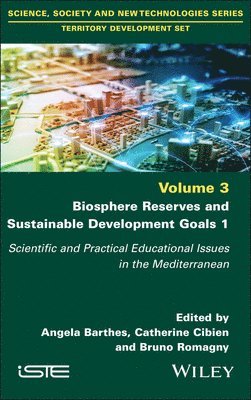
    Biosphere Reserves and Sustainable Development Goals 1

    Scientific and Practical Educational Issues in the Mediterranean

    AvAngela Barthes,Angela Barthes

    Inbunden, Engelska, 2024

    1 731 kr

    Beställningsvara. Skickas inom 5-8 vardagar. Fri frakt över 249 kr.

    Beskrivning

    Since 1971, UNESCO's Man and the Biosphere (MAB) Programme has embraced a number of principles that link the political, scientific and academic spheres.Biosphere Reserves and Sustainable Development Goals 1 presents these areas as privileged spaces for experimenting with operating methods specific to cross-cutting objectives and issues. These areas encourage the development of interdisciplinary research, supported by a worldwide network to disseminate experience, approaches and knowhow.The various global and local political scales are linked here, with different consequences for the reconfiguration of local political arenas, for specific modes of development linked to a renewed relationship with knowledge, powers and institutions, and for renewed relationships between the worlds of science, education and territorial governance.

    Produktinformation

    • Utgivningsdatum:2024-03-11
    • Mått:156 x 234 x 16 mm
    • Vikt:644 g
    • Format:Inbunden
    • Språk:Engelska
    • Antal sidor:256
    • Förlag:ISTE Ltd and John Wiley & Sons Inc
    • ISBN:9781786307804

    Utforska kategorier

    • Internationell ekonomi inom Ekonomi och Ledarskap
    • Miljövetenskap och miljöpolitik inom Naturvetenskap och teknik
    • Miljöteknik inom Naturvetenskap och teknik

    Mer om författaren

    Angela Barthes is a professor at the University of Aix-Marseille, France, and specializes in environmental education and rural development.Catherine Cibien is director of the French committee of UNESCO’s Man and the Biosphere (MAB) Programme.Bruno Romagny is an economist and director of research at the French National Research Institute for Sustainable Development (IRD - Institut de recherche pour le développement), Laboratoire populationenvironnement-développement (LPED), France.

    Innehållsförteckning

    • Presentation of the Authors of the Two Volumes xiIntroduction xxiAngela BARTHES, Catherine CIBIEN and Bruno ROMAGNYPart 1 Biosphere Reserves and Sustainable Development Goals: Multidisciplinary Scientific IssuesIntroduction to Part 1 3Bruno ROMAGNYChapter 1 Man and the Biosphere: A Precursory Program for the Next World 7Meriem BOUAMRANE and Didier BABIN1.1 1971-2021, the beginnings of sustainable development 71.2 Making sure no one is left behind 91.3 Identification of gaps, risks and challenges 101.4 Valuable lessons learned from the transformation towards sustainable and resilient societies 111.5 Investments that may affect the building of sustainable and resilient societies 111.6 Integration of biodiversity within sustainable development policies 121.7 Policy recommendations to accelerate progress in building sustainable and resilient societies 131.8 Lessons learned from the Covid-19 crisis and perspectives for biosphere reserves for the next world 141.9 References 15Chapter 2 Humans and Nature: A Story to be Rewritten 17Magda BOU DAGHER KHARRAT, Éliane BOU DAGHER and Rhéa KAHALÉ2.1 Homo sapiens, a species like the others 172.2 Homo sapiens, a nature modifier 172.3 The Mediterranean, more than a sea in the middle of the land 192.4 The academic sphere and the action in favor of biodiversity 202.5 Biosphere reserves and Sustainable Development Goals 212.6 References 23Chapter 3 Social Representations, Collective Organization and Mediterranean Biosphere Reserves 25Angela BARTHES, Bruno ROMAGNY, Jean-Marc LANGE, Lahoucine AMZIL, Roser MANEJA, Mohammed ADERGHAL and Véronique CHALANDO3.1 Introduction 253.2 Social representations as an exploratory method of prior knowledge 273.3 How can social representations be defined? Some theoretical elements 283.4 How can social representations be defined? Central core and peripheral elements 293.5 The methodological elements of our study 303.6 Study results 323.7 Differences and similarities in the social representations of students 363.8 Addressing the issue of complexity versus focusing on the environment 373.9 Addressing the collective organization of society versus the recourse to individual action 393.10 Conclusion 393.11 References 40Chapter 4 Challenges and Opportunities of Collaborative Research on Biosphere Reserves in the Mediterranean 43Moustapha ITANI, Salma NASHABE TALHOUK, Wassim EL-HAJJ, Nivine NASRALLAH and Hannah ABOU FAKHER4.1 Introduction 434.2 Collaborative research 434.3 Beneficial aspects of collaborative research 444.4 Challenges to collaborative research and data sharing 454.5 Motives behind collaborative research 464.6 The Mediterranean Basin: asymmetries between Northern and Southern Mediterranean countries 484.7 Travel limitations 514.8 Conclusion 554.9 References 56Chapter 5 Scientific Tourism in Multi-Labeled Protected Areas: The Ecological Transition and Controversy in the Mountains 61Mikaël CHAMBRU and Cécilia CLAEYS5.1 Introduction 615.2 The ecological transition: from the injunctions to the different socio-political and cultural references 645.3 The trajectories of governance forms for a scientific tourism project 665.4 The ambiguities related to the touristic development of scientific culture 685.5 The environmental paradoxes of a scientific tourism project 715.6 Conclusion 735.7 References 75Part 2 Educational Practices Relating to Biosphere Reserves: Balance and ProspectsIntroduction to Part 2 81Angela BARTHESChapter 6 Teaching How to Produce Differently at a Biosphere Reserve 83Véronique CHALANDO and Angela BARTHES6.1 Introduction 836.2 Curricular challenges of teaching how to "produce differently" 846.3 Technical knowledge and political movements 876.4 Knowledge conflicts and conflicts of values: the question of direction in the circulation of knowledge 886.5 Towards coherent criteria for analyzing agroecological literacy 896.6 Case study 926.7 Discussion 966.8 Conclusion 996.9 References 99Chapter 7 The Sustainable Management of Biosphere Reserves: What Are the Challenges for Agricultural Education? 103Nina ASLOUM, Guillaume GILLET and Laurent BEDOUSSAC7.1 Introduction 1037.2 Agroecology, from its emergence to the change of agricultural model 1057.3 Social representations 1077.4 Methodology 1097.5 Data categorization 1107.6 Results 1107.7 Discussion 1137.8 Conclusion 1147.9 References 115Chapter 8 Collective Skills from Partnerships Between Protected Areas and Teachers 119Sylviane BLANC-MAXIMIN8.1 Introduction 1198.2 The educational partnership 1218.3 Three case studies in a labeled rural territory 1268.4 Presence of a collective skill and of the collective’s skill 1318.5 Conclusion 1348.6 Appendix 1358.7 References 136Chapter 9 The Instrumentalization of Education in Sustainable Development at the Service of Tourism: The Case of the Arganeraie 141Salma ITSMAÏL and Bruno GARNIER9.1 Introduction 1419.2 Environmental crisis and inflation of alternative tourism 1419.3 Tourism and sustainable development 1439.4 Sustainable tourism and patrimony: educational issues 1449.5 Towards a "sustainable strategy" 1479.6 The Moroccan situation: a sustainable tourism policy in the ABR? 1489.7 A cultural as well as a natural patrimony item: the argan tree 1519.8 Between reality and opportunism: the instrumentalization of sustainable development 1529.9 Education: the missing vector for sustainable tourism 1589.10 Conclusion 1619.11 References 161Chapter 10 Biosphere Reserves and Political Skills Transfer in University Curricula 165Melki SLIMANI, Angela BARTHES and Jean-Marc LANGE10.1 Introduction 16510.2 Towards a conceptual recontextualization of the political skill in the environmental field 16610.3 Environmental political skill: Master’s degree in Man and the Biosphere - case study 17010.4 Results and discussion 17310.5 Conclusion: changing curricular morphologies 17710.6 References 178Chapter 11 Education and Mediation in the Arganeraie: Alliance Strategies Between Education and Tourism Actors? 183Saïd BOUJROUF and Abdullah AÏT L’HOUSSAIN11.1 Introduction 18311.2 Locating the Arganeraie biosphere reserve 18411.3 The ABR, a tourist landscape showcased by the media? 18411.4 ABR landscape imaging and its dissemination 18511.5 A confusion between education forms in the ABR: formal, non-formal and informal 18611.6 Towards mediation in the ABR or the construction of an alliance and communication strategies between education and tourism actors 19011.7 The territorial integration of the ABR - a condition for the alliance’s success: communication, mediation and media coverage 19211.8 "Polarized" networks in the ABR: a tool for the alliance between education and tourism actors 19411.9 Actor training for the development of capacities: skills and capability for communication management 19511.10 Conclusion 19711.11 References 198List of Authors 201Index 203Summary of Volume 2 207