• Fri frakt över 249 kr
  • •
  • Snabba leveranser
  • •
  • Billiga böcker
Kundservice

Du är på sajten för privatpersoner.

Företag, bibliotek eller offentlig verksamhet?

Du handlar på classic.bokus.com, där alla dina funktioner finns intakta.
Till classic.bokus.com
Bokus logotyp. Gå till startsidan.
  • Erbjudanden
  • Nyheter
  • Student
  • Topplistor
  • Barn & ungdom
  • Bokus Play
  • E-böcker
  • Pocketböcker
  • Spel & pussel

10% studentrabatt med kod TERM26

Sidfot

Mina sidor

    Hjälp

    • Kundservice
    • Vanliga frågor och svar
    • Frakt och leverans
    • Retur vid ångerrätt
    • Reklamera vara
    • Betalning
    • Köpvillkor
    • Allmänna villkor
    • Information om webbplatsens tillgänglighet

    Om Bokus

    • Om oss
    • Pressrum
    • För studenter
    • För företag
    • För bibliotek och offentlig verksamhet
    • För leverantörer
    • Hållbarhet

    Populärt

    • Aktuella erbjudanden
    • Presentkort
    • Studentlitteratur
    • Nya böcker
    • Topplistor
    • Signerade böcker
    • Engelska böcker

    Inspiration

    • Boktips
    • BookTok
    • Populära bokserier
    • Barnbokskaraktärer
    • Populära författare
    Logotyp för Bokus
    Följ oss på Facebook (extern länk)Följ oss på Instagram (extern länk)Följ oss på YouTube (extern länk)Följ oss på TikTok (extern länk)
    bokus @ CookiesAnpassa cookiesIntegritetspolicyKöpvillkor
    Till Citymail hemsida (extern länk)Till Budbee hemsida (extern länk)Till Postnord hemsida (extern länk)Till Schenker hemsida (extern länk)Till Early Bird hemsida (extern länk)Till Walleys hemsida (extern länk)
    1. Naturvetenskap och teknik
    2. Teknik och industri
    3. Elektronik och kommunikationer

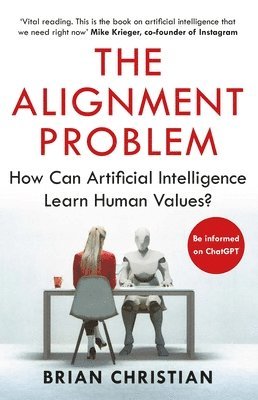
    Alignment Problem

    'If you're going to read one book on artificial intelligence, this is the one' New York Times

    AvBrian Christian

    Häftad, Engelska, 2021

    146 kr

    Skickas . Fri frakt över 249 kr.

    Fler format och utgåvor

    Häftad

    141 kr

    Beskrivning

    'If you're going to read one book on artificial intelligence, this is the one.' New York Times'The Alignment Problem is the best book on the key technical and moral questions of A.I. that I've read.' Ezra KleinArtificial intelligence is rapidly dominating every aspect of our modern lives influencing the news we consume, whether we get a mortgage, and even which friends wish us happy birthday. But as algorithms make ever more decisions on our behalf, how do we ensure they do what we want? And fairly?This conundrum - dubbed 'The Alignment Problem' by experts - is the subject of this timely and important book. From the AI program which cheats at computer games to the sexist algorithm behind Google Translate, bestselling author Brian Christian explains how, as AI develops, we rapidly approach a collision between artificial intelligence and ethics. If we stand by, we face a future with unregulated algorithms that propagate our biases - and worse - violate our most sacred values. Urgent and fascinating, this is an accessible primer to the most important issue facing AI researchers today.

    Produktinformation

    • Utgivningsdatum:2021-09-02
    • Mått:188 x 34 x 128 mm
    • Vikt:445 g
    • Format:Häftad
    • Språk:Engelska
    • Antal sidor:496
    • Förlag:Atlantic Books
    • ISBN:9781786494337

    Utforska kategorier

    • Elektronik och kommunikationer inom Naturvetenskap och teknik
    • Människa – datorinteraktion inom Data och IT
    • Informationsteknik: allmänt inom Data och IT

    Mer om författaren

    Brian Christian is the author of the acclaimed bestsellers The Most Human Human and Algorithms to Live By, which have been translated into nineteen languages. A visiting scholar at the University of California, Berkeley, he lives in San Francisco.

    Recensioner i media

    Essential reading. Christian brings much needed clarity to a subject that is often talked about but little understood.

    Innehållsförteckning

    • 0: Introduction 1: REPRESENTATION 2: FAIRNESS 3: TRANSPARENCY 4: REINFORCEMENT 5: SHAPING 6: CURIOSITY 7: IMITATION 8: INFERENCE 9: UNCERTAINTY 10: Conclusion