E-bok, Engelska, 2016
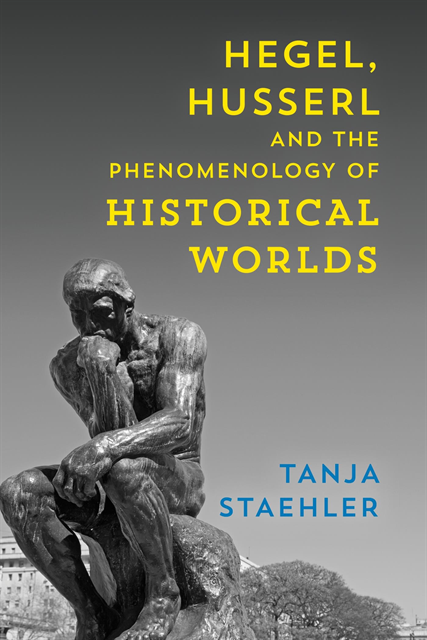
Hegel, Husserl and the Phenomenology of Historical Worlds
610 kr
Läs direkt i Bokus Reader – eller ladda ned till din enhet
Beskrivning
However, in the twentieth century, another German philosopher, Edmund Husserl, attempted a similar project when he realised that a philosophical account of our human experience requires attending to the historical world we live in. According to Husserl, the Western world is a world in crisis. In this book, Tanja Staehler explores how Husserl thus radicalises Hegel’s philosophy by providing an account of historical movement as open. Husserl’s phenomenology allows thinking of historical worlds in the plural, without hierarchy, determined by ethics and aesthetics. Staehler argues that, through his radicalization of Hegel’s philosophy, Husserl provides us with a historical phenomenology and a coherent concept of a culture that points to the future for phenomenology as a philosophy that provides the methodological grounding for a variety of qualitative approaches in the humanities and social sciences.
Produktinformation
- Utgivningsdatum: 2016-12-07
- Språk: Engelska
- Antal sidor: 248
- Filformat: EPUB
- Kopieringsskydd: LCP
- ISBN: 9781786602886
- Förlag: Bloomsbury Publishing Plc
Utforska kategorier
Mer om författaren
Tanja Staehler is Reader in Philosophy at the University of Sussex. She is the author of Die Unruhe des Anfangs. Hegel und Husserl auf dem Weg in die ‘Phänomenologie’ (2003), Plato and Levinas: The Ambiguous Out-Side of Ethics (2010), and (with Michael Lewis) Phenomenology: An Introduction (2010), as well as articles on method, dance and childbirth.
Recensioner i media
Hegel, Husserl and the Phenomenology of Historical Worlds is a profound treatment of the genesis of life-worlds in their cultural and historical dimensions. Starting with a highly perceptive comparison of Hegel and Husserl as contrasting phenomenologists, Tanja Staehler shows brilliantly how the two thinkers, despite certain affinities, diverge on matters of time and history, the nature of knowledge and the place of others. Derrida and Irigaray emerge as contemporary figures who offer essential correctives to their two German predecessors. The book ends with pellucid reflections on such basic issues as morality, death, and mood. This is a beautifully written text that opens up genuinely new directions of thought for understanding today’s troubled world.
Betyg & recensioner
0 recensioner
Inga recensioner tillgängliga.