• Fri frakt över 249 kr
  • •
  • Snabba leveranser
  • •
  • Billiga böcker
Kundservice

Du är på sajten för privatpersoner.

Företag, bibliotek eller offentlig verksamhet?

Du handlar på classic.bokus.com, där alla dina funktioner finns intakta.
Till classic.bokus.com
Bokus logotyp. Gå till startsidan.
  • Erbjudanden
  • Nyheter
  • Student
  • Topplistor
  • Barn & ungdom
  • Bokus Play
  • E-böcker
  • Pocketböcker
  • Spel & pussel

Må bättre, för mindre! Upp till 50% rabatt på hälsoböcker

Sidfot

Mina sidor

    Hjälp

    • Kundservice
    • Vanliga frågor och svar
    • Frakt och leverans
    • Retur vid ångerrätt
    • Reklamera vara
    • Betalning
    • Köpvillkor
    • Allmänna villkor
    • Information om webbplatsens tillgänglighet

    Om Bokus

    • Om oss
    • Pressrum
    • För studenter
    • För företag
    • För bibliotek och offentlig verksamhet
    • För leverantörer
    • Hållbarhet

    Populärt

    • Aktuella erbjudanden
    • Presentkort
    • Studentlitteratur
    • Nya böcker
    • Topplistor
    • Signerade böcker
    • Engelska böcker

    Inspiration

    • Boktips
    • BookTok
    • Populära bokserier
    • Barnbokskaraktärer
    • Populära författare
    Logotyp för Bokus
    Följ oss på Facebook (extern länk)Följ oss på Instagram (extern länk)Följ oss på YouTube (extern länk)Följ oss på TikTok (extern länk)
    bokus @ CookiesAnpassa cookiesIntegritetspolicyKöpvillkor
    Till Citymail hemsida (extern länk)Till Budbee hemsida (extern länk)Till Postnord hemsida (extern länk)Till Schenker hemsida (extern länk)Till Early Bird hemsida (extern länk)Till Walleys hemsida (extern länk)
    1. Naturvetenskap och teknik
    2. Geovetenskap
    3. Geografi

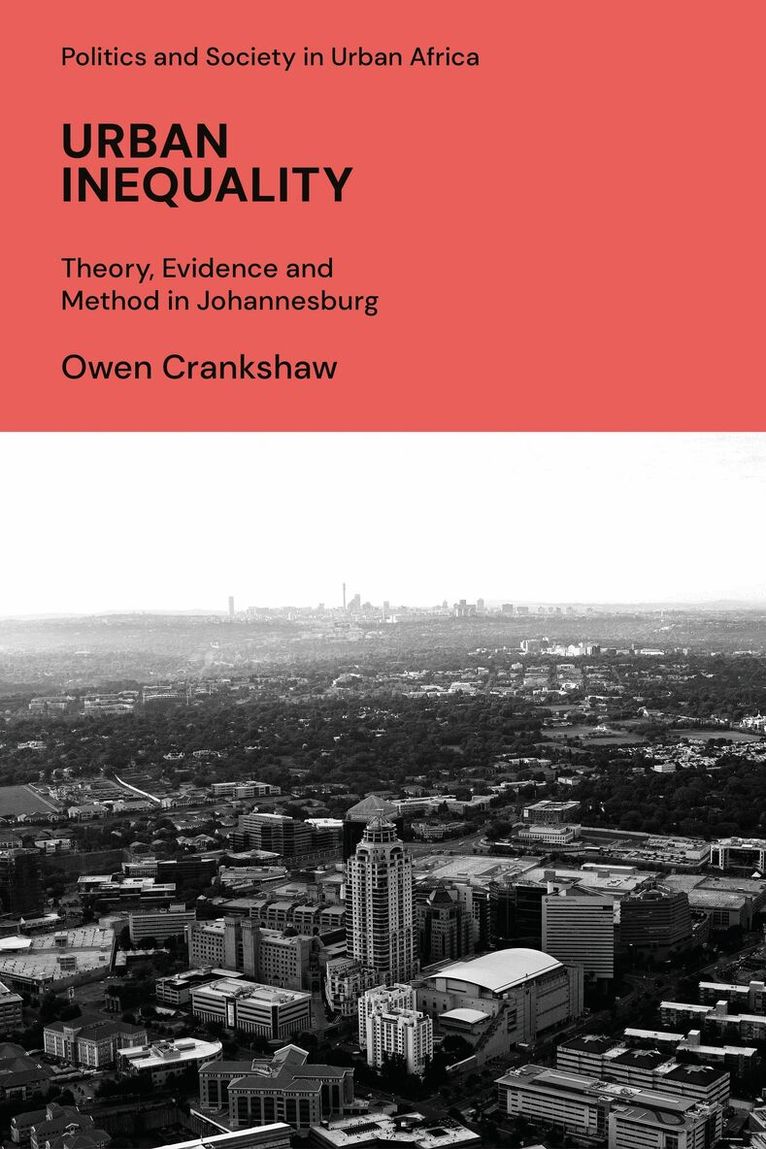
    Urban Inequality

    Theory, Evidence and Method in Johannesburg

    AvOwen Crankshaw

    Inbunden, Engelska, 2022

    Del i serien Politics and Society in Urban Africa

    1 319 kr

    Skickas . Fri frakt över 249 kr.

    Fler format och utgåvor

    E-bok

    453 kr

    E-bok

    453 kr

    Häftad

    423 kr

    Beskrivning

    Based on new evidence that challenges existing theories of urban inequality, Crankshaw argues that the changing pattern of earnings and occupational inequality in Johannesburg is better described by the professionalism of employment alongside high-levels of chronic unemployment.Central to this examination is that the social polarisation hypothesis, which is accepted by many, is simply wrong in the case of Johannesburg. Ultimately, Crankshaw posits that the post-Fordist, post-apartheid period is characterised by a completely new division of labour that has caused new forms of racial inequality. That racial inequality in the post-apartheid period is not the result of the persistence of apartheid-era causes, but is the result of new causes that have interacted with the historical effects of apartheid to produce new patterns of racial inequality.

    Produktinformation

    • Utgivningsdatum:2022-02-24
    • Mått:156 x 234 x 20 mm
    • Vikt:502 g
    • Format:Inbunden
    • Språk:Engelska
    • Serie:Politics and Society in Urban Africa
    • Antal sidor:232
    • Förlag:Bloomsbury Publishing PLC
    • ISBN:9781786998941

    Utforska kategorier

    • Geografi inom Naturvetenskap och teknik
    • Politiskt förtryck inom Samhälle och politik

    Mer om författaren

    Owen Crankshaw is Full Professor of Sociology at the University of Cape Town, where he is an expert in the design and statistical analysis of surveys and population censuses. He is the author of Race, Class and the Changing Division of Labour Under Apartheid (1997) and co-author of Uniting a Divided City: Governance and social exclusion in Johannesburg (2002). He has contributed to many other books and scholarly journals in the field of Urban and African Studies.

    Recensioner i media

    This detailed study of urban inequality in Johannesburg provides a rigorous examination of the links between de-industrialisation, occupational change, residential segregation and the housing market. It highlights the way in which race and the legacy of the South African apartheid state intersect with changes in the structure of the labour market over a 40 year period from 1970-2011 to change the structure of urban inequality. It is an invaluable source which links to wider international debates about urban social polarisation, professionalization and the post-Fordist city. A ‘must read’ for all students of African cities.

    Innehållsförteckning

    • AcknowledgementsList of FiguresList of TablesIntroduction: 1.Theories of Urban InequalityPart One: De-Industrialisation and the Labour Market2.The Changing Occupational Structure: Social Polarisation or Professionalisation?3.Professionalisation, Unemployment and Racial InequalityPart Two: From a Fordist to a Post-Fordist Spatial Order4.Johannesburg’s Fordist Spatial Order5.The Edge City of Sandton6.From Racial Ghetto to Excluded Ghetto: Soweto, Eldorado Park and Lenasia7.Racial Residential Desegregation in White NeighbourhoodsConclusion8.Urban InequalityReferences