• Fri frakt över 249 kr
  • •
  • Snabba leveranser
  • •
  • Billiga böcker
Kundservice

Du är på sajten för privatpersoner.

Företag, bibliotek eller offentlig verksamhet?

Du handlar på classic.bokus.com, där alla dina funktioner finns intakta.
Till classic.bokus.com
Bokus logotyp. Gå till startsidan.
  • Erbjudanden
  • Nyheter
  • Student
  • Topplistor
  • Barn & ungdom
  • Bokus Play
  • E-böcker
  • Pocketböcker
  • Spel & pussel

10% rabatt på allt med kod NYSTART10 →

Sidfot

Mina sidor

    Hjälp

    • Kundservice
    • Vanliga frågor och svar
    • Frakt och leverans
    • Retur vid ångerrätt
    • Reklamera vara
    • Betalning
    • Köpvillkor
    • Allmänna villkor
    • Information om webbplatsens tillgänglighet

    Om Bokus

    • Om oss
    • Pressrum
    • För studenter
    • För företag
    • För bibliotek och offentlig verksamhet
    • För leverantörer
    • Hållbarhet

    Populärt

    • Aktuella erbjudanden
    • Presentkort
    • Studentlitteratur
    • Nya böcker
    • Topplistor
    • Signerade böcker
    • Engelska böcker

    Inspiration

    • Boktips
    • BookTok
    • Populära bokserier
    • Barnbokskaraktärer
    • Populära författare
    Logotyp för Bokus
    Följ oss på Facebook (extern länk)Följ oss på Instagram (extern länk)Följ oss på YouTube (extern länk)Följ oss på TikTok (extern länk)
    bokus @ CookiesAnpassa cookiesIntegritetspolicyKöpvillkor
    Till Citymail hemsida (extern länk)Till Budbee hemsida (extern länk)Till Postnord hemsida (extern länk)Till Schenker hemsida (extern länk)Till Early Bird hemsida (extern länk)Till Walleys hemsida (extern länk)
    1. Data och IT
    2. Systemvetenskap och AI

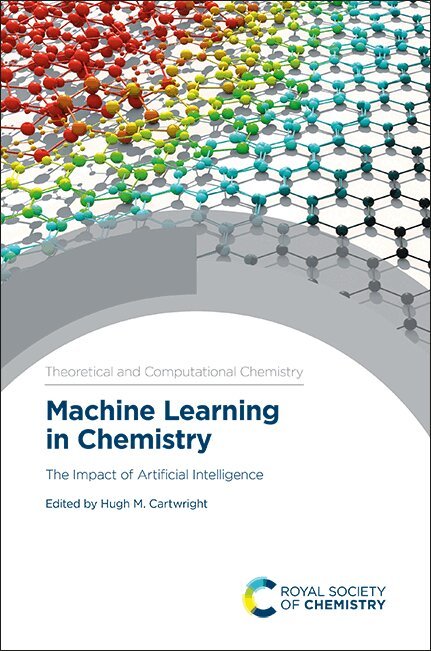
    Machine Learning in Chemistry

    The Impact of Artificial Intelligence

    AvHugh M Cartwright

    Inbunden, Engelska, 2020

    Del i serien Theoretical and Computational Chemistry Series

    3 192 kr

    Beställningsvara. Skickas inom 5-8 vardagar. Fri frakt över 249 kr.

    Beskrivning

    Progress in the application of machine learning (ML) to the physical and life sciences has been rapid. A decade ago, the method was mainly of interest to those in computer science departments, but more recently ML tools have been developed that show significant potential across wide areas of science. There is a growing consensus that ML software, and related areas of artificial intelligence, may, in due course, become as fundamental to scientific research as computers themselves.Yet a perception remains that ML is obscure or esoteric, that only computer scientists can really understand it, and that few meaningful applications in scientific research exist. This book challenges that view.With contributions from leading research groups, it presents in-depth examples to illustrate how ML can be applied to real chemical problems. Through these examples, the reader can both gain a feel for what ML can and cannot (so far) achieve, and also identify characteristics that might make a problem in physical science amenable to a ML approach.This text is a valuable resource for scientists who are intrigued by the power of machine learning and want to learn more about how it can be applied in their own field.

    Produktinformation

    • Utgivningsdatum:2020-07-21
    • Mått:156 x 234 x 41 mm
    • Vikt:1 276 g
    • Format:Inbunden
    • Språk:Engelska
    • Serie:Theoretical and Computational Chemistry Series
    • Antal sidor:546
    • Förlag:Royal Society of Chemistry
    • ISBN:9781788017893

    Utforska kategorier

    • Systemvetenskap och AI inom Data och IT
    • Fysikalisk kemi inom Naturvetenskap och teknik

    Mer om författaren

    Hugh Cartwright is a computational chemist, now retired. He spent almost three decades as a member of the Chemistry Faculty at Oxford University in the U.K., where his research focussed on the application of Artificial Intelligence related methods to problems in science, using Artificial Neural Networks, Genetic Algorithms, Self-Organising Maps and Support Vector Machines. He has written or edited several texts on the use of Artificial Intelligence in science, including Applications of Artificial Intelligence in Chemistry, and Using Artificial Intelligence in Chemistry and Biology: a Practical Guide.

    Innehållsförteckning

    • Computers as Scientists;How Do Machines Learn?;MedChemInformatics: An Introduction to Machine Learning for Drug Discovery;Machine Learning for Nonadiabatic Molecular Dynamics;Machine Learning in Science – A Role for Mechanical Sympathy?;A Prediction of Future States: AI-powered Chemical Innovation for Defense Applications;Machine Learning for Chemical Synthesis;Constraining Chemical Networks in Astrochemistry;Machine Learning at the (Nano)materials-biology Interface;Machine Learning Techniques Applied to a Complex Polymerization Process;Machine Learning and Scoring Functions (SFs) for Molecular Drug Discovery: Prediction and Characterisation of Druggable Drugs and Targets;Artificial Intelligence Applied to the Prediction of Organic Materials;A New Era of Inorganic Materials Discovery Powered by Data Science;Machine Learning Applications in Chemical Engineering;Representation Learning in Chemistry;Demystifying Artificial Neural Networks as Generators of New Chemical Knowledge: Antimalarial Drug Discovery as a Case Study;Machine Learning for Core-loss Spectrum;Autonomous Science: Big Data Tools for Small Data Problems in Chemistry;Machine Learning for Heterogeneous Catalysis: Global Neural Network Potential from Construction to Applications;A Few Guiding Principles for Practical Applications of Machine Learning to Chemistry and Materials