• Fri frakt över 249 kr
  • •
  • Snabba leveranser
  • •
  • Billiga böcker
Kundservice

Du är på sajten för privatpersoner.

Företag, bibliotek eller offentlig verksamhet?

Du handlar på classic.bokus.com, där alla dina funktioner finns intakta.
Till classic.bokus.com
Bokus logotyp. Gå till startsidan.
  • Erbjudanden
  • Nyheter
  • Student
  • Topplistor
  • Barn & ungdom
  • Bokus Play
  • E-böcker
  • Pocketböcker
  • Spel & pussel

10% rabatt på allt med kod: NYSTART10 →

Sidfot

Mina sidor

    Hjälp

    • Kundservice
    • Vanliga frågor och svar
    • Frakt och leverans
    • Retur vid ångerrätt
    • Reklamera vara
    • Betalning
    • Köpvillkor
    • Allmänna villkor
    • Information om webbplatsens tillgänglighet

    Om Bokus

    • Om oss
    • Pressrum
    • För studenter
    • För företag
    • För bibliotek och offentlig verksamhet
    • För leverantörer
    • Hållbarhet

    Populärt

    • Aktuella erbjudanden
    • Presentkort
    • Studentlitteratur
    • Nya böcker
    • Topplistor
    • Signerade böcker
    • Engelska böcker

    Inspiration

    • Boktips
    • BookTok
    • Populära bokserier
    • Barnbokskaraktärer
    • Populära författare
    Logotyp för Bokus
    Följ oss på Facebook (extern länk)Följ oss på Instagram (extern länk)Följ oss på YouTube (extern länk)Följ oss på TikTok (extern länk)
    bokus @ CookiesAnpassa cookiesIntegritetspolicyKöpvillkor
    Till Citymail hemsida (extern länk)Till Budbee hemsida (extern länk)Till Postnord hemsida (extern länk)Till Schenker hemsida (extern länk)Till Early Bird hemsida (extern länk)Till Walleys hemsida (extern länk)
    1. Ekonomi och Ledarskap
    2. Nationalekonomi
    3. Ekonomisk politik

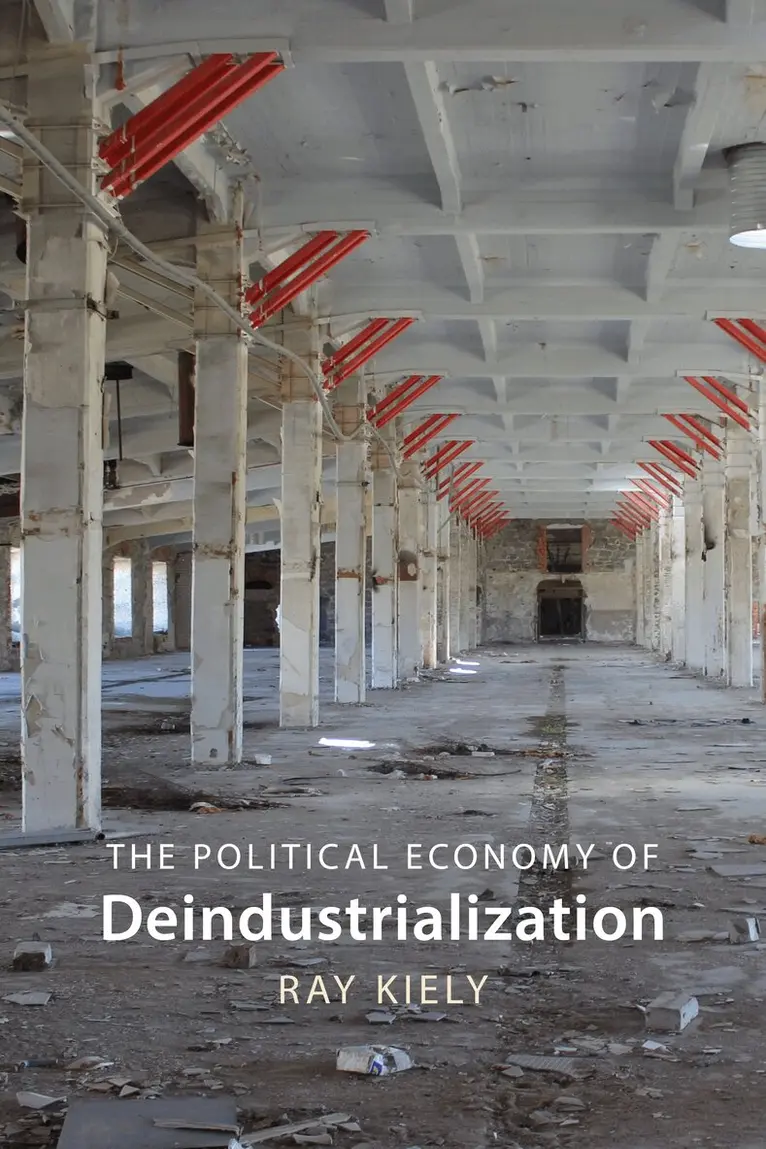
    Political Economy of Deindustrialization

    Causes, Consequences, Implications

    AvRay Kiely

    Inbunden, Engelska, 2024

    Del i serien Edinburgh University Press

    1 302 kr

    Skickas . Fri frakt över 249 kr.

    Fler format och utgåvor

    E-bok

    1 143 kr

    E-bok

    1 143 kr

    Beskrivning

    It is often assumed that deindustrialization is a bad thing, confined to the Global North, and caused by cheap imports from the Global South. Although not entirely incorrect, the truth is far more complicated. Ray Kiely argues that the current economic debate assumes too much in terms of causality around deindustrialization, which is better seen as a product of wider changes in contemporary global capitalism. Yet, evidence of a zero-sum game doesn't have to be very strong for this to have become an issue of deep politics, informing right-wing populism and contemporary geopolitical tensions (namely with China). A clearer understanding of the processes of deindustrialization can help in appreciating the political responses and movements across the Global North – and South – and enable us to find better responses to the processes themselves.

    Produktinformation

    • Utgivningsdatum:2024-09-10
    • Mått:156 x 234 x 20 mm
    • Vikt:428 g
    • Format:Inbunden
    • Språk:Engelska
    • Serie:Edinburgh University Press
    • Antal sidor:224
    • Förlag:Edinburgh University Press
    • ISBN:9781788217569

    Utforska kategorier

    • Ekonomisk politik inom Ekonomi och Ledarskap
    • Industrier och branscher inom Ekonomi och Ledarskap
    • Digital ekonomi inom Ekonomi och Ledarskap

    Mer om författaren

    Ray Kiely is Professor of International Politics at Queen Mary University of London. His books include The BRICs, US 'Decline' and Global Transformations (2015) and The Neoliberal Paradox (2018) .

    Recensioner i media

    Deindustrialization is a key economic problem in today’s world; it has been blamed for a wide range of ills, from slow economic growth to the rise of the so-called ‘populist right’. This book offers a comprehensive, informative, clear, balanced and uniquely insightful examination of this global phenomenon in all its complexity, located within the uneven and combined development of global capitalism, and outlines the possible alternatives. Essential reading.

    Innehållsförteckning

    • 1. IntroductionPart I Explaining deindustrialization2. Explanation 1: what is it and why it might (not) matter3. Explanation 2: deindustrialization as a product of relocation and import competition4. Explanation 3: deindustrialization as a product of technological change (and why automation’s significance is real but exaggerated)Part II Deindustrialization and its wider context5. Deindustrialization and its wider context 1: contemporary capitalism – long downturn or uneven and unequal expansion?6. Deindustrialization and its wider context 2: the question of geopolitics7. Deindustrialization and its wider context 3: the question of populism8. Deindustrialization and its wider context 4: further political alternatives9. Conclusion