• Fri frakt över 249 kr
  • •
  • Snabba leveranser
  • •
  • Billiga böcker
Kundservice

Du är på sajten för privatpersoner.

Företag, bibliotek eller offentlig verksamhet?

Du handlar på classic.bokus.com, där alla dina funktioner finns intakta.
Till classic.bokus.com
Bokus logotyp. Gå till startsidan.
  • Erbjudanden
  • Nyheter
  • Student
  • Topplistor
  • Barn & ungdom
  • Bokus Play
  • E-böcker
  • Pocketböcker
  • Spel & pussel

10% rabatt på allt med kod: NYSTART10 →

Sidfot

Mina sidor

    Hjälp

    • Kundservice
    • Vanliga frågor och svar
    • Frakt och leverans
    • Retur vid ångerrätt
    • Reklamera vara
    • Betalning
    • Köpvillkor
    • Allmänna villkor
    • Information om webbplatsens tillgänglighet

    Om Bokus

    • Om oss
    • Pressrum
    • För studenter
    • För företag
    • För bibliotek och offentlig verksamhet
    • För leverantörer
    • Hållbarhet

    Populärt

    • Aktuella erbjudanden
    • Presentkort
    • Studentlitteratur
    • Nya böcker
    • Topplistor
    • Signerade böcker
    • Engelska böcker

    Inspiration

    • Boktips
    • BookTok
    • Populära bokserier
    • Barnbokskaraktärer
    • Populära författare
    Logotyp för Bokus
    Följ oss på Facebook (extern länk)Följ oss på Instagram (extern länk)Följ oss på YouTube (extern länk)Följ oss på TikTok (extern länk)
    bokus @ CookiesAnpassa cookiesIntegritetspolicyKöpvillkor
    Till Citymail hemsida (extern länk)Till Budbee hemsida (extern länk)Till Postnord hemsida (extern länk)Till Schenker hemsida (extern länk)Till Early Bird hemsida (extern länk)Till Walleys hemsida (extern länk)
    1. Språk och ordböcker
    2. Språkvetenskap och lingvistik

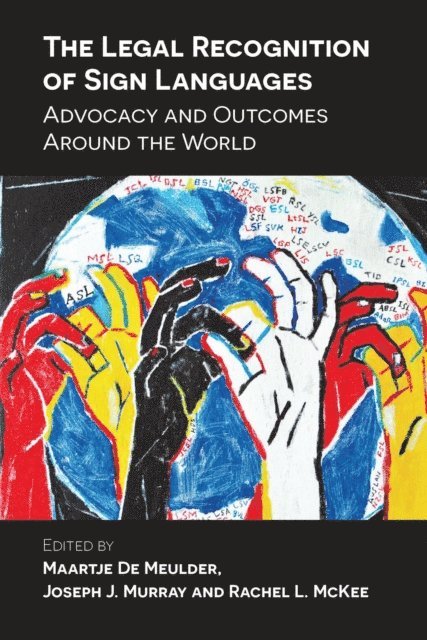
    Legal Recognition of Sign Languages

    Advocacy and Outcomes Around the World

    AvMaartje De Meulder,Joseph J. Murray

    Inbunden, Engelska, 2019

    1 671 kr

    Beställningsvara. Skickas inom 5-8 vardagar. Fri frakt över 249 kr.
    Beskrivning

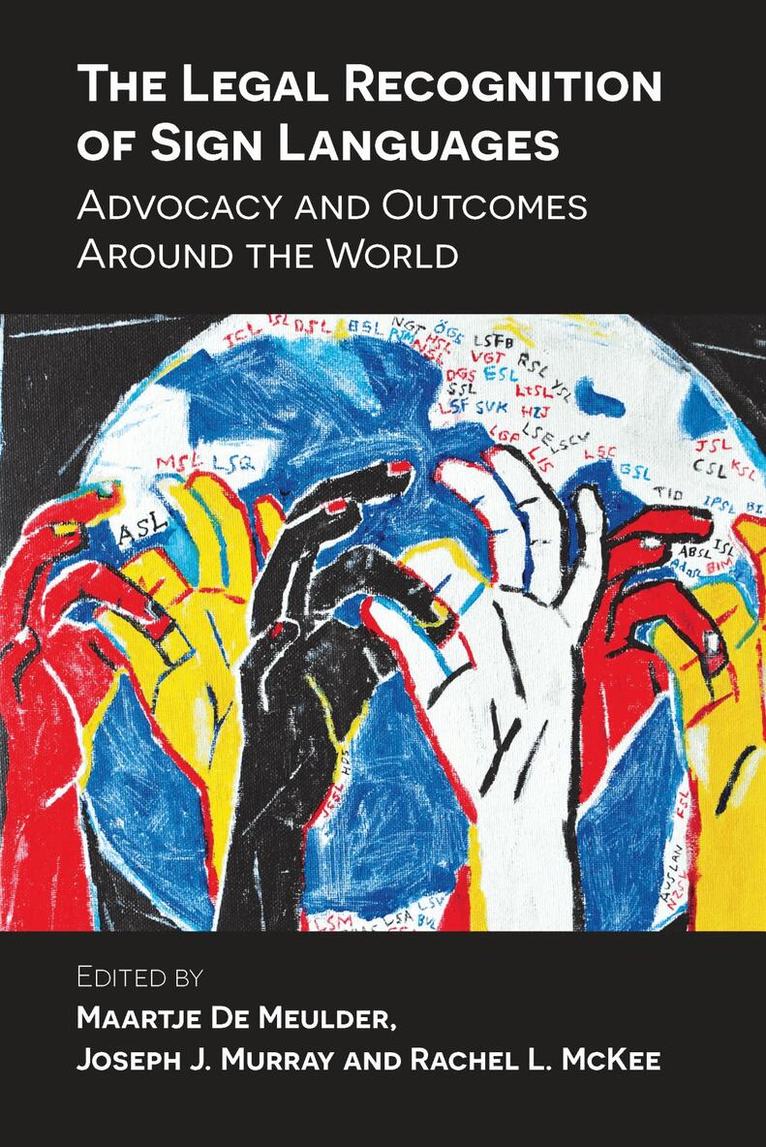
    This book presents the first ever comprehensive overview of national laws recognising sign languages, the impacts they have and the advocacy campaigns which led to their creation. It comprises 18 studies from communities across Europe, the US, South America, Asia and New Zealand. They set sign language legislation within the national context of language policies in each country and show patterns of intersection between language ideologies, public policy and deaf communities’ discourses. The chapters are grounded in a collaborative writing approach between deaf and hearing scholars and activists involved in legislative campaigns. Each one describes a deaf community’s expectations and hopes for legal recognition and the type of sign language legislation achieved. The chapters also discuss the strategies used in achieving the passage of the legislation, as well as an account of barriers confronted and surmounted (or not) in the legislative process. The book will be of interest to language activists in the fields of sign language and other minority languages, policymakers and researchers in deaf studies, sign linguistics, sociolinguistics, human rights law and applied linguistics.

    Produktinformation

    • Utgivningsdatum:2019-06-17
    • Mått:156 x 234 x 22 mm
    • Vikt:700 g
    • Format:Inbunden
    • Språk:Engelska
    • Antal sidor:327
    • Förlag:Multilingual Matters
    • ISBN:9781788924009

    Utforska kategorier

    • Språkvetenskap och lingvistik inom Språk och ordböcker
    • Politiskt förtryck inom Samhälle och politik

    Mer om författaren

    Maartje De Meulder is Postdoctoral Research Fellow at the Namur Institute of Language, Text and Transmediality (NaLTT), University of Namur, Belgium. Her research interests include sign language policy and planning, sign language rights, family language policy, multilingualism and sign language maintenance and revitalisation.Joseph J. Murray is Professor in the Department of American Sign Language and Deaf Studies, Gallaudet University, Washington, DC, USA. A trained historian, his work explores ways in which deaf people navigate their societies as sign language minorities.Rachel L. McKee is Programme Director of NZSL Studies, Victoria University of Wellington, New Zealand. Her research interests include sign language documentation, sign language policy, sociolinguistic variation in sign language, interpreting, and sign language teaching and learning.

    Recensioner i media

    Only a small number of the thousands of endangered languages are legally recognized or protected, but among them, the 19 sign languages discussed in this volume show how acknowledgement in national legislation reveals a significant advance in 21st century language management. This collection detailing the way this happened is a major contribution to the study of language policy.

    Innehållsförteckning

    • Maartje De Meulder, Joseph J. Murray and Rachel L. McKee: Introduction: The Legal Recognition of Sign Languages: Advocacy and Outcomes Around the WorldSection 1 – Recent Sign Language LawsChapter 1. John Bosco Conama:“Ah, That’s Not Necessary, You Can Read English Instead”: An Analysis of State Language Policy Concerning Irish Sign Language and its EffectChapter 2. Sung-Eun Hong, Hyunhwa Lee, Mi-Hye Lee and Seung-Il Byun: The Korean Sign Language ActChapter 3. Marie Azzopardi-Alexander, Karl Borg, Dorianne Callus, Keith Callus, Steven Mulvaney, Alison Vere, Annabelle Xerri and Loran Ripard Xuereb : The Road to Maltese Sign Language RecognitionChapter 4. Lilian Lawson, Frankie McLean, Rachel O’Neill and Robert Brian Wilks: Recognising British Sign Language in ScotlandSection 2 – Implicit Legal RecognitionChapter 5. Deniz İlkbaşaran and Okan Kubus: A Roof Without Foundation: Shifts in the Legal and Practical Status of Turkish Sign Language (TİD) Since 2005Chapter 6. Soya Mori and Atsubumi Sugimoto: Progress and Problems in the Campaign for Sign Language Recognition in JapanChapter 7. Joseph J. Murray: American Sign Language Legislation in the United StatesChapter 8. Maribel González, Andrea Pérez, Juan Luis Marín and Camila Villavicencio: Towards the Recognition of Chilean Sign LanguageChapter 9. Yann Cantin, Florence Encrevé and Marie-Thérèse L’Huillier: The Societal and Political Recognition of French Sign Language (LSF) in France: 1970-2018Section 3 – On-going Campaigns Towards Explicit Legal RecognitionChapter 10. Richard Cokart, Trude Schermer, Corrie Tijsseling and Eva Westerhoff: In Pursuit of Legal Recognition of The NetherlandsChapter 11. Carlo Geraci and Humberto Insolera: The “Language Issue”: The Struggle and Path for the Recognition of LISChapter 12. Arnfinn Muruvik Vonen and Paal Richard Peterson: Sign Language Legislation in NorwaySection 4 – Implementation of Sign Language LawsChapter 13. Franz Dotter, Verena Krausneker, Helene Jarmer and Lukas Huber: Austrian Sign Language: Recognition Achieved but Discrimination ContinuesChapter 14. Rachel L. McKee and Victoria Manning: Implementing Recognition of New Zealand Sign Language: 2006-2018Chapter 15. Valgerður Stefánsdóttir, Ari Pall Kristinsson and Julia G. Hreinsdottir: The Legal Recognition of Icelandic Sign Language: Meeting Deaf People’s Expectations?Chapter 16. Ronice Müller De Quadros and Marianne Rossi Stumpf: Recognizing Brazilian Sign Language: Legislation and OutcomesChapter 17. Maria Josep Jarque, Marta Bosch-Baliarda and Menchu González: Legal Recognition and Regulation of Catalan Sign LanguageChapter 18. Maartje De Meulder and Thierry Haesenne: A Belgian Compromise? Recognising French-Belgian Sign Language and Flemish Sign LanguageChapter 19. Maartje De Meulder, Joseph J. Murray and Rachel L. McKee: Epilogue: Claiming Multiple Positionalities: Lessons from the First Two Decades of Sign Language Recognition