• Fri frakt över 249 kr
  • •
  • Snabba leveranser
  • •
  • Billiga böcker
Kundservice

Du är på sajten för privatpersoner.

Företag, bibliotek eller offentlig verksamhet?

Du handlar på classic.bokus.com, där alla dina funktioner finns intakta.
Till classic.bokus.com
Bokus logotyp. Gå till startsidan.
  • Erbjudanden
  • Nyheter
  • Student
  • Topplistor
  • Barn & ungdom
  • Bokus Play
  • E-böcker
  • Pocketböcker
  • Spel & pussel

10% rabatt på allt med kod NYSTART10 →

Sidfot

Mina sidor

    Hjälp

    • Kundservice
    • Vanliga frågor och svar
    • Frakt och leverans
    • Retur vid ångerrätt
    • Reklamera vara
    • Betalning
    • Köpvillkor
    • Allmänna villkor
    • Information om webbplatsens tillgänglighet

    Om Bokus

    • Om oss
    • Pressrum
    • För studenter
    • För företag
    • För bibliotek och offentlig verksamhet
    • För leverantörer
    • Hållbarhet

    Populärt

    • Aktuella erbjudanden
    • Presentkort
    • Studentlitteratur
    • Nya böcker
    • Topplistor
    • Signerade böcker
    • Engelska böcker

    Inspiration

    • Boktips
    • BookTok
    • Populära bokserier
    • Barnbokskaraktärer
    • Populära författare
    Logotyp för Bokus
    Följ oss på Facebook (extern länk)Följ oss på Instagram (extern länk)Följ oss på YouTube (extern länk)Följ oss på TikTok (extern länk)
    bokus @ CookiesAnpassa cookiesIntegritetspolicyKöpvillkor
    Till Citymail hemsida (extern länk)Till Budbee hemsida (extern länk)Till Postnord hemsida (extern länk)Till Schenker hemsida (extern länk)Till Early Bird hemsida (extern länk)Till Walleys hemsida (extern länk)
    1. Naturvetenskap och teknik
    2. Teknik och industri
    3. Miljöteknik

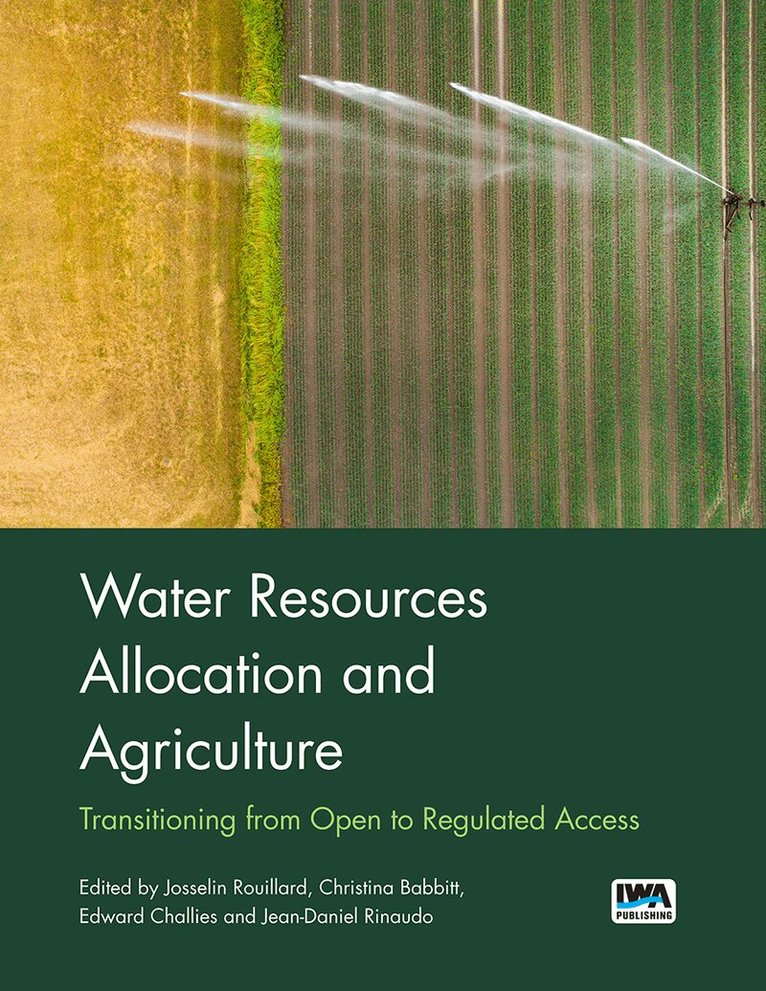
    Water Resources Allocation and Agriculture

    AvJosselin Rouillard,Christina Babbitt

    Häftad, Engelska, 2022

    1 866 kr

    Skickas . Fri frakt över 249 kr.

    Beskrivning

    The book brings together a range of leading scholars and practitioners to compile an international account of water allocation policies supporting a transition to sustainable water use in regions where agriculture is the dominant water use. In Section 1, the collection canvasses five key cross-cutting issues shaping the challenge of sustainable water allocation policy, such as legal and economic perspectives, the role of politics, the setting of environmental flows, and the importance of indigenous rights. Section 2 presents 13 national, state and transboundary case studies of water allocation policy, covering cases from Europe, the Americas, Central Asia, the Middle East and the Pacific region. These case studies highlight novel and innovative elements of water allocation regimes, which respond to the cross-cutting issues addressed in Section 1, as well as local challenges and social and environmental imperatives. The book provides a comprehensive account of water allocation in a range of international settings and provides a reference point for practitioners and scholars worldwide wishing to draw on the latest advances on how to design and implement sustainable water allocation systems.

    Produktinformation

    • Utgivningsdatum:2022-08-15
    • Mått:156 x 234 x 18 mm
    • Vikt:576 g
    • Format:Häftad
    • Språk:Engelska
    • Antal sidor:300
    • Förlag:IWA Publishing
    • ISBN:9781789062779

    Utforska kategorier

    • Miljöteknik inom Naturvetenskap och teknik

    Innehållsförteckning

    • About the EditorsContributorsForewordAcknowledgementsChapter 1IntroductionJosselin Rouillard, Christina Babbitt, Edward Challies and Jean-Daniel RinaudoChapter 2The politics of groundwater allocation and the transition from open accessWilliam Blomquist and Christina BabbittChapter 3Allocations and legal trends in the 21st centuryRebecca L. NelsonChapter 4Indigenous water and Mother EarthMargot A. HurlbertChapter 5Allocations and environmental flowsEric D. Stein, Michael E. McClain, Ashmita Sengupta, Theodore E. Grantham, Julie K. H. Zimmerman and Sarah M. YarnellChapter 6Economics and water allocation reformC. Dionisio Pérez-BlancoChapter 7England and Wales: countering ‘unsustainable abstraction’ with the catchment based approachDavid Benson, Hadrian Cook, M. Yasir Ak and Burcin DemirbilekChapter 8Water allocation in Spain. Legal framework, instruments and emerging debatesCarles Sanchis-Ibor, Manuel Pulido-Velazquez, Juan Valero de Palma and Marta García-MolláChapter 9Managing a common resource in agriculture: an overview of the French nested water allocation systemJosselin Rouillard and Jean-Daniel RinaudoChapter 10Turkey’s water allocation regime under institutional changeM. Yasir Ak, Burcin Demirbilek and David BensonChapter 11Water allocation in Aotearoa New Zealand: societal values and ecological bottom lines Edward Challies, Stephen Fragaszy and Josselin RouillardChapter 12Groundwater allocation in New South Wales, AustraliaJoseph H. A. Guillaume, Alvar Closas and Andrew McCallumChapter 13Water allocation in Brazil: main strategies, learning and challengesGuilherme F. MarquesChapter 14What are we allocating and who decides? Democratising understanding of groundwater and decisions for judicious allocations in IndiaUma Aslekar, Dhaval Joshi and Himanshu KulkarniChapter 15Legal frameworks for agricultural water use in Canada: a comparative study of Alberta and QuébecHugo TremblayChapter 16Idaho’s Eastern Snake Plain Aquifer: cooperative water policy change for Idaho’s groundwater farmersKatrina RunningChapter 17Polycentric governance in Nebraska, U.S., for ground and surface waterTheresa Jedd, Anthony Schutz and Mark BurbachChapter 18Transboundary water allocation in the Amudarya Basin of Central AsiaDinara ZiganshinaChapter 19Current challenges in the Rio Grande/Río Bravo Basin: old disputes in a new centuryRegina M. Buono and Gabriel EcksteinChapter 20Transitioning away from open access: lessons learnt from a comparative analysis of water allocation regimes worldwideJosselin Rouillard, Christina Babbitt, Edward Challies and Jean-Daniel RinaudoIndex