• Fri frakt över 249 kr
  • •
  • Snabba leveranser
  • •
  • Billiga böcker
Kundservice

Du är på sajten för privatpersoner.

Företag, bibliotek eller offentlig verksamhet?

Du handlar på classic.bokus.com, där alla dina funktioner finns intakta.
Till classic.bokus.com
Bokus logotyp. Gå till startsidan.
  • Erbjudanden
  • Nyheter
  • Student
  • Topplistor
  • Barn & ungdom
  • Bokus Play
  • E-böcker
  • Pocketböcker
  • Spel & pussel

10% rabatt på allt med kod NYSTART10 →

Sidfot

Mina sidor

    Hjälp

    • Kundservice
    • Vanliga frågor och svar
    • Frakt och leverans
    • Retur vid ångerrätt
    • Reklamera vara
    • Betalning
    • Köpvillkor
    • Allmänna villkor
    • Information om webbplatsens tillgänglighet

    Om Bokus

    • Om oss
    • Pressrum
    • För studenter
    • För företag
    • För bibliotek och offentlig verksamhet
    • För leverantörer
    • Hållbarhet

    Populärt

    • Aktuella erbjudanden
    • Presentkort
    • Studentlitteratur
    • Nya böcker
    • Topplistor
    • Signerade böcker
    • Engelska böcker

    Inspiration

    • Boktips
    • BookTok
    • Populära bokserier
    • Barnbokskaraktärer
    • Populära författare
    Logotyp för Bokus
    Följ oss på Facebook (extern länk)Följ oss på Instagram (extern länk)Följ oss på YouTube (extern länk)Följ oss på TikTok (extern länk)
    bokus @ CookiesAnpassa cookiesIntegritetspolicyKöpvillkor
    Till Citymail hemsida (extern länk)Till Budbee hemsida (extern länk)Till Postnord hemsida (extern länk)Till Schenker hemsida (extern länk)Till Early Bird hemsida (extern länk)Till Walleys hemsida (extern länk)
    1. Kultur
    2. Arkitektur

    Canterbury Cathedral, Trinity Chapel

    The Archaeology of the Mosaic Pavement and Setting of the Shrine of St Thomas Becket

    AvDavid S Neal,Warwick Rodwell

    Inbunden, Engelska, 2022

    1 112 kr

    Skickas . Fri frakt över 249 kr.

    Beskrivning

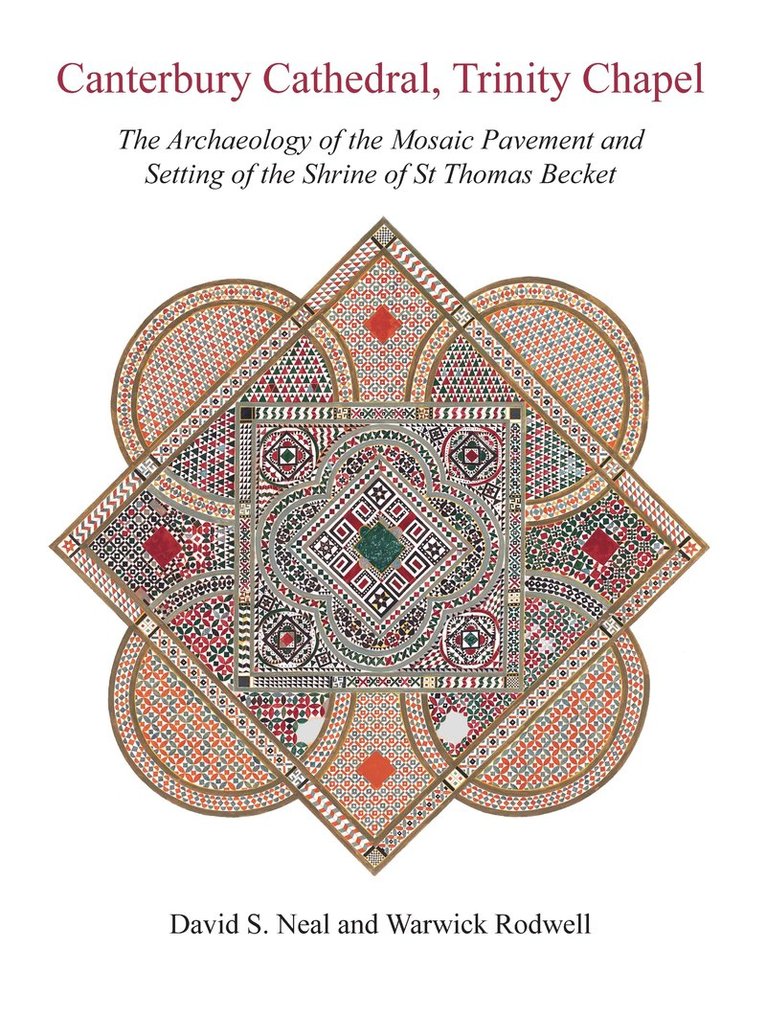
    Canterbury Cathedral possesses a unique marble mosaic pavement, dating from the early 12th century, which has long intrigued scholars and been the subject of speculation and debate. It forms part of the floor of the Trinity chapel, adjacent to the site where the shrine of St Thomas Becket stood, prior to the Reformation. Since the mosaic is older than the chapel itself and partly destroyed a pavement of figurative roundels, laid c.1215, it must have been moved here from elsewhere in the cathedral. This volume explores the history and archaeology of the Trinity chapel, the pavement and the physical remains of the cult of Becket, based largely on hitherto unrecorded and unpublished evidence. In the early 12th century, Archbishop Anselm rebuilt the eastern arm of the cathedral, introducing architectural elements from his native Italy, and these included a magnificent mosaic pavement, composed of the most expensive marbles, which lay in front of the high altar. In 1170, Archbishop Becket was murdered in the cathedral, and his body rested overnight on the pavement before being buried in the crypt. Thomas was immediately revered as a martyr, and in 1173 was canonised by the pope; a simple shrine was erected over his tomb. In the following year, a fire (arson) destroyed the eastern arm of the cathedral, precipitating the construction of the present Trinity and Corona chapels, wherein St Thomas’s remains were enshrined. After decades of delay and political strife, the enshrinement took place in 1220, in the presence of Henry III. The shrine comprised a great marble table, supported on six clusters of columns. On top of the table was a marble sarcophagus containing the saint’s body in an iron-bound timber coffin, over which stood the sumptuous feretory, a gabled timber ‘roof’, plated with sheets of gold and adorned with jewels. East of the shrine lies the small Corona chapel in which a fragment of Becket’s skull was separately encased in a ‘head-shrine’, and to the west a large area was paved with forty-eight figurative stone roundels, created by French artisans. All around, stained-glass windows display the early miracles of Becket. The layout of the Trinity chapel underwent transmutations, first around 1230, when the mosaic pavement was taken up from the old presbytery, reduced in size and relaid in front of Becket’s shrine, where is it today. Second, the chapel was reordered in c. 1290, when the podium carrying the shrine was enlarged and the paving around it reconfigured. Medieval tombs were now being installed in the chapels, including those of the Black Prince and Henry IV. The end came in 1538, when Henry VIII ordered the thorough destruction of Becket’s shrines, but a great deal of archaeological evidence remained in the floors, walls and a few surviving fragments of the shrines, all now recorded and discussed in this beautifully illustrated volume for the first time.

    Produktinformation

    • Utgivningsdatum:2022-08-15
    • Mått:240 x 305 x 37 mm
    • Vikt:2 376 g
    • Format:Inbunden
    • Språk:Engelska
    • Antal sidor:416
    • Förlag:Oxbow Books
    • ISBN:9781789258417

    Utforska kategorier

    • Arkitektur inom Kultur
    • Europas historia inom Historia och arkeologi

    Mer om författaren

    Dr David S. Neal, NDD, D.Litt, FSA, trained in graphic design and was head of archaeological illustration of the Ancient Monuments Inspectorate, and later became Senior Archaeologist, English Heritage. He has many years of experience in the study, illustration and publication of mosaic pavements, and is joint author of the major work on the mosaic pavements in Roman Britain, Roman Mosaics of Britain (2002–2010). In 2012 he joined forces with Warwick Rodwell, to illustrate and analyze the assemblage of medieval cosmatesque mosaics in Westminster Abbey, in which they published The Cosmatesque Mosaics of Westminster Abbey: The Pavements and Royal Tombs (Oxbow, 2019). Professor Warwick Rodwell, OBE, D.Phil, D.Litt, FSA, is Consultant Archaeologist to Westminster Abbey and formerly Visiting Professor in Archaeology at the University of Reading. He has written or edited several volumes on Westminster Abbey. He is also author of volumes on Wells Cathedral, Dorchester Abbey and The Archaeology of Churches (2012).

    Innehållsförteckning

    • ForewordPrefaceAcknowledgementsSummary Introduction1. The Trinity and Corona chapels in context2. The antiquarian record Part 1: The Mosaic and inlaid-roundel pavements3. The Romanesque mosaic pavement in bay 14. History and interpretation of the mosaic pavement5. The pavement of figurative stone roundels in bay 16. Interventions in the roundel pavement: 13th to 20th century Part 2: The Trinity chapel and shrines of St Thomas of Canterbury7. Aspects of the archaeology of the Trinity and Corona chapels8. The shrine pavement in bays 2 and 39. St Thomas’s shrine-tombs and their setting10. The Corona chapel (‘Becket’s Crown’)11. Synthesis and discussion12. The petrology of the tesserae and paving by Kevin Hayward13. Appendices Notes to chaptersAbbreviationsBibliographyIndex