• Fri frakt över 249 kr
  • •
  • Snabba leveranser
  • •
  • Billiga böcker
Kundservice

Du är på sajten för privatpersoner.

Företag, bibliotek eller offentlig verksamhet?

Du handlar på classic.bokus.com, där alla dina funktioner finns intakta.
Till classic.bokus.com
Bokus logotyp. Gå till startsidan.
  • Erbjudanden
  • Nyheter
  • Student
  • Topplistor
  • Barn & ungdom
  • Bokus Play
  • E-böcker
  • Pocketböcker
  • Spel & pussel

10% studentrabatt med kod TERM26

Sidfot

Mina sidor

    Hjälp

    • Kundservice
    • Vanliga frågor och svar
    • Frakt och leverans
    • Retur vid ångerrätt
    • Reklamera vara
    • Betalning
    • Köpvillkor
    • Allmänna villkor
    • Information om webbplatsens tillgänglighet

    Om Bokus

    • Om oss
    • Pressrum
    • För studenter
    • För företag
    • För bibliotek och offentlig verksamhet
    • För leverantörer
    • Hållbarhet

    Populärt

    • Aktuella erbjudanden
    • Presentkort
    • Studentlitteratur
    • Nya böcker
    • Topplistor
    • Signerade böcker
    • Engelska böcker

    Inspiration

    • Boktips
    • BookTok
    • Populära bokserier
    • Barnbokskaraktärer
    • Populära författare
    Logotyp för Bokus
    Följ oss på Facebook (extern länk)Följ oss på Instagram (extern länk)Följ oss på YouTube (extern länk)Följ oss på TikTok (extern länk)
    bokus @ CookiesAnpassa cookiesIntegritetspolicyKöpvillkor
    Till Citymail hemsida (extern länk)Till Budbee hemsida (extern länk)Till Postnord hemsida (extern länk)Till Schenker hemsida (extern länk)Till Early Bird hemsida (extern länk)Till Walleys hemsida (extern länk)
    1. Kultur
    2. Designböcker

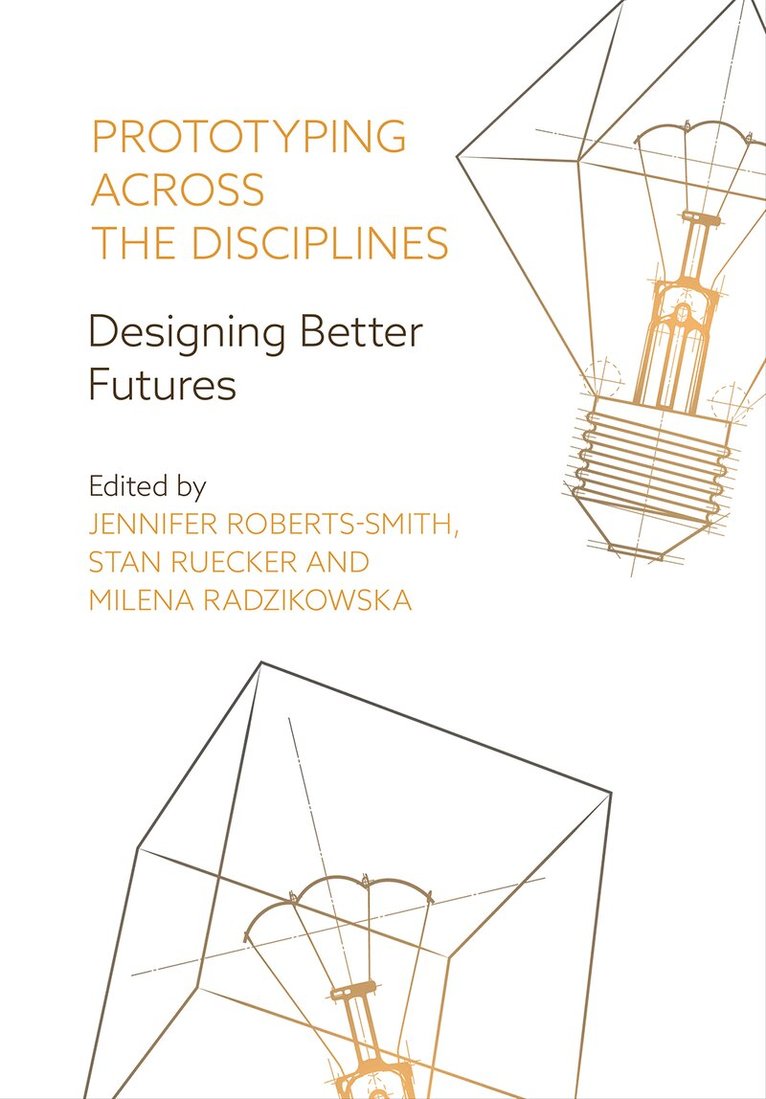
    Prototyping across the Disciplines

    Designing Better Futures

    AvJennifer Roberts-Smith,Stan Ruecker

    Häftad, Engelska, 2021

    568 kr

    Beställningsvara. Skickas inom 5-8 vardagar. Fri frakt över 249 kr.

    Beskrivning

    If people from different fields are going to work together on projects, then they need to begin to understand each other. They can be separated by the words they use, the ways they work and how they think. However, in many fields there is common ground, in the attempts to create what is sometimes called inventive knowledge. These fields progress not only by understanding increasingly more about what already exists, but by making guesses about possible better futures. The guesses consist of small forays into that future, using strategies that are variously called learning through making, research through design or, more simply, prototyping.While traditionally associated primarily with industrial design, and more recently with software development, prototyping is now used as an important tool in areas ranging from materials engineering to landscape architecture to the digital humanities. This book collects current theories and methods of prototyping in a dozen disciplines, illustrating them through case studies of actual projects, whether in industry or the classroom.This edited collection aims to provide a context, a theoretical framework and a set of methodologies for interdisciplinary collaboration in design. Each chapter offers a different disciplinary perspective on prototyping, providing a case study as a point of comparison for identifying commonalities and divergences in current practices. Contributions are from a group of scholars with worldwide experience of working and presenting in design, and who are currently based in Canada, the United States, Chile and Brazil. This book isn’t just about design across the disciplines, it is about how prototyping works in different disciplines. Prototyping is a crucial part of the design process, and a practice used by  creators from all design disciplines, from architects and engineers, to industrial and service designers, to test a concept or process and evaluate an idea.Much research has been published on prototyping in design; what makes this new book unique is the cross disciplinary nature, showing designers how they can learn from various approaches to improve their skills. Disciplines discussed include post-human design, theatre, tabletop game design, landscape architecture and arts entrepreneurship.Primarily of interest to design scholars and practitioners with an interest in integrative design. Undergraduates and graduate students in design, HCI (human-computer interaction) and the digital humanities.  Textbook potential.

    Produktinformation

    • Utgivningsdatum:2021-11-09
    • Mått:170 x 244 x 23 mm
    • Vikt:596 g
    • Format:Häftad
    • Språk:Engelska
    • Antal sidor:292
    • Förlag:Intellect
    • ISBN:9781789381801

    Utforska kategorier

    • Designböcker inom Kultur
    • Produktdesign inom Kultur

    Mer om författaren

    Stan Ruecker, a scholar in information and communication design, is the Anthony J. Petullo professor of design at the University of Illinois. He has been tenured at three different universities: the University of Alberta in the MA in Humanities Computing programme; Illinois Tech in the School of Design (aka the New Bauhaus); University of Illinois School of Design. From 2013–16, he was visiting professor at UNISINOS in Brazil; since 2018, he is visiting professor at the Dalian University of Technology. Since joining the faculty at the University of Illinois, he has been appointed as affiliate professor in the Informatics Program of the iSchool and the Carle College of Medicine.Milena Radzikowska, since 2005, has collaborated on over 30 design research projects that extended anywhere from two to seven years; four of those with budgets in the millions. Her research work is transdisciplinary, marked by a passion to benefit others and informed by fifteen years on teams with researchers from over 30 different fields. She’s worked on large, medium and small, national and international projects, with undergraduate and graduate researchers, industry partners, not-for-profit agencies and scholars. Her work has been iterative and experimental – meant to challenge existing design conventions and explore unique alternatives to complex problems.Jennifer Roberts-Smith (University of Waterloo, co-applicant) is a woman-identified, cis-gendered settler scholar whose interdisciplinary research and creative practice focus on performance and digital media, with particular emphases on design, theatre, history and pedagogy. She has been instrumental in securing the place of performance-informed scholarship in the digital humanities, including in pedagogical game design and the design of justice-oriented digital pedagogical environments. As principal investigator or co-applicant on fourteen funded research projects with budgets totalling $850,000 in the last ten years (in addition to roles as collaborator), Dr Roberts-Smith has been evolving, with her collaborators, a critical feminist approach to research project management. Currently, she directs the qcollaborative and leads the Virtual Reality Development Cluster of the Digital Oral Histories for Reconciliation (DOHR) project. Her work has been supported by SSHRC, MITACS and the Canada Council for the Arts, and recognized with an Ontario Early Researcher Award and a UW Faculty of Arts Outstanding Performance Award.

    Innehållsförteckning

    • IntroductionOur goalsWhat’s aheadPART 1: QUESTIONING ASSUMPTIONS1.1 Cosmopolitical interventions: Prototyping inter-species encountersBy Pablo Hermansen and Martin Tironi1.2 How industrial prototypes behave thru structure, function, and material By Zhabiz Shafieyoun and Gerry Derksen1.3 To design is to pretend: Observational modeling and Analysis by children By Teresa Dobson, Ernesto Peña and Milena Radzikowska1.4 Prototyping text analysis in the motorcycle shopBy Milena Radzikowska, Alyssa Kelle and Madison SnellPART 2: PROBLEM SOLVING2.1 Prototyping with physical-digital interactions: Conceptual models for hacking the constructed world as an inquisitive process By Juan De La Rosa2.2 Designing tabletop games with the use of prototypes By Simone L. Sperhacke and Maurício M. E. S. Bernardes2.3. Octagonal research globe for prototyping emergent immersive reality experiences By Lisa E. Mercer and William C. Bullock2.4 Persist, pivot or punt: The role of prototyping in teams involved in a commercial arts-led innovation programme By David Goodwin & Jill Tomasson GoodwinPART 3: DESIGNING DISRUPTION3.1 Making and appreciating theatre: Lessons in ethical relationality and prototype expansion By Kathleen Gallagher and Scott Mealey3.2 Prototyping and the critical practice of landscape architecture By David L. Hays3.3 Teaching materials engineering through embodied cognition By John A. Nychka and Glenn D. Hibbard3.4 Using prototypes to develop research questions By Stan Ruecker and Guilherme Englert Corrêa MeyerConclusion1. What we’ve learned2. Final thoughtsReferences