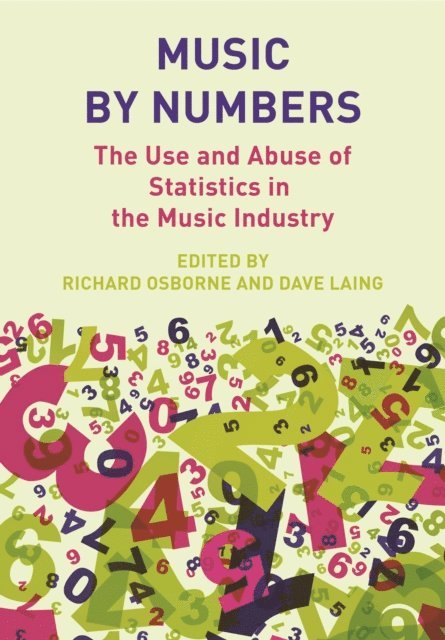
E-bok, Engelska, 2020
Music by Numbers
Av Dave Laing, Richard Osborne
1180 kr
Läs direkt i Bokus Reader – eller ladda ned till din enhet (PDF kräver ofta zoom och scroll på små skärmar).
Beskrivning
The music industries are fuelled by statistics: sales targets, breakeven points, success ratios, royalty splits, website hits, ticket revenues, listener figures, piracy abuses and big data. Statistics are of consequence. They influence the music that consumers get to hear, they determine the revenues of music makers, and they shape the policies of governments and legislators. Yet many of these statistics are generated by the music industries themselves, and their accuracy can be questioned. This original new book sets out to explore this shadowy terrain.
While there are books that offer guidelines about how the music industries work, as well as critiques from academics about the policies of music companies, this is the first book that takes a sustained look at these subjects from a statistical angle. This is particularly significant as statistics have not just been used to explain the music industries, they are also essential to the ways that the industries work: they drive signing policy, contractual policy, copyright policy, economic policy and understandings of consumer behaviour.
This edited collection provides the first in-depth examination of the use and abuse of statistics in the music industries. The international group of contributors are noted music business scholars and practitioners in the field. The book addresses five key areas in which numbers are employed: sales and awards; royalties and distribution; music piracy; music policy; and audiences and their uses of music. The authors address these subjects from a range of perspectives. Some of them test the veracity of this data and explore its tactical use by music businesses. Others are helping to generate these numbers: they are developing surveys and online projects and offer candid self-observations in this volume. There are also authors who have been subject to statistics; they deliver first-hand accounts of music industry reporting.
The digital age is inherently numerical. Within the music industries this has prompted new ways of tracking the usage and recompense of music. In addition, it has generated new means of monitoring and engaging audience behaviour. It has also led to increased documentation of the trade. There is more reporting of the overall revenues of music industry sectors. There is also more engagement between industry and academia when it comes to conducting analyses and offering numerical recommendations to politicians.
The aim of this collection is to expose the culture and politics of data. Music industry statistics are all-pervasive, yet because of this ubiquity they have been under-explored. This book provides new ways by which to learn music by numbers.
A timely examination of how data and statistics are key to the music industries. Widely held industry assumptions are challenged with data from a variety of sources and in an engaging, lucid manner. Highly recommended for anyone with an interest in how the music business uses and manipulates the data that digital technologies have made available.
Primary readership will be among popular music academics, undergraduate and postgraduate students working in the fields of popular music studies, music business, media studies, cultural studies, sociology and creative industries. The book will also be of interest to people working within the music industries and to those whose work encounters industry statistics.
Produktinformation
- Utgivningsdatum: 2020-12-02
- Språk: Engelska
- Filformat: PDF
- Kopieringsskydd: LCP
- ISBN: 9781789382549
- Förlag: Intellect Books
Utforska kategorier
Betyg & recensioner
0 recensioner
Inga recensioner tillgängliga.