• Fri frakt över 249 kr
  • •
  • Snabba leveranser
  • •
  • Billiga böcker
Kundservice

Du är på sajten för privatpersoner.

Företag, bibliotek eller offentlig verksamhet?

Du handlar på classic.bokus.com, där alla dina funktioner finns intakta.
Till classic.bokus.com
Bokus logotyp. Gå till startsidan.
  • Erbjudanden
  • Nyheter
  • Student
  • Topplistor
  • Barn & ungdom
  • Bokus Play
  • E-böcker
  • Pocketböcker
  • Spel & pussel

10% rabatt på allt med kod: NYSTART10 →

Sidfot

Mina sidor

    Hjälp

    • Kundservice
    • Vanliga frågor och svar
    • Frakt och leverans
    • Retur vid ångerrätt
    • Reklamera vara
    • Betalning
    • Köpvillkor
    • Allmänna villkor
    • Information om webbplatsens tillgänglighet

    Om Bokus

    • Om oss
    • Pressrum
    • För studenter
    • För företag
    • För bibliotek och offentlig verksamhet
    • För leverantörer
    • Hållbarhet

    Populärt

    • Aktuella erbjudanden
    • Presentkort
    • Studentlitteratur
    • Nya böcker
    • Topplistor
    • Signerade böcker
    • Engelska böcker

    Inspiration

    • Boktips
    • BookTok
    • Populära bokserier
    • Barnbokskaraktärer
    • Populära författare
    Logotyp för Bokus
    Följ oss på Facebook (extern länk)Följ oss på Instagram (extern länk)Följ oss på YouTube (extern länk)Följ oss på TikTok (extern länk)
    bokus @ CookiesAnpassa cookiesIntegritetspolicyKöpvillkor
    Till Citymail hemsida (extern länk)Till Budbee hemsida (extern länk)Till Postnord hemsida (extern länk)Till Schenker hemsida (extern länk)Till Early Bird hemsida (extern länk)Till Walleys hemsida (extern länk)
    1. Historia och arkeologi
    2. Historia
    3. Historia: särskilda händelser och ämnen
    4. Socialhistoria och kulturhistoria

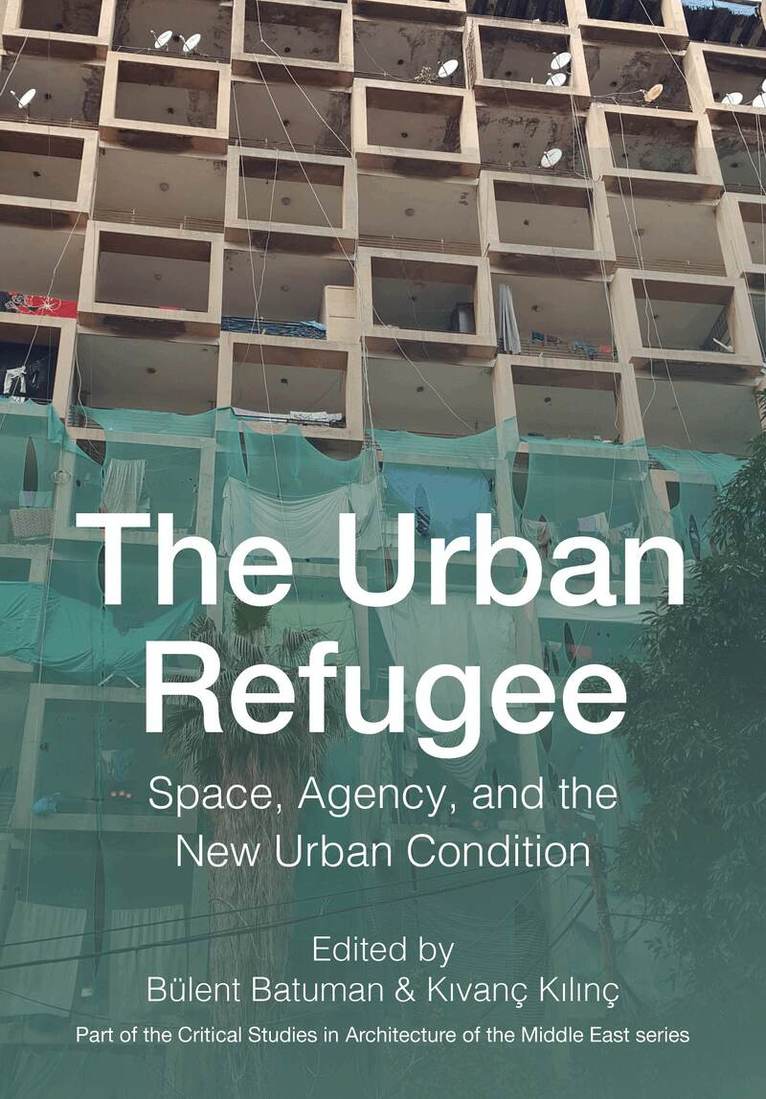
    Urban Refugee

    Space, Agency, and the New Urban Condition

    AvBülent Batuman,Kıvanç Kılınç

    Inbunden, Engelska, 2024

    Del i serien Critical Studies in Architecture of the Middle East

    1 556 kr

    Tillfälligt slut

    Beskrivning

    The presence of the refugee in the contemporary metropolis is marked by precarity, a quality that has become a characteristic feature of the neoliberal urban milieu. Bringing together essays from diverse disciplines, from architectural history to cultural anthropology and urban planning, this collection sheds light on both the specificities of the contemporary urban condition that affects the refugees and the multi-dimensional impact that the refugees have on the city. The authors propose investigating this connection through three interlinked themes: identity (informality, imagination and belonging); place (transnational homemaking practices); and site (the navigation of urban space).In recent years, there has been a significant growth in scholarship on forced migration, particularly on the relationship between displacement and the built environment. Scholars have focused on spatial practices and forms that arise under conditions of displacement, with much attention given to refugee camps and the social and political aspects of temporariness. While these issues are important, the essays in this volume aim to contribute to a less explored aspect of displacement, namely the interaction between refugees and the cities they inhabit. In this respect, the volume underlines the specificity of the urban refugee as well as their spatial agency and investigates the irreversible effect they have on the contemporary urban condition.The authors argue that viewing urban refugees solely as dislocated individuals outside the camp-like spaces of containment fails to understand the agency of the urban refugee and the blurred boundaries of identity that result. The term 'refugee crisis' objectifies and denies active agency to refugees, homogenizing dislocated individuals and groups. The neoliberalization of the past four decades has led to the precarization of labour and the displacement of refugees, who frequently blend into the urban environment as hidden populations. Refugees are subjected to constant surveillance and the state's attempts to control them. However, these attempts are not uncontested, and the involvement of activist interventions further politicizes the urban refugee.

    Produktinformation

    • Utgivningsdatum:2024-02-19
    • Mått:170 x 230 x 21 mm
    • Vikt:737 g
    • Format:Inbunden
    • Språk:Engelska
    • Serie:Critical Studies in Architecture of the Middle East
    • Antal sidor:276
    • Förlag:Intellect
    • ISBN:9781789389005

    Utforska kategorier

    • Socialhistoria och kulturhistoria inom Historia och arkeologi
    • Arkitektur inom Kultur

    Mer om författaren

    Bülent Batuman is an associate professor of architecture at Bilkent University in Ankara, Turkey. He studied at the Middle East Technical University and received his Ph.D. in History and Theory of Art and Architecture from Binghamton University, SUNY, USA. His recent work focuses on the relationship between Islamism and the built environment.Kıvanç Kılınç is associate professor at Izmir Institute of Technology (IYTE), Turkey. He received his Ph.D. in the History and Theory of Art and Architecture Graduate Program at Binghamton University, SUNY, USA. His current research focuses on the transnational cultural and material exchanges, and their consequences, which shaped contemporary social housing practices in Turkey and the Middle East.

    Recensioner i media

    ‘This book redefines the urban as a phenomenon of refugeehood, a circumstance of people simultaneously in and out of place, where logic or logistic of control coalesces with the unrestraint experiential quality of the urban. Batuman and Kilinc have brought together contributors committed to take seriously the agency and subjectivity of refugees in the co-production of urban space and in claiming the rights to the city. Together, they engage significant research materials with critical concepts in urban studies that cut across the North-South divide. They have made us aware that the global urban present and future is unthinkable without recognizing the phenomena of refugeehood that mediate the consequences of built environments and complex strategies of place-making.’

    Innehållsförteckning

    • List of Figures ix Acknowledgements xi Introduction: The Urban Refugee: Migration, Neoliberalism, and the City 1 Bülent BatumanPart 1. On Identity: Informality, Imagination, and Belonging 25 Chapter 1. Urban Refugees and Differential Inclusion through Urban Informality in Denizli, Turkey 27 Eda Sevinin Chapter 2. Syrian Children’s Imagination and Play Areas beyond the Physical Reality of Urban Spaces in Beirut 51Roula El Khoury and Paola Ardizzola Chapter 3. From Longing to Belonging: Arab American Cultural Adaptation and Refugee Resettlement Practices in Houston, Texas and the Gulf Coast 73 Maria F. CurtisPart 2. On Place: Transnational Homemaking Practices 101 Chapter 4. Opening Your Home to The Other: Living with a Stranger, Citizens Hosting Exiles in Ile de France 103Stéphanie Dadour Chapter 5. Housing Syrian Refugees in Saida under Protracted Displacement: Unfolding Spatial and Social Exclusion 127Howayda Al-Harithy, Abir Eltayeb, and Ali KhodrChapter 6. Transnational Homemaking in Somali Malls: Cape Town, and Minneapolis 159 Huda TayobPart 3. On Site: Navigating the Urban Space 181 Chapter 7. Syrian Refugees’ Location Choice in Urban Areas as a Subjective Process: A Cross-case Comparison of Önder (Ankara) and Yunusemre (Izmir) Neighbourhoods 183Feriha Nazda Güngördü and Zerrin Ezgi Haliloğlu Kahraman Chapter 8. Gaza Buildings: Architectures of Precarity in Sabra, Beirut 213Are John KnudsenChapter 9. Transience, Marginality, and Spaces of Refuge: Basmane Hotels District in Izmir 233Kıvanç Kılınç and Şebnem YücelContributor Biographies 255 Index 259