• Fri frakt över 249 kr
  • •
  • Snabba leveranser
  • •
  • Billiga böcker
Kundservice

Du är på sajten för privatpersoner.

Företag, bibliotek eller offentlig verksamhet?

Du handlar på classic.bokus.com, där alla dina funktioner finns intakta.
Till classic.bokus.com
Bokus logotyp. Gå till startsidan.
  • Erbjudanden
  • Nyheter
  • Student
  • Topplistor
  • Barn & ungdom
  • Bokus Play
  • E-böcker
  • Pocketböcker
  • Spel & pussel

10% rabatt på allt med kod: NYSTART10 →

Sidfot

Mina sidor

    Hjälp

    • Kundservice
    • Vanliga frågor och svar
    • Frakt och leverans
    • Retur vid ångerrätt
    • Reklamera vara
    • Betalning
    • Köpvillkor
    • Allmänna villkor
    • Information om webbplatsens tillgänglighet

    Om Bokus

    • Om oss
    • Pressrum
    • För studenter
    • För företag
    • För bibliotek och offentlig verksamhet
    • För leverantörer
    • Hållbarhet

    Populärt

    • Aktuella erbjudanden
    • Presentkort
    • Studentlitteratur
    • Nya böcker
    • Topplistor
    • Signerade böcker
    • Engelska böcker

    Inspiration

    • Boktips
    • BookTok
    • Populära bokserier
    • Barnbokskaraktärer
    • Populära författare
    Logotyp för Bokus
    Följ oss på Facebook (extern länk)Följ oss på Instagram (extern länk)Följ oss på YouTube (extern länk)Följ oss på TikTok (extern länk)
    bokus @ CookiesAnpassa cookiesIntegritetspolicyKöpvillkor
    Till Citymail hemsida (extern länk)Till Budbee hemsida (extern länk)Till Postnord hemsida (extern länk)Till Schenker hemsida (extern länk)Till Early Bird hemsida (extern länk)Till Walleys hemsida (extern länk)
    1. Samhälle och politik
    2. Samhälle och kultur
    3. Kultur och medier
    4. Referensverk och tvärvetenskap

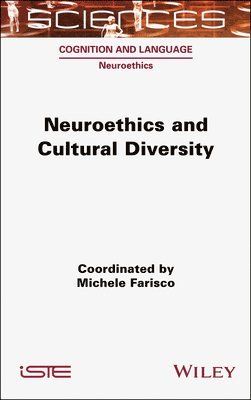
    Neuroethics and Cultural Diversity

    AvMichele Farisco,Michele Farisco

    Inbunden, Engelska, 2023

    1 772 kr

    Beställningsvara. Skickas inom 5-8 vardagar. Fri frakt över 249 kr.

    Beskrivning

    There is a growing discussion concerning the relationship between neuroethical reflections and cultural diversity, which is among the most impactful factors in shaping neuroethics, both as a scientific discipline and a social enterprise. The impacts of culture on science and its public perception are particularly relevant to neuroethics, which aims to facilitate the creation of an interface between neuroscience and society at large. Time is ripe for neuroethics to review the influence of the culturally specific contexts from which it originated (i.e. North America and Western Europe) and to also include other cultural perspectives in the discussion.This book illustrates a convergent approach among different cultures in identifying the main issues raised by neuroscience and emerging technologies. This should be taken as a starting point for advancing in the search for shared solutions, which are, if not definitive, at least sufficiently reliable to be translated into democratic deliberative processes.

    Produktinformation

    • Utgivningsdatum:2023-12-13
    • Mått:156 x 234 x 21 mm
    • Vikt:758 g
    • Format:Inbunden
    • Språk:Engelska
    • Antal sidor:352
    • Förlag:ISTE Ltd
    • ISBN:9781789451399

    Utforska kategorier

    • Referensverk och tvärvetenskap inom Samhälle och politik
    • Språkvetenskap och lingvistik inom Språk och ordböcker

    Mer om författaren

    Michele Farisco is a researcher at the Centre for Research Ethics and Bioethics, Uppsala University, Sweden, and at Biogem Institute, Ariano Irpino (AV), Italy. He is the author of four books and has written several articles regarding posthumanism, ethical, legal and social implications (ELSI) of genetics and neuroscience, consciousness, Artificial Intelligence, and neuroethics.

    Innehållsförteckning

    • Preface xiiiMichele FARISCOPart 1 Neuroethics as a Field 1Chapter 1 Examining the Ethics of Neuroscience in Contemporary Neuroethics 3Cynthia FORLINI1.1 Introduction 31.2 A brief history of neuroethics 41.3 Critiques of the ethics of neuroscience 91.4 Responses to critiques of the ethics of neuroscience 121.5 Blind spots in the ethics of neuroscience are opportunities for engagement 141.6 Conclusion 161.7 References 16Chapter 2 Neuroscience of Ethics 21Georg NORTHOFF2.1 Introduction 212.2 Example I: a non-reductionistic and neuro-ecological model of brains 222.3 Example II: from the neural basis of sense of self to relational agency 272.4 Example III: enhancement of self – deep brain stimulation 302.5 Conclusion 322.6 References 33Chapter 3 Fundamental Neuroethics 37Kathinka EVERS3.1 Science and ethics 373.2 Neuroethics 393.3 Fundamental versus applied neuroethics 403.4 Fundamental neuroethics as a key component of European research and innovation in the area of neuroscience 413.5 Conceptual analysis in fundamental neuroethics methodology 443.6 Fundamental neuroethics connecting neuroscience with "free will" and social structures 483.7 Conclusion 513.8 Acknowledgments 513.9 References 52Chapter 4 Diversity in Neuroethics: Which Diversity and Why it Matters? 55Eric RACINE and Abdou Simon SENGHOR4.1 Background 554.2 Diversity and cultural diversity 574.3 Diversity, ethics and neuroethics' uneasy relationship with diversity 594.4 Should neuroethics take cultural diversity into account, and why? 654.5 Conclusion 684.6 References 70Chapter 5 Neurofeminism in BCI and BBI Ethics as a Prelude to Political Neuroethics 77Mai IBRAHIM and Veljko DUBLJEVIC5.1 Introduction 785.2 Brain-to-brain interfaces 795.3 Neurosexism 815.4 Agential realism 855.5 Political perspective in neuroethics 895.6 Conclusion 915.7 References 91Chapter 6 Neuroethics as an Anthropological Project 95Fabrice JOTTERAND6.1 Introduction 956.2 The nature of neuroethics 966.3 Neuroethics as an anthropological project 1006.4 Protecting the brain and the mind 1026.5 Concluding remarks 1046.6 References 104Part 2 Cultural Influences on Neuroethics 107Chapter 7 Neuroethics and Culture 109Arleen SALLES7.1 Introduction 1097.2 Neuroethics and the challenge of cultural diversity 1117.3 Can neuroethics contribute to the discussion? 1147.4 Concluding remarks and the way forward 1197.5 Acknowledgments 1207.6 References 120Chapter 8 Globalization of Neuroethics: Rethinking the Brain and Mind "Global Market" 125Karen HERRERA-FERRÁ8.1 Introduction 1258.2 Neuroethics within the global market: the "normality" problem 1288.3 Neuroethics in a consumer country: a narrative from Mexico 1328.4 Conclusion and future directions 1368.5 References 137Chapter 9 The Dilemma of Cross-Cultural Neuroethics 143Laura SPECKER SULLIVAN and Karen S ROMMELFANGER9.1 Framing 1439.2 Benefits and aims of cross-cultural neuroethics 1469.3 Potential forms of cross-cultural neuroethics 1489.4 Challenges in cross-cultural neuroethics 1519.5 Conclusion 1549.6 References 155Chapter 10 Neuroethics in Religion and Science: Hume's Law and Bodily Value 159Denis LARRIVEE10.1 Introduction 15910.2 Contingency, autonomy and bodily value 16510.3 Autonomy as a constituent ground of nature: a metaphysical composition 16910.4 The personal subject and intrinsic corporal value 17310.5 Conclusion 17510.6 References 175Chapter 11 How Would Neo-Confucians Value Moral Neuroenhancement? 179Jie YIN11.1 Moral neuroenhancement: the scenario and the conceptual challenge 18011.2 How would neo-Confucians value moral neuroenhancement? 18411.3 Concluding remarks: the complementary role of Chinese philosophy in applied ethics 19011.4 References 191Part 3 Illustrative Cases 193Chapter 12 How Do Arabic Cultural and Ethical Perspectives Engage with New Neuro-technologies? A Scoping Review 195Amal MATAR12.1 Background 19512.2 Methods 19612.3 Results 19712.4 Discussion 20412.5 Conclusion 20612.6 Acknowledgments 20712.7 Appendix 20712.8 References 212Chapter 13 The Binary Illusion 217Karin GRASENICK13.1 A brain is still a brain 21713.2 Imagine all the people living life in vain 21813.3 This land is my land, from the asylum to the last island 21913.4 Little bits of history repeating 22113.5 What's good for me is good enough for you 22213.6 They keep saying they have something for you 22313.7 Sign of the times 22613.8 Just microscopic cogs for a neuroethics plan (conclusion) 22813.9 References 229Chapter 14 What's Next? The Chilean Neuroprotection Initiative, in Light of the Historical Dynamics of Human Rights 235Manuel GUERRERO14.1 Introduction 23514.2 Battling on the "last frontier": the Chilean neuroprotection legislation 23614.3 The Chilean neuroprotection initiative, an unfinished project 24114.4 References 246Chapter 15 Interrogating the Culture of Human Exceptionalism: Animal Research and the Neuroethics of Animal Minds and Brains 249L Syd M JOHNSON15.1 Introduction 24915.2 Brains, minds, consciousness and moral status 25015.3 Chimeras and humanization: the overexamined problem 252  15.4 Already human-like: the overlooked problem 26015.5 Implications: justice in neuroscientific research 26015.6 Interrogating the anthropocentric culture and human exceptionalism of neuroethics 26315.7 References 266Chapter 16 Cultural Neuroethics in Practice – Human Rights Law and Brain Death 271Jennifer A CHANDLER16.1 Introduction 27116.2 The concept of brain death 27316.3 Objections to brain death: culture, religion and demographic minorities 27516.4 What is at stake with the definition of death? 27616.5 Legal responses to brain death objection 27916.6 Accommodation of dissenting views 28116.7 Conclusion 28216.8 Acknowledgments 28316.9 References 283Chapter 17 Neuroscientific Research, Neurotechnologies and Minors: Ethical Aspects 287Laura PALAZZANI17.1 The importance of neuroscientific and neurotechnological research on minors 28717.2 Ethical criteria of neuroscientific research on minors in the medical field 28917.3 Research for neuro-enhancement purposes 29817.4 Use of neurotechnologies in non-medical field without any research 30017.5 Some conclusive reflections 30117.6 References 302Conclusion 305Michele FARISCOList of Authors 311Index 315