• Fri frakt över 249 kr
  • •
  • Snabba leveranser
  • •
  • Billiga böcker
Kundservice

Du är på sajten för privatpersoner.

Företag, bibliotek eller offentlig verksamhet?

Du handlar på classic.bokus.com, där alla dina funktioner finns intakta.
Till classic.bokus.com
Bokus logotyp. Gå till startsidan.
  • Erbjudanden
  • Nyheter
  • Student
  • Topplistor
  • Barn & ungdom
  • Bokus Play
  • E-böcker
  • Pocketböcker
  • Spel & pussel

10% rabatt på allt med kod: NYSTART10 →

Sidfot

Mina sidor

    Hjälp

    • Kundservice
    • Vanliga frågor och svar
    • Frakt och leverans
    • Retur vid ångerrätt
    • Reklamera vara
    • Betalning
    • Köpvillkor
    • Allmänna villkor
    • Information om webbplatsens tillgänglighet

    Om Bokus

    • Om oss
    • Pressrum
    • För studenter
    • För företag
    • För bibliotek och offentlig verksamhet
    • För leverantörer
    • Hållbarhet

    Populärt

    • Aktuella erbjudanden
    • Presentkort
    • Studentlitteratur
    • Nya böcker
    • Topplistor
    • Signerade böcker
    • Engelska böcker

    Inspiration

    • Boktips
    • BookTok
    • Populära bokserier
    • Barnbokskaraktärer
    • Populära författare
    Logotyp för Bokus
    Följ oss på Facebook (extern länk)Följ oss på Instagram (extern länk)Följ oss på YouTube (extern länk)Följ oss på TikTok (extern länk)
    bokus @ CookiesAnpassa cookiesIntegritetspolicyKöpvillkor
    Till Citymail hemsida (extern länk)Till Budbee hemsida (extern länk)Till Postnord hemsida (extern länk)Till Schenker hemsida (extern länk)Till Early Bird hemsida (extern länk)Till Walleys hemsida (extern länk)
    1. Naturvetenskap och teknik
    2. Matematik och naturvetenskap
    3. Biologi

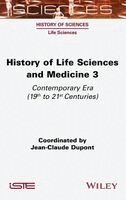
    History of Life Sciences and Medicine, Volume 3

    Contemporary Era (19th to 21st Centuries)

    AvJean-Claude DuPont,Jean-Claude Dupont

    Inbunden, Engelska, 2026

    Del i serien ISTE Invoiced

    1 725 kr

    Beställningsvara. Skickas inom 5-8 vardagar. Fri frakt över 249 kr.

    Beskrivning

    Writing the recent history of life sciences is an exciting but demanding undertaking. Some disciplines are emerging while others are disappearing; above all, they are now intertwined and overlapping, constantly shifting their boundaries. However, despite the resulting complexity, certain fundamental cross-disciplinary concepts continue to structure research, giving biology a coherent overall identity.History of Life Sciences and Medicine 3 takes a conceptual approach to history, aiming to reflect the contemporary constitution of the field of life sciences. It thus addresses some of the most representative concepts from a historical and epistemological perspective, for example, those that have particularly structured the field of life sciences since the 19th and 20th centuries. Ten key biological concepts are analyzed: the origin of life, evolution, the ecosystem, the cell, metabolism, the gene, development, immunity, the brain and pathology.

    Produktinformation

    • Utgivningsdatum:2026-03-24
    • Mått:164 x 239 x 22 mm
    • Vikt:570 g
    • Format:Inbunden
    • Språk:Engelska
    • Serie:ISTE Invoiced
    • Antal sidor:304
    • Förlag:ISTE Ltd
    • ISBN:9781789452105

    Utforska kategorier

    • Biologi inom Naturvetenskap och teknik

    Mer om författaren

    Jean-Claude Dupont is Professor Emeritus of History and Philosophy of Science at the University of Picardie Jules Verne (Amiens), France. He is a specialist in the history of life sciences and medicine.

    Innehållsförteckning

    • Presentation of Field "History of Science" xiJean-Claude DUPONTIntroduction: The Conceptual Scope of Life xiiiJean-Claude DUPONT Chapter1. Theories for the Origin of Life in the 19th and 20th Centuries 1Stéphane TIRARD1.1. Introduction 11.2. Lamarck: animalization and permanent spontaneous generation 11.3. Pasteur and the abandonment of spontaneous generation 31.4. Darwin: lack of evidence and discreet comments 51.5. Abiogenesis: the transition from non-life to life 61.6. Panspermia: eternal and universal life 71.7. Oparin and Haldane: hypothetical scenarios for life's emergence on Earth 81.8. Prebiotic chemistry: an experimental model of primitive Earth 101.9. The RNA world and the first carriers of genetic information 121.10. The origins of life on Earth: a historical problem with no record and the need for cross-disciplinary approaches 131.11. Extraterrestrial life and the development of astrobiology 151.12. Conclusion 171.13. References 17Chapter 2. The Reception of Evolutionary Theory in France 21Olivier PERRU2.1. Introduction 212.2. Darwin and biological evolution 232.3. The reception of Darwin's theory of evolution in 19th century France 262.4. Henri Bergson and Pierre Teilhard de Chardin 302.5. The theory of evolution and French biologists in the early 20th century 332.6. The possibility of rejecting evolution 362.7. Conclusion 372.8. References 37Chapter 3. The History of the Ecosystem Concept 39Julien DELORD3.1. Introduction 393.2. The origins of the term "ecosystem" 403.3. From the ecosystem concept to systems ecology 433.4. Ecosystem ecology as "big science" 453.5. The IBP's mixed record in developing ecosystem ecology 453.6. Shortcomings of the Odumian ecosystem paradigm 463.7. The contemporary ecosystem paradigm: "the analysis of (self-organized) ecological networks" 483.8. Disturbance ecology 503.9. Biodiversity and ecosystem functioning 503.10. Conclusion and outlook 523.11. References 56Chapter 4. The Cell: The Basic Structural and Functional Unit of Living Organisms 63François DUCHESNEAU4.1. Introduction 634.2. Schwann's cell theory 664.3. Holistic reinterpretations of Schwann's theory 704.4. Elementary organisms and protoplasmic individualities 774.5. Mitosis and meiosis revealed 804.6. The relativization and complexification of cell theory 844.7. References 86Chapter 5. The History of the Metabolism Concept: From Its Beginnings to Maturity 89Jean-Claude DUPONT5.1. Introduction 895.2. The emergence of the metabolism concept 905.3. Biochemistry: the science of metabolism 975.4. The metabolism's golden age: cellular respiration 1035.5. Conclusion: the evolution of molecular dissection methods and the revival of the metabolism 1135.6. References 116Chapter 6. The History of the Gene 125Antonine NICOGLOU6.1. Introduction 1256.2. The prehistory of the gene 1276.3. The gene in Mendelian genetics: the probabilistic gene 1316.4. The gene in formal genetics: the statistical gene 1376.5. The gene in molecular biology: the gene in DNA nucleotides 1406.6. The gene and its surroundings: the genome 1436.7. Conclusion: no longer "life's destiny", the gene as the "future of biology" 1466.8. References 147Chapter 7. Microcosm, Type and Individuation: Understanding Animal Development 151Ghyslain BOLDUC7.1. Introduction: development as the backbone of biological thought 1517.2. The establishment of embryology as an autonomous and central morphological science 1537.3. Darwinian reform of developmental history 1567.4. The birth of experimental embryology 1597.5. The rise of experimental embryology: gradients, organizers and fields 1617.6. From embryology to developmental biology 1647.7. Conclusion: questioning development through evolution, variation and individuality 1747.8. References 176Chapter 8. A Conceptual History of Immunology 183Alfred I. TAUBER8.1. Introduction 1838.2. Historical antecedents 1848.3. Two visions of immunity 1868.4. The immune self 1888.5. Immunology and ecology 1918.6. Systems biology 1948.7. Conclusion: on identity 1968.8. References 198Chapter 9. Human Brains: Representations, Explorations and Stimulations 203Mathilde LANCELOT9.1. Introduction: the brain as a timeless object of research 2039.2. Opening up the brain: explorations, motivations and instruments 2059.3. Stimulating the brain: electricity, mapping and implants 2129.4. Conclusion: the brain as a "social phenomenon" 2169.5. References 218Chapter 10. Modern Medicine and the Sciences: A History of Ruptures 223Mathieu ARMINJON10.1. Introduction: two ruptures 22310.2. The history of medical rationality as told by key events 22510.3. Historiographical rupture and the medical revolution 23410.4. Conclusion: a critical history of medical rationality 24210.5. References 244List of Authors 249Index of Things 251Index of Names 255Summary of Volume 1 263Summary of Volume 2 269