• Fri frakt över 249 kr
  • •
  • Snabba leveranser
  • •
  • Billiga böcker
Kundservice

Du är på sajten för privatpersoner.

Företag, bibliotek eller offentlig verksamhet?

Du handlar på classic.bokus.com, där alla dina funktioner finns intakta.
Till classic.bokus.com
Bokus logotyp. Gå till startsidan.
  • Erbjudanden
  • Nyheter
  • Student
  • Topplistor
  • Barn & ungdom
  • Bokus Play
  • E-böcker
  • Pocketböcker
  • Spel & pussel

10% studentrabatt med kod TERM26

Sidfot

Mina sidor

    Hjälp

    • Kundservice
    • Vanliga frågor och svar
    • Frakt och leverans
    • Retur vid ångerrätt
    • Reklamera vara
    • Betalning
    • Köpvillkor
    • Allmänna villkor
    • Information om webbplatsens tillgänglighet

    Om Bokus

    • Om oss
    • Pressrum
    • För studenter
    • För företag
    • För bibliotek och offentlig verksamhet
    • För leverantörer
    • Hållbarhet

    Populärt

    • Aktuella erbjudanden
    • Presentkort
    • Studentlitteratur
    • Nya böcker
    • Topplistor
    • Signerade böcker
    • Engelska böcker

    Inspiration

    • Boktips
    • BookTok
    • Populära bokserier
    • Barnbokskaraktärer
    • Populära författare
    Logotyp för Bokus
    Följ oss på Facebook (extern länk)Följ oss på Instagram (extern länk)Följ oss på YouTube (extern länk)Följ oss på TikTok (extern länk)
    bokus @ CookiesAnpassa cookiesIntegritetspolicyKöpvillkor
    Till Citymail hemsida (extern länk)Till Budbee hemsida (extern länk)Till Postnord hemsida (extern länk)Till Schenker hemsida (extern länk)Till Early Bird hemsida (extern länk)Till Walleys hemsida (extern länk)
    1. Historia och arkeologi
    2. Historia

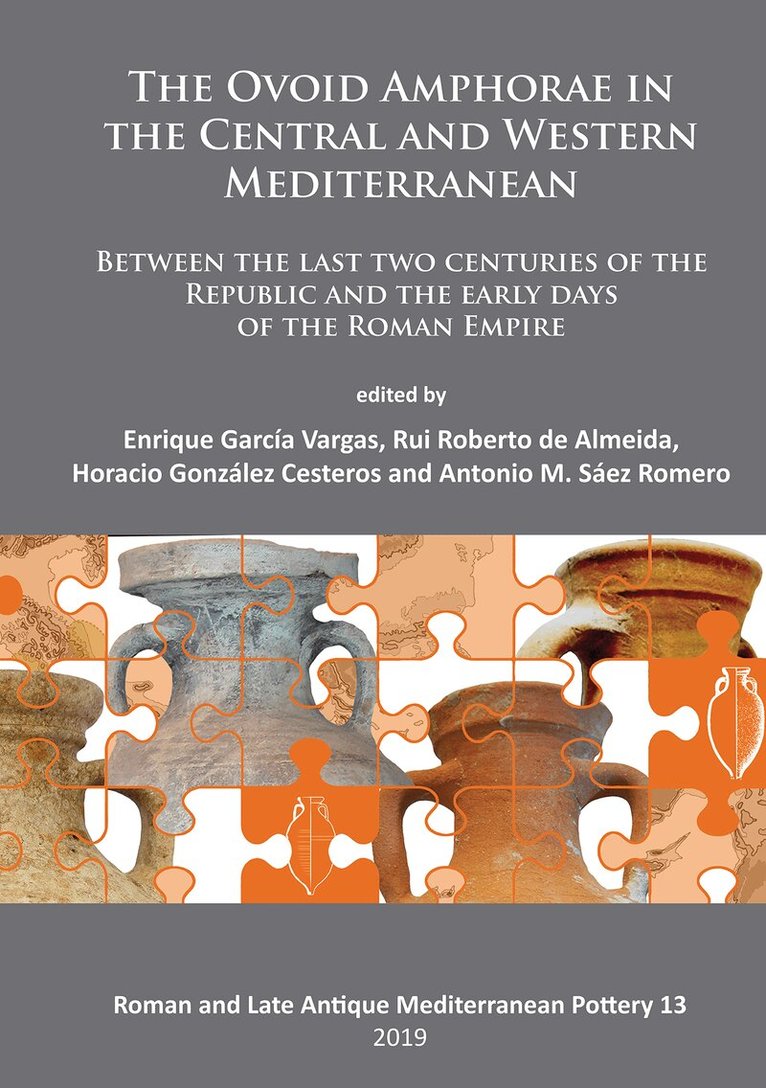
    Ovoid Amphorae in the Central and Western Mediterranean

    Between the last two centuries of the Republic and the early days of the Roman Empire

    AvEnrique García Vargas,Rui Roberto de Almeida

    Häftad, Engelska, 2019

    Del 13 i serien Roman and Late Antique Mediterranean Pottery

    998 kr

    Skickas . Fri frakt över 249 kr.

    Beskrivning

    The production of amphorae and the export of commodities transported in them was a key activity for the Mediterranean world in Antiquity. Consequently, their study is of enormous value for analysing the agricultural and fishing economy, and also the commercial mechanism of that period. Through the typological and chronological analysis of these ceramic containers, a high degree of knowledge has been achieved, especially for the production of the different Mediterranean societies from the second millennium BC to the Middle Ages.In The Ovoid Amphorae in the Central and Western Mediterranean between the last two centuries of the Republic and the early days of the Roman Empire, several series of amphorae created in the Late Republican Roman period (2nd and 1st centuries BC) have been studied – a group of material until now little studied. All of these groups of containers share a common feature in the shape of their bodies which is generally ovoid. The fact that they were conceived and developed in the economic and political context in which Rome expanded throughout the Mediterranean, transferring to its new territories its production and commercialization procedures, bears witness to the almost total integration of the Mediterranean markets.This publication is based on the proceedings of the workshop held at Seville University in December 2015. The book brings together contributions on the main production areas of these ovoid amphorae from the Atlantic to the Greek mainland / North Peloponnese, analysing in detail the origins, evolution and disappearance of their main series. It also includes case studies that are particularly relevant in relation to their distribution, consumption patterns, contents and relationship with other groups of amphorae manufactured in the Roman Imperial era. The aim of this publication has been to present an updated and complete synthesis of the so-called ovoid amphorae, from an interdisciplinary, international and diachronic standpoint.

    Produktinformation

    • Utgivningsdatum:2019-09-19
    • Mått:210 x 297 x 23 mm
    • Vikt:2 080 g
    • Format:Häftad
    • Språk:Engelska, Spanska
    • Serie:Roman and Late Antique Mediterranean Pottery
    • Antal sidor:430
    • Förlag:Archaeopress
    • ISBN:9781789692969

    Utforska kategorier

    • Historia inom Historia och arkeologi

    Mer om författaren

    Enrique García Vargas (PhD History, University of Seville) is Lecturer at the University of Seville. Currently, he co-leads the Tomares Treasure Project, on a huge coin hoard buried near Seville during the first decades of the 4th century AD.Rui Roberto de Almeida holds a Master’s degree in Archaeology and is currently developing his PhD research and thesis on maritime food trade from the Guadalquivir valley to Lusitania during the Roman era (I century BC - VI AD)’.Horacio González Cesteros (PhD Archaeology, University of Tarragona and the Catalan Archaeological Institute) is a member of the research staff of the Austrian Archaeological Institute.Antonio Sáez Romero (PhD Archaeology, University of Cadiz) is Assistant Professor at the University of Seville (Spain) and has been part or directed several research projects in Gibraltar, Portugal, Morocco, Italy and Greece.

    Innehållsförteckning

    • PROLOGUEIntroduction – by Enrique García Vargas, Horacio González Cesteros, Rui Roberto de Almeida, Antonio Sáez RomeroPART I: Ovoid amphorae production in the MediterraneanThe ovoid amphorae from Aigion, in the north-west Peloponnese. The connections with Corinth and the Brindisi area – by Konstantinos FilisProduzioni di anfore ovoidi di area brindisina – by Daniele ManacordaLate Republican and Early Imperial ovoid amphorae: the African production – by Alessia Contino and Claudio CapelliOvoid amphorae as the first Roman provincial repertoire in Hispania Ulterior (the Guadalquivir valley) – by Enrique García Vargas, Horacio González Cesteros and Rui Roberto de AlmeidaOvoid amphorae production in the Bay of Cadiz and the southern coast of the Ulterior/Baetica (Late Republican and Early Imperial periods) – by Enrique García Vargas and Antonio M. Sáez RomeroÁnforas ovoides del noreste de la Hispania Citerior Tarraconensis en época tardorepublicana. Ensayo de síntesis – by Jordi Miró Canals y Ramón Járrega DomínguezThe ‘early production’ of Roman amphorae in Lusitania. State of play of a universe (still) under construction – by Rui Roberto de Almeida and Carlos FabiãoDe la producción de ánforas Ovoide 1 gaditanas: aportaciones del alfar de Verinsur – by Darío Bernal-Casasola, José J. Díaz Rodríguez, María Luisa Lavado-Florido y Rosario García-GiménezPART II: Ovoid amphorae throughout the Mediterranean – Case studies, commercial routes, consumption contexts and contentsOvoid Amphoras found in Hellenistic Southern Levant contexts: their chronology and need for proveniences – by Gerald FinkielsztejnNorthern Peloponnesian amphorae with convex-concave rims from the Styra A shipwreck – by Lucie S. VidličkováOvoid African and Hispanic amphorae in Italy. Some examples from Ostia and Pompeii – by Alessia Contino, Lucilla D’Alessandro, Guillermo Pascual Berlanga and Albert Ribera i LacombaThe Italic ovoid amphorae in the Toulouse area at the end of the Iron Age (Midi-Pyrénées, France) – by Laurence BenquetThe diffusion of south-Hispanic ovoid amphorae in Gaul, between the Late Republican and Early Empire times – by Kevin Quillon and Max LuacesDistribution of ovoid amphorae in north-west Europe. Consumption contexts and main trade routes – by Horacio González CesterosAmphorae of the Brindisi area in Gallia Belgica: The example of Titelberg (Luxembourg) – by Debora C. Tretola MartinezOvoid amphorae in Hispania Citerior/Tarraconensis: consumption contexts and main trade areas – by Daniel Mateo Corredor and Jaime Molina VidalLa importación de ánforas ovoides en la Tarraco republicana – by Moisés Díaz GarcíaAre you Local? Imported and locally produced amphorae in Alto Alentejo (Portugal) during the 1st century BC: three case studies at Soeiros, Rocha da Mina and Caladinho – by Rui Mataloto, Joey Williams and Conceição RoquePreliminary organic residue analysis of Ovoid 1 and Ovoid 5 amphorae from the Guadalquivir valley – by Darío Bernal-Casasola, Alessandra Pecci and Antonio M. Sáez RomeroEPILOGUEOvoid amphorae in the Mediterranean (2nd century BC- early 1st century AD). State of the play and future research perspectives – by Enrique García Vargas, Horacio González Cesteros, Rui Roberto de Almeida, Antonio Sáez Romero