• Fri frakt över 249 kr
  • •
  • Snabba leveranser
  • •
  • Billiga böcker
Kundservice

Du är på sajten för privatpersoner.

Företag, bibliotek eller offentlig verksamhet?

Du handlar på classic.bokus.com, där alla dina funktioner finns intakta.
Till classic.bokus.com
Bokus logotyp. Gå till startsidan.
  • Erbjudanden
  • Nyheter
  • Student
  • Topplistor
  • Barn & ungdom
  • Bokus Play
  • E-böcker
  • Pocketböcker
  • Spel & pussel

10% rabatt på allt med kod: NYSTART10 →

Sidfot

Mina sidor

    Hjälp

    • Kundservice
    • Vanliga frågor och svar
    • Frakt och leverans
    • Retur vid ångerrätt
    • Reklamera vara
    • Betalning
    • Köpvillkor
    • Allmänna villkor
    • Information om webbplatsens tillgänglighet

    Om Bokus

    • Om oss
    • Pressrum
    • För studenter
    • För företag
    • För bibliotek och offentlig verksamhet
    • För leverantörer
    • Hållbarhet

    Populärt

    • Aktuella erbjudanden
    • Presentkort
    • Studentlitteratur
    • Nya böcker
    • Topplistor
    • Signerade böcker
    • Engelska böcker

    Inspiration

    • Boktips
    • BookTok
    • Populära bokserier
    • Barnbokskaraktärer
    • Populära författare
    Logotyp för Bokus
    Följ oss på Facebook (extern länk)Följ oss på Instagram (extern länk)Följ oss på YouTube (extern länk)Följ oss på TikTok (extern länk)
    bokus @ CookiesAnpassa cookiesIntegritetspolicyKöpvillkor
    Till Citymail hemsida (extern länk)Till Budbee hemsida (extern länk)Till Postnord hemsida (extern länk)Till Schenker hemsida (extern länk)Till Early Bird hemsida (extern länk)Till Walleys hemsida (extern länk)
    1. Historia och arkeologi
    2. Arkeologi
    3. Arkeologiska perioder och områden

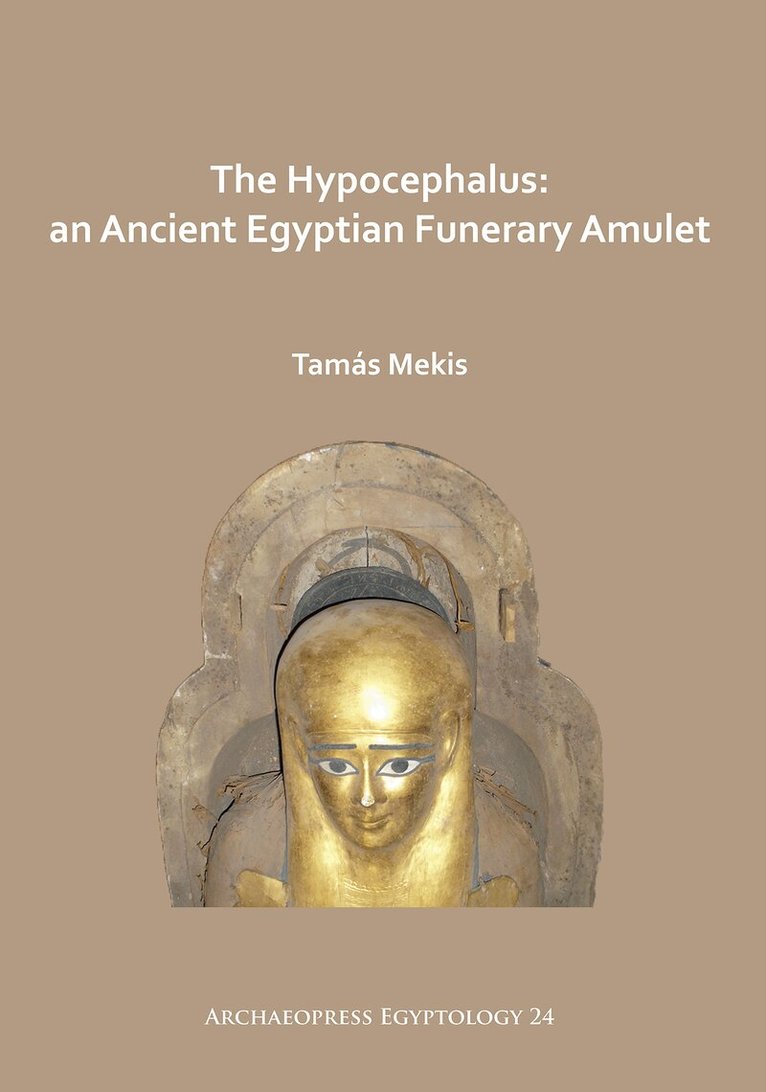
    Hypocephalus: An Ancient Egyptian Funerary Amulet

    AvTamás Mekis

    Häftad, Engelska, 2020

    Del 25 i serien Archaeopress Egyptology

    845 kr

    Skickas . Fri frakt över 249 kr.

    Beskrivning

    The hypocephalus is an element of Late Period and Ptolemaic funerary equipment – an amuletic disc placed under the head of mummies. Its shape emulates the sun’s disc, and its form is planar, although it occasionally has a concave shape (in such cases, it protects the head as a funerary cap). The earliest known example can be dated to the 4th century BC and the latest to the 2nd/1st century BC. The Hypocephalus: an Ancient Egyptian Funerary Amulet analyses both the written records and iconography of these objects. So far, 158 examples are known; several, unfortunately, from old descriptions only. The relatively low number shows that the object was not a widespread item of funerary equipment. Only priest and priestly families used them, those of Amon in Thebes, of Min in Akhmim, and the ones of Ptah in Memphis. Among the examples, no two are identical. In some details, every piece is an individualized creation. Ancient Egyptian theologians certainly interpreted hypocephali as the iris of the wedjat-eye, amidst which travels the sun-god in his hidden, mysterious and tremendous form(s). The hypocephalus can be considered as the sun-disk itself. It radiates light and energy towards the head of the deceased, who again becomes a living being, feeling him/herself as ‘one with the Earth’ through this energy. The texts and the iconography derive principally from the supplementary chapters of the Book of the Dead. Some discs directly cite the text of spell 162 which furnishes the mythological background of the invention of the disc by the Great Cow, who protected her son Re by creating the disc at his death.

    Produktinformation

    • Utgivningsdatum:2020-02-29
    • Mått:205 x 290 x 16 mm
    • Vikt:1 820 g
    • Format:Häftad
    • Språk:Engelska
    • Serie:Archaeopress Egyptology
    • Antal sidor:374
    • Förlag:Archaeopress
    • ISBN:9781789693331

    Utforska kategorier

    • Arkeologiska perioder och områden inom Historia och arkeologi

    Mer om författaren

    Tamás Mekis graduated from the Eötvös Loránd University, Budapest in 2007 with a degree in Egyptology. In 2013 he defended his PhD dissertation with summa cum laude. In quest of hypocephalus amulets he spent his traineeship in Brussels at the Royal Museums of Art and History in 2008 and in Paris at the Louvre Museum in 2010. He conducted extended researches at the Egyptian Museum of Cairo in 2007-9 and 2014-15, where, together with the curators of the museum, he found a rare hypocepalus of the prophet-registrar of Min-Horus-Isis Djed-hor/Wesirwer in situ, under the head of his undisturbed mummy. Tamás is an independent researcher.

    Recensioner i media

    ‘Mekis deserves gratitude for an outstanding achievement in gathering and organizing a wealth of material that will make studying hypocephali much easier in the future. He has also put forward a coherent interpretation. Though other interpretations are possible and will doubtlessly be forthcoming, he has at least provided a target for others to tilt at. This work should be the new starting point for future study.’ – John Gee (2022): Bibliotheca Orientalis LXXIX 1/2

    Innehållsförteckning

    • 1 Introduction ; 2 History of the research on hypocephali ; 3 Sun-disc under the head – overview ; 4 Some problems around hypocephali – pseudo-hypocephali ; 5 Systematisation of hypocephali ; 6 Introduction to the understanding of the structure of the discs ; 7. Spell 162 of the Book of the Dead: prescription of the hypocephalus ; 8 Grouping of hypocephali on the basis of rim inscriptions ; 9 Text typology in use ; 10 Transliteration and translation of the texts of the pictorial field ; 11. Workshop traditions ; 12. Conclusion ; Catalogue ; I. Classic hypocephali ; II. Textile amuletic hypocephali ; Plates ; Illustration credits ; Bibliography ; Indices