Häftad, Engelska, 2023
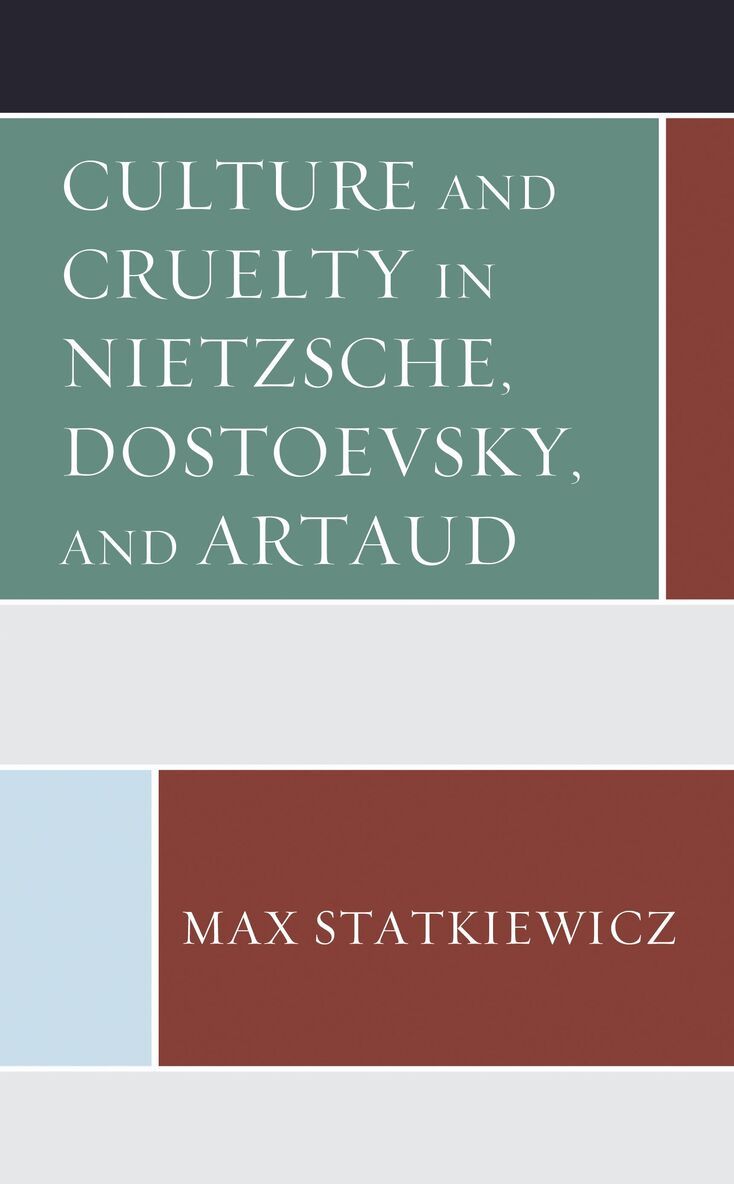
Culture and Cruelty in Nietzsche, Dostoevsky, and Artaud
526 kr
Beställningsvara. Skickas inom 10-15 vardagar. Fri frakt över 249 kr.
Beskrivning
Produktinformation
- Utgivningsdatum: 2023-04-12
- Mått: 154 x 222 x 10 mm
- Vikt: 213 g
- Format: Häftad
- Språk: Engelska
- Antal sidor: 136
- Förlag: Bloomsbury Publishing Plc
- ISBN: 9781793603944
Utforska kategorier
Mer om författaren
Max Statkiewicz is associate professor of comparative literature and folklore studies at the University of Wisconsin, Madison.
Recensioner i media
In Culture and Cruelty in Nietzsche, Dostoevsky, Artaud, Max Stakiewicz deals, once again, with the “old quarrel” between poetry and philosophy. In his previous book – Rhapsody of Philosophy. Dialogues with Plato in Contemporary Thought (2009) – Stakiewicz had already called into question the very idea of such a “quarrel” by showing that the dialogue between “rigor” (akribeia) and “play” (paidia) can be read in Plato himself as a non-conflict. By rethinking the relationship between philosophy and poetry in contemporary thought, Rhapsody of Philosophy concludes that poetry and philosophy are not antagonists, but rather complicit knowledge processes. In this new book, Stakiewicz goes back to the so-called “Ode to Man” in Sophocles’ Antigone – human being is the most wonderful and the most terrible thing that there is – to argue that culture and cruelty are not binaries but rather different ways of understanding the complex world we live in. Against Matthew Arnold’s culture as “sweetness and light,” which tends to oversee cruelty, Stakiewicz stresses the disquieting power of art by analyzing the revelation of cruelty in his exemplary study of three poet-philosophers or philosopher-poets: Nietzsche, Dostoevsky, and Artaud. Difference in the culture, Stakiewicz shows us in the work of these three artists, is what resists the dreadful nihilism of indifference in a culture that goes on wrecking violence and destruction all over the world.
Betyg & recensioner
0 recensioner
Inga recensioner tillgängliga.