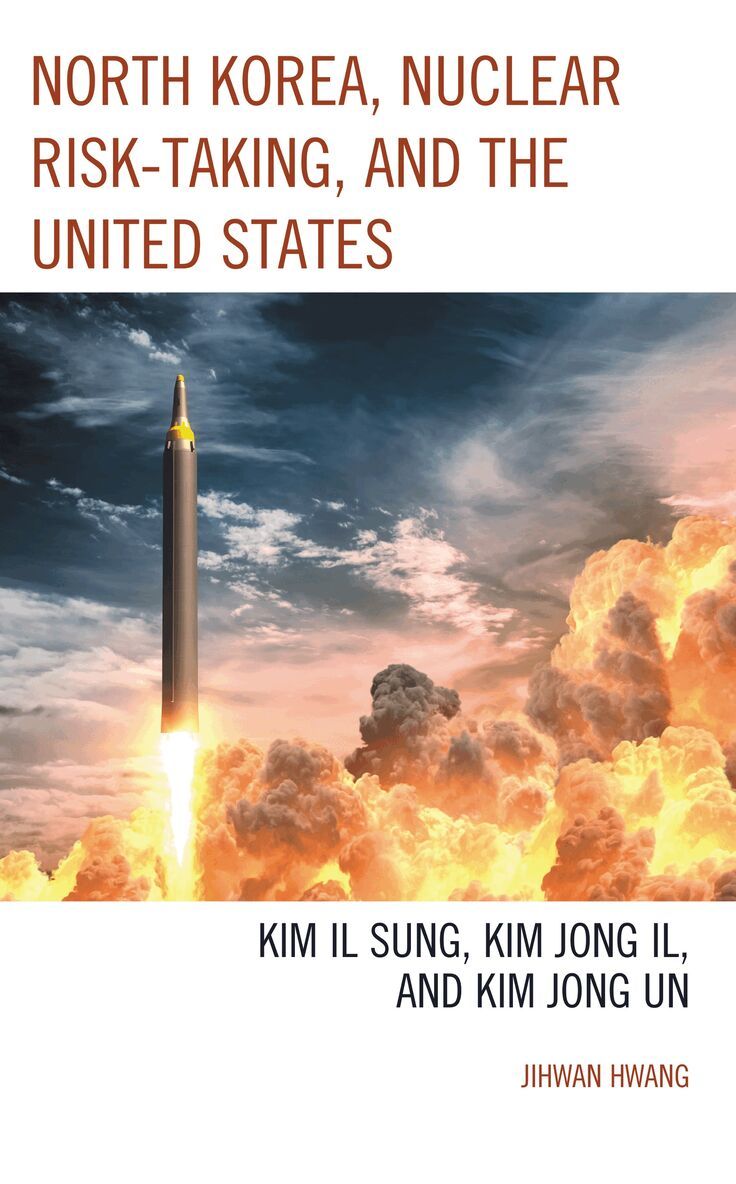
Inbunden, Engelska, 2023
North Korea, Nuclear Risk-Taking, and the United States
Kim Il Sung, Kim Jong Il, and Kim Jong Un
Av Jihwan Hwang
Del i serien Bloomsbury Studies on Korea's Place in International Relations
1133 kr
Beställningsvara. Skickas inom 10-15 vardagar. Fri frakt över 249 kr.
Beskrivning
Produktinformation
- Utgivningsdatum: 2023-11-21
- Mått: 157 x 236 x 25 mm
- Vikt: 517 g
- Format: Inbunden
- Språk: Engelska
- Serie: Bloomsbury Studies on Korea's Place in International Relations
- Antal sidor: 216
- Förlag: Bloomsbury Publishing Plc
- ISBN: 9781793650269
- Utmärkelser: Winner of Outstanding Academic Title 2024
Utforska kategorier
Mer om författaren
Jihwan Hwang is professor of International Relations at the University of Seoul, Korea.
Recensioner i media
In this outstanding and original book, Hwang analyzes North Korea’s nuclear diplomacy under three leaders during the nuclear crises on the Korean peninsula since the early 1990s. He challenges the realist and liberal approaches dominating scholarly and policy discourses and offers an alternative approach based on prospect theory. The book argues that North Korea’s leaders are risk-acceptant or risk-averse according to their perception of gains and losses in international and domestic environments. As a result, North Korea has moved between engagement and confrontation with the US when its supreme leader has perceived North Korea's security predicament to be deteriorating. Hwang explains why Kim Il Sung changed North Korea's nuclear policy from confrontation to engagement (risk-aversion), signing the June 1994 Agreed Framework with the US. The second nuclear crisis under Kim Jong Il witnessed a sharp change in nuclear policy from confrontation (withdrawal from the Non-Proliferation Treaty) to engagement (Six-Party Talks) back to confrontation. Lastly, Hwang discusses North Korea's nuclear risk-taking attitudes under Kim Jong Un, including the failed summits with the US and the return to a confrontation policy toward the US. A useful addition to Jun Taek Kwon and Weiqi Zhang's Strategies of Survival (CH, Apr'24, 61-2307). Highly recommended. Advanced undergraduates through faculty; practitioners.
Betyg & recensioner
0 recensioner
Inga recensioner tillgängliga.