• Fri frakt över 249 kr
  • •
  • Snabba leveranser
  • •
  • Billiga böcker
Kundservice

Du är på sajten för privatpersoner.

Företag, bibliotek eller offentlig verksamhet?

Du handlar på classic.bokus.com, där alla dina funktioner finns intakta.
Till classic.bokus.com
Bokus logotyp. Gå till startsidan.
  • Erbjudanden
  • Nyheter
  • Student
  • Topplistor
  • Barn & ungdom
  • Bokus Play
  • E-böcker
  • Pocketböcker
  • Spel & pussel

10% rabatt på allt med kod: NYSTART10 →

Sidfot

Mina sidor

    Hjälp

    • Kundservice
    • Vanliga frågor och svar
    • Frakt och leverans
    • Retur vid ångerrätt
    • Reklamera vara
    • Betalning
    • Köpvillkor
    • Allmänna villkor
    • Information om webbplatsens tillgänglighet

    Om Bokus

    • Om oss
    • Pressrum
    • För studenter
    • För företag
    • För bibliotek och offentlig verksamhet
    • För leverantörer
    • Hållbarhet

    Populärt

    • Aktuella erbjudanden
    • Presentkort
    • Studentlitteratur
    • Nya böcker
    • Topplistor
    • Signerade böcker
    • Engelska böcker

    Inspiration

    • Boktips
    • BookTok
    • Populära bokserier
    • Barnbokskaraktärer
    • Populära författare
    Logotyp för Bokus
    Följ oss på Facebook (extern länk)Följ oss på Instagram (extern länk)Följ oss på YouTube (extern länk)Följ oss på TikTok (extern länk)
    bokus @ CookiesAnpassa cookiesIntegritetspolicyKöpvillkor
    Till Citymail hemsida (extern länk)Till Budbee hemsida (extern länk)Till Postnord hemsida (extern länk)Till Schenker hemsida (extern länk)Till Early Bird hemsida (extern länk)Till Walleys hemsida (extern länk)
    1. Samhälle och politik
    2. Politik och statsskick

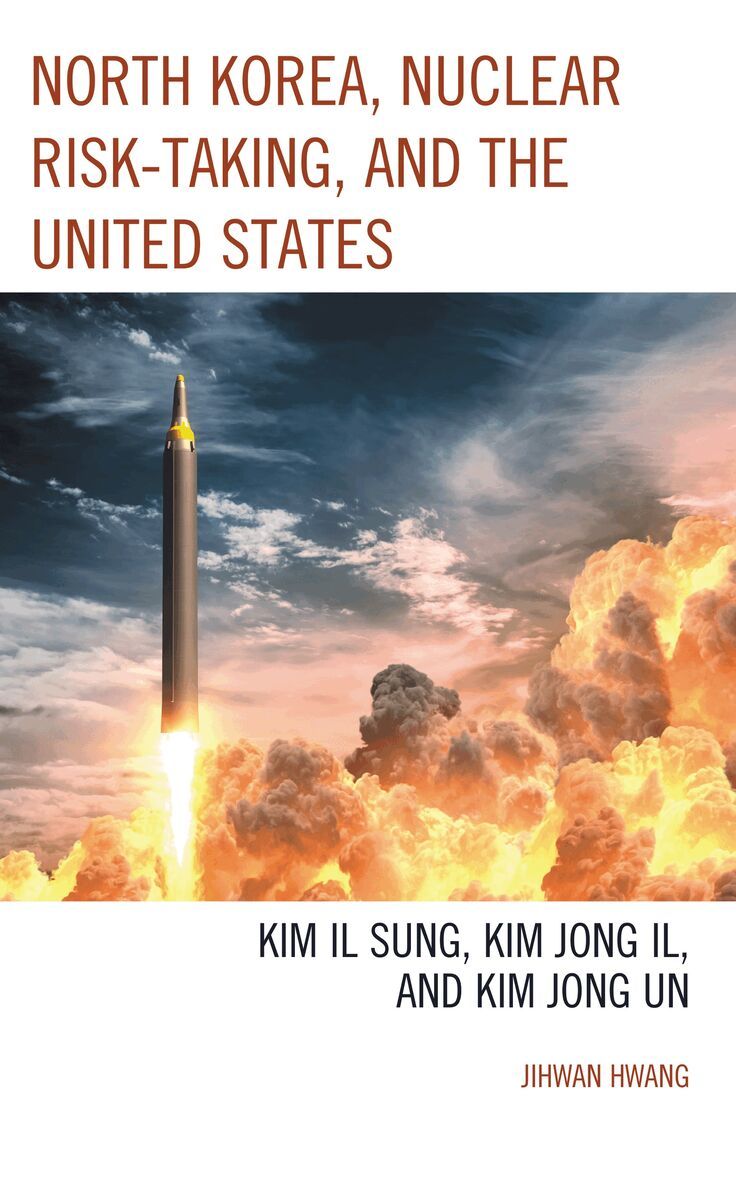
    North Korea, Nuclear Risk-Taking, and the United States

    Kim Il Sung, Kim Jong Il, and Kim Jong Un

    AvJihwan Hwang

    Häftad, Engelska, 2026

    Del i serien Bloomsbury Studies on Korea's Place in International Relations

    326 kr

    Beställningsvara. Skickas inom 10-15 vardagar. Fri frakt över 249 kr.

    Fler format och utgåvor

    Inbunden

    1 117 kr

    Beskrivning

    Jihwan Hwang analyzes Pyongyang’s nuclear policy changes over the last three decades under Kim Il Sung, Kim Jong Il and Kim Jong Un. Why did a weaker North Korea take the risk of standing up against the much stronger U.S. with its nuclear weapons program, even escalating the crisis to the point of a war? Later, why did North Korea change its course of action amid the crisis even though the security environment remained essentially the same? Hwang draws on the main tenets of prospect theory in international relations and argues that Pyongyang becomes either risk-acceptant or risk-averse toward the U.S., depending on the situation it faces. When Pyongyang perceived the status quo to be deteriorating, it framed its situation as a loss and chose a risk-acceptant of confrontation to restore the status quo. Equally, when Pyongyang perceived the situation to be improving, it chose a risk-averse engagement in the domain of gain. In contrast, when Pyongyang perceived an extreme loss such as military confrontation against the United States, it would rather choose a risk-averse policy to avoid the catastrophic outcome of war. The issues of risk are central to an understanding of Pyongyang’s nuclear policy decision-making.

    Produktinformation

    • Utgivningsdatum:2026-02-19
    • Mått:148 x 228 x 14 mm
    • Vikt:320 g
    • Format:Häftad
    • Språk:Engelska
    • Serie:Bloomsbury Studies on Korea's Place in International Relations
    • Antal sidor:216
    • Förlag:Bloomsbury Publishing Plc
    • ISBN:9781793650283

    Utforska kategorier

    • Politik och statsskick inom Samhälle och politik
    • Internationella relationer inom Samhälle och politik
    • Krig och försvar inom Samhälle och politik

    Mer om författaren

    Jihwan Hwang is professor of International Relations at the University of Seoul, Korea.

    Recensioner i media

    In this outstanding and original book, Hwang analyzes North Korea’s nuclear diplomacy under three leaders during the nuclear crises on the Korean peninsula since the early 1990s. He challenges the realist and liberal approaches dominating scholarly and policy discourses and offers an alternative approach based on prospect theory. The book argues that North Korea’s leaders are risk-acceptant or risk-averse according to their perception of gains and losses in international and domestic environments. As a result, North Korea has moved between engagement and confrontation with the US when its supreme leader has perceived North Korea's security predicament to be deteriorating. Hwang explains why Kim Il Sung changed North Korea's nuclear policy from confrontation to engagement (risk-aversion), signing the June 1994 Agreed Framework with the US. The second nuclear crisis under Kim Jong Il witnessed a sharp change in nuclear policy from confrontation (withdrawal from the Non-Proliferation Treaty) to engagement (Six-Party Talks) back to confrontation. Lastly, Hwang discusses North Korea's nuclear risk-taking attitudes under Kim Jong Un, including the failed summits with the US and the return to a confrontation policy toward the US. A useful addition to Jun Taek Kwon and Weiqi Zhang's Strategies of Survival (CH, Apr'24, 61-2307). Highly recommended. Advanced undergraduates through faculty; practitioners.

    Innehållsförteckning

    • IntroductionChapter 1: Realism and Liberalism on the North Korean Nuclear CrisisChapter 2: Theorizing the North Korean Nuclear Risk-Taking: Prospect TheoryChapter 3: Kim Il Sung: From Confrontation to EngagementChapter 4: Kim Jong Il: From Engagement to ConfrontationChapter 5: Kim Jong Un: Between Confrontation and EngagementConclusion