• Fri frakt över 249 kr
  • •
  • Snabba leveranser
  • •
  • Billiga böcker
Kundservice

Du är på sajten för privatpersoner.

Företag, bibliotek eller offentlig verksamhet?

Du handlar på classic.bokus.com, där alla dina funktioner finns intakta.
Till classic.bokus.com
Bokus logotyp. Gå till startsidan.
  • Erbjudanden
  • Nyheter
  • Student
  • Topplistor
  • Barn & ungdom
  • Bokus Play
  • E-böcker
  • Pocketböcker
  • Spel & pussel

10% rabatt på allt med kod NYSTART10 →

Sidfot

Mina sidor

    Hjälp

    • Kundservice
    • Vanliga frågor och svar
    • Frakt och leverans
    • Retur vid ångerrätt
    • Reklamera vara
    • Betalning
    • Köpvillkor
    • Allmänna villkor
    • Information om webbplatsens tillgänglighet

    Om Bokus

    • Om oss
    • Pressrum
    • För studenter
    • För företag
    • För bibliotek och offentlig verksamhet
    • För leverantörer
    • Hållbarhet

    Populärt

    • Aktuella erbjudanden
    • Presentkort
    • Studentlitteratur
    • Nya böcker
    • Topplistor
    • Signerade böcker
    • Engelska böcker

    Inspiration

    • Boktips
    • BookTok
    • Populära bokserier
    • Barnbokskaraktärer
    • Populära författare
    Logotyp för Bokus
    Följ oss på Facebook (extern länk)Följ oss på Instagram (extern länk)Följ oss på YouTube (extern länk)Följ oss på TikTok (extern länk)
    bokus @ CookiesAnpassa cookiesIntegritetspolicyKöpvillkor
    Till Citymail hemsida (extern länk)Till Budbee hemsida (extern länk)Till Postnord hemsida (extern länk)Till Schenker hemsida (extern länk)Till Early Bird hemsida (extern länk)Till Walleys hemsida (extern länk)
    1. Kultur
    2. Arkitektur

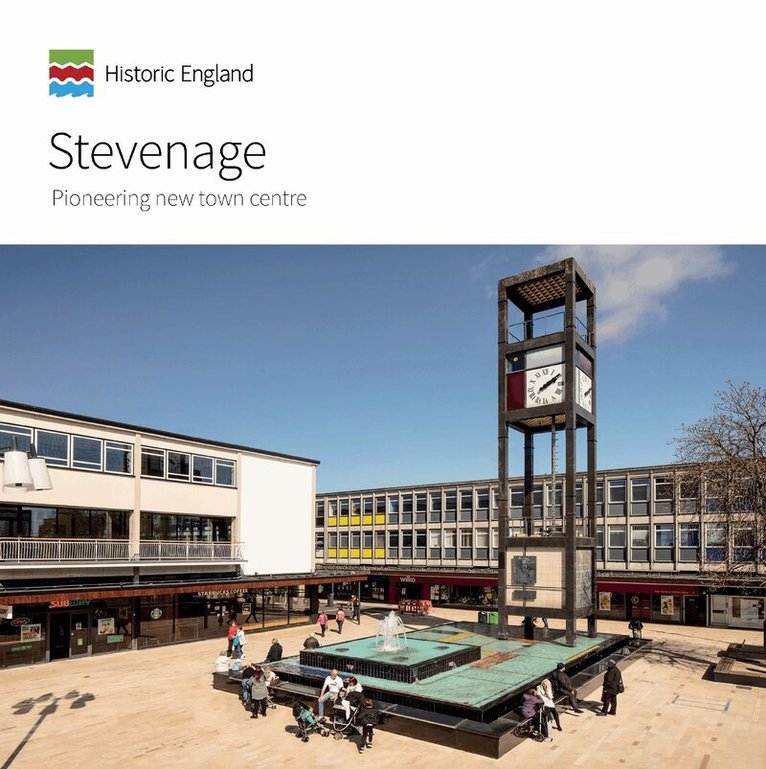
    Stevenage

    Pioneering New Town Centre

    AvEmily Cole,Edward James

    Häftad, Engelska, 2021

    Del i serien Informed Conservation

    288 kr

    Beställningsvara. Skickas inom 5-8 vardagar. Fri frakt över 249 kr.

    Beskrivning

    This book charts the history of Stevenage new town centre, looking at its planning, development, design influences, significance and survival. The historic market town of Stevenage was the first location to be designated for major expansion under the New Towns Act 1946, making it Britain's first post-war new town. As part of this a new town centre was planned from 1946. Informed by the ideas of figures including Gordon Stephenson and Clarence Stein, among the leading planners of their day, the detailed design of this area was undertaken in the 1950s by Stevenage Development Corporation, under Chief Architect Leonard Vincent. The shopping precinct, with surrounding car parks and bus station, was built first, begun in earnest in 1956 and officially opened in April 1959. Its design is notable: the fully pedestrian precinct is one of the earliest examples of this kind of development in Britain and on a scale unequalled in Europe at the time of its initiation. The shopping precinct, designated as a conservation area in 1988, is notable for its uniformity, integrity and level of survival. Provision was also made in the town centre for offices, community, entertainment and public buildings, which will be discussed in this book, along with expansion works undertaken in the 1960s and ‘70s.

    Produktinformation

    • Utgivningsdatum:2021-11-17
    • Mått:210 x 210 x 14 mm
    • Vikt:548 g
    • Format:Häftad
    • Språk:Engelska
    • Serie:Informed Conservation
    • Antal sidor:176
    • Förlag:Liverpool University Press
    • ISBN:9781800855991

    Utforska kategorier

    • Arkitektur inom Kultur

    Mer om författaren

    Emily Cole is Senior Architectural Investigator at Historic England. Elain Harwood (1958–2023) was a Senior Architectural Investigator with Historic England, specialising in the years after 1945. Edward James is a Historic Places Adviser with Historic England, covering the East of England region.

    Recensioner i media

    ‘This book marks the maturity of the town centre, on the brink of being carried forward to cater for another way of modern living... a pleasing book to hold, to read and to refer to, quite definitely a local history but set within a context of international significance and enduring academic interest.’ Gary Moyle, The Local Historian