Inbunden, Engelska, 2025
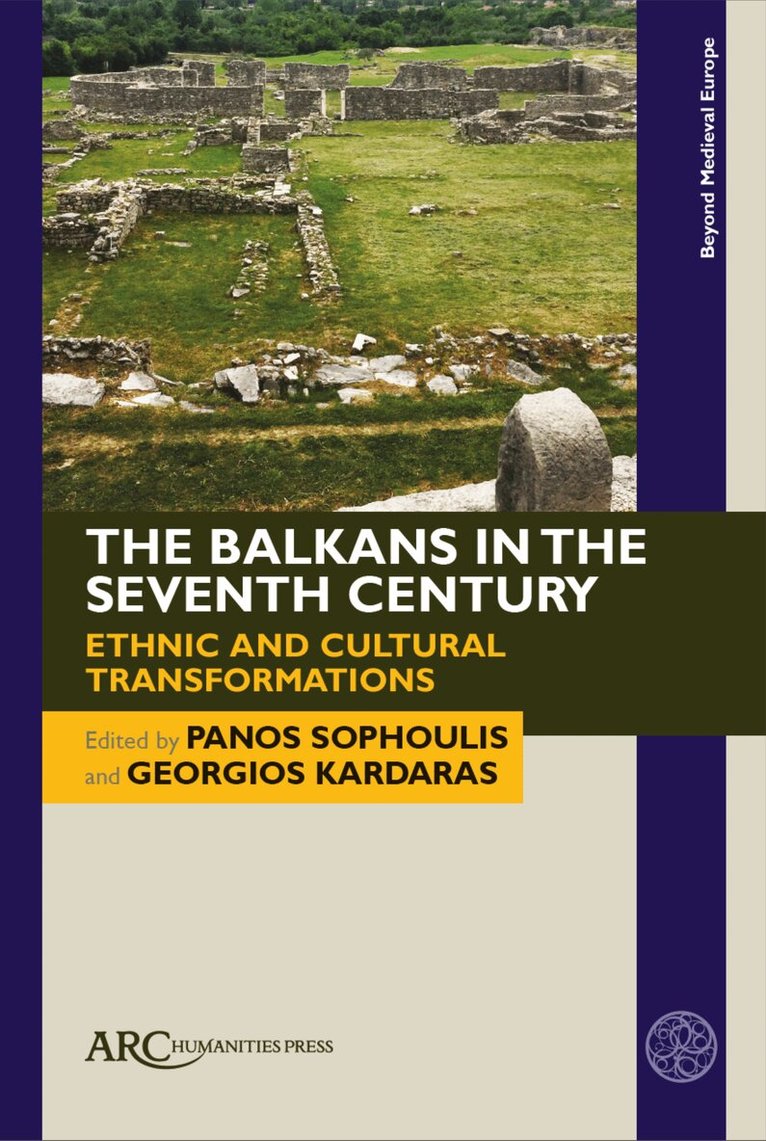
Balkans in the Seventh Century
Ethnic and Cultural Transformations
Av Panos Sophoulis, Georgios Kardaras
Del i serien Beyond Medieval Europe
2092 kr
Beställningsvara. Skickas inom 7-10 vardagar. Fri frakt över 249 kr.
Beskrivning
Produktinformation
- Utgivningsdatum: 2025-10-31
- Mått: 152 x 229 x 18 mm
- Vikt: 476 g
- Format: Inbunden
- Språk: Engelska
- Serie: Beyond Medieval Europe
- Antal sidor: 212
- Förlag: Arc Humanities Press
- ISBN: 9781802702484
Utforska kategorier
Mer om författaren
Panos Sophoulis is a specialist in the history of south-eastern Europe, with a particular interest in the Balkans during the Middle Ages. He is the author of Byzantium and Bulgaria (2011) and Banditry in the Medieval Balkans, 800–1500 (2020).Georgios Kardaras’s research interests focus on the relations between Byzantium and its northern neighbours and the history and culture of the Slavs and the Eurasian nomads. He is author of three monographs including Byzantium and the Avars. Political, Diplomatic and Cultural Relations, 6th-9th c. AD (2018).
Recensioner i media
Taken together, the volume offers an excellent overview of recent developments in both archaeological and historical scholarship on the seventh-century Balkans. Several contributions challenge traditional ethnic interpretations of archaeological finds and question chronologies derived primarily from the limited written evidence. The long-established image of the early seventh century as a period of abrupt collapse of East Roman authority throughout the Balkans gives way to a far more differentiated picture that takes regional diversity seriously and highlights the often-considerable discrepancies between the written sources and the archaeological record.Overall, this collection provides a valuable survey of important recent developments in the field. At the same time, it highlights the many unresolved questions that continue to shape current scholarship, thereby offering an excellent point of departure for future research.
Betyg & recensioner
0 recensioner
Inga recensioner tillgängliga.