• Fri frakt över 249 kr
  • •
  • Snabba leveranser
  • •
  • Billiga böcker
Kundservice

Du är på sajten för privatpersoner.

Företag, bibliotek eller offentlig verksamhet?

Du handlar på classic.bokus.com, där alla dina funktioner finns intakta.
Till classic.bokus.com
Bokus logotyp. Gå till startsidan.
  • Erbjudanden
  • Nyheter
  • Student
  • Topplistor
  • Barn & ungdom
  • Bokus Play
  • E-böcker
  • Pocketböcker
  • Spel & pussel

10% rabatt på allt med kod: NYSTART10 →

Sidfot

Mina sidor

    Hjälp

    • Kundservice
    • Vanliga frågor och svar
    • Frakt och leverans
    • Retur vid ångerrätt
    • Reklamera vara
    • Betalning
    • Köpvillkor
    • Allmänna villkor
    • Information om webbplatsens tillgänglighet

    Om Bokus

    • Om oss
    • Pressrum
    • För studenter
    • För företag
    • För bibliotek och offentlig verksamhet
    • För leverantörer
    • Hållbarhet

    Populärt

    • Aktuella erbjudanden
    • Presentkort
    • Studentlitteratur
    • Nya böcker
    • Topplistor
    • Signerade böcker
    • Engelska böcker

    Inspiration

    • Boktips
    • BookTok
    • Populära bokserier
    • Barnbokskaraktärer
    • Populära författare
    Logotyp för Bokus
    Följ oss på Facebook (extern länk)Följ oss på Instagram (extern länk)Följ oss på YouTube (extern länk)Följ oss på TikTok (extern länk)
    bokus @ CookiesAnpassa cookiesIntegritetspolicyKöpvillkor
    Till Citymail hemsida (extern länk)Till Budbee hemsida (extern länk)Till Postnord hemsida (extern länk)Till Schenker hemsida (extern länk)Till Early Bird hemsida (extern länk)Till Walleys hemsida (extern länk)
    1. Historia och arkeologi
    2. Arkeologi
    3. Arkeologiska perioder och områden

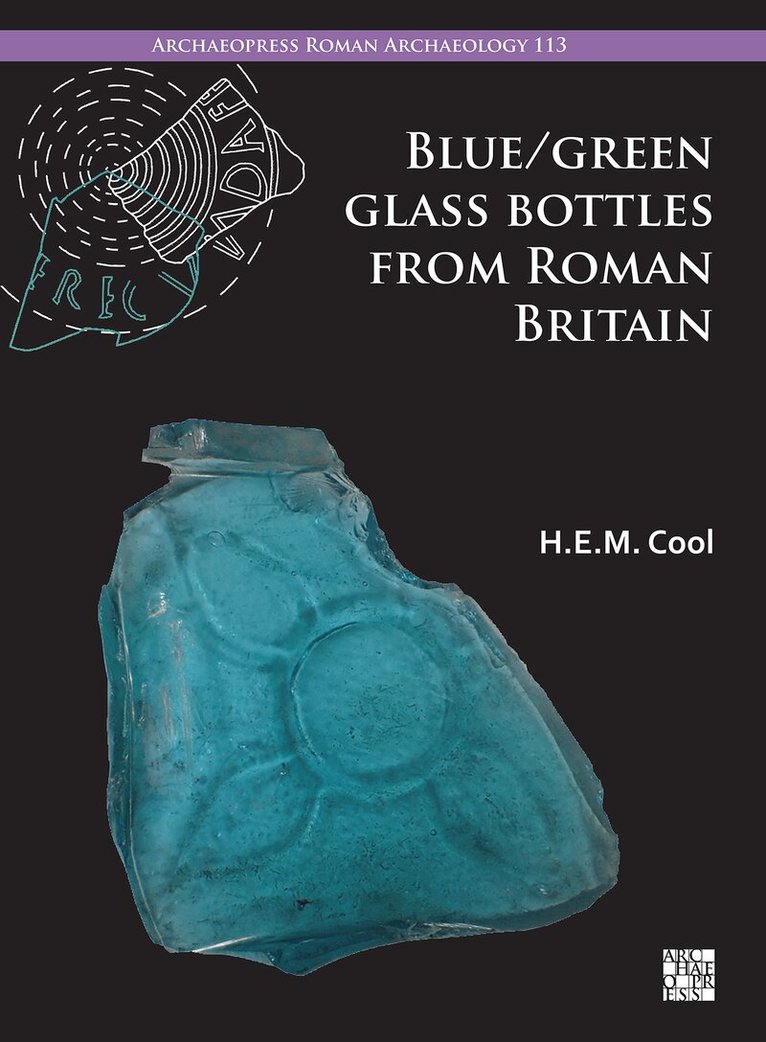
    Blue/Green Glass Bottles from Roman Britain

    Square and Other Prismatic Forms

    AvH.E.M. Cool

    Häftad, Engelska, 2024

    Del 113 i serien Archaeopress Roman Archaeology

    769 kr

    Skickas . Fri frakt över 249 kr.

    Beskrivning

    Square bottles came into use in the AD 60s and rapidly became the commonest glass vessel form in the empire. For the next two centuries their fragments dominate all glass assemblages. Hitherto this material has not been exploited to any great extent because there has been no close chronological framework.Blue/Green Glass Bottles from Roman Britain presents a classification scheme for the moulded base patterns which allows their chronological development to be reconstructed. With this it is possible to explore how sizes and capacities changed with time. The British data are set within the context of the bottles from the rest of the western empire, and it can be seen that different provinces favoured different base patterns in a systematic fashion. Previously it has been assumed that base patterns reflect long distance trade of the bottles and their contents. Now it can be seen that the main driving force for the distribution of bottles with similar distinctive base patterns was most probably the movements of military units, and that most bottles were made locally. An investigation of common capacities indicates that these were shared with glass bath flasks and it is proposed that, just as bath flasks were oil containers for hygiene purposes, square bottles became so common because they were the favoured vessel for household oil. The chronological trajectories of square bottles, bath flasks and the Spanish olive oil industry evidenced by Dressel 20 amphoras are identical, but previously unremarked upon.

    Produktinformation

    • Utgivningsdatum:2024-04-04
    • Mått:277 x 202 x 18 mm
    • Vikt:857 g
    • Format:Häftad
    • Språk:Engelska
    • Serie:Archaeopress Roman Archaeology
    • Antal sidor:272
    • Förlag:Archaeopress
    • ISBN:9781803277431

    Utforska kategorier

    • Arkeologiska perioder och områden inom Historia och arkeologi

    Mer om författaren

    Hilary Cool works within commercial British archaeology providing specialist post-excavation services. For nearly thirty years she has run her own business working with many projects in the professional and academic sectors. She is also a director of Barbican Research Associates, a company specialising in bringing backlog sites to publication. She has published numerous articles and books including The Roman Cemetery at Brougham (Roman Society 2004), Eating and Drinking in Roman Britain (Cambridge University Press 2006) and The Small Finds and Vessel Glass from Insula VI.1 Pompeii (Archaeopress 2016).

    Recensioner i media

    ‘Square bottles came into use in the AD 60s and rapidly became the commonest glass vessel form in the empire. For the next two centuries their fragments dominate all glass assemblages. Hitherto this material has not been exploited to any great extent because there has been no close chronological framework. This book presents a classification scheme for the moulded base patterns which allows their chronological development to be reconstructed. With this it is possible to explore how sizes and capacities changed with time.’ – Epistula XXVII (2024)

    Innehållsförteckning

    • Acknowledgements  PrefaceSection 1Chapter 1: IntroductionChapter 2: The DataSection 2Chapter 3: Family 1: Square bottle bases with concentric circlesChapter 4: Family 2: Square bottle bases framed by circular mouldingsChapter 5: Family 3: Square bottle bases framed by square mouldingsChapter 6: Family 4: Square bottle bases framed by angle mouldingsChapter 7: Families 5-7: square bottle bases without framesChapter 8: Hexagonal bottlesChapter 9: Rectangular and octagonal bottlesSection 3Chapter 10: Chronological patternsChapter 11: Distributions: Geographical and socialChapter 12: The uses they servedChapter 13: Summing upAppendix 1: Base mouldsAppendix 2: Mould parallelsAppendix 3: Bath flask capacity dataAppendix 4: Guide to the Digital filesBibliographyIndex