• Fri frakt över 249 kr
  • •
  • Snabba leveranser
  • •
  • Billiga böcker
Kundservice

Du är på sajten för privatpersoner.

Företag, bibliotek eller offentlig verksamhet?

Du handlar på classic.bokus.com, där alla dina funktioner finns intakta.
Till classic.bokus.com
Bokus logotyp. Gå till startsidan.
  • Erbjudanden
  • Nyheter
  • Student
  • Topplistor
  • Barn & ungdom
  • Bokus Play
  • E-böcker
  • Pocketböcker
  • Spel & pussel

10% rabatt på allt med kod: NYSTART10 →

Sidfot

Mina sidor

    Hjälp

    • Kundservice
    • Vanliga frågor och svar
    • Frakt och leverans
    • Retur vid ångerrätt
    • Reklamera vara
    • Betalning
    • Köpvillkor
    • Allmänna villkor
    • Information om webbplatsens tillgänglighet

    Om Bokus

    • Om oss
    • Pressrum
    • För studenter
    • För företag
    • För bibliotek och offentlig verksamhet
    • För leverantörer
    • Hållbarhet

    Populärt

    • Aktuella erbjudanden
    • Presentkort
    • Studentlitteratur
    • Nya böcker
    • Topplistor
    • Signerade böcker
    • Engelska böcker

    Inspiration

    • Boktips
    • BookTok
    • Populära bokserier
    • Barnbokskaraktärer
    • Populära författare
    Logotyp för Bokus
    Följ oss på Facebook (extern länk)Följ oss på Instagram (extern länk)Följ oss på YouTube (extern länk)Följ oss på TikTok (extern länk)
    bokus @ CookiesAnpassa cookiesIntegritetspolicyKöpvillkor
    Till Citymail hemsida (extern länk)Till Budbee hemsida (extern länk)Till Postnord hemsida (extern länk)Till Schenker hemsida (extern länk)Till Early Bird hemsida (extern länk)Till Walleys hemsida (extern länk)
    1. Kultur
    2. Arkitektur

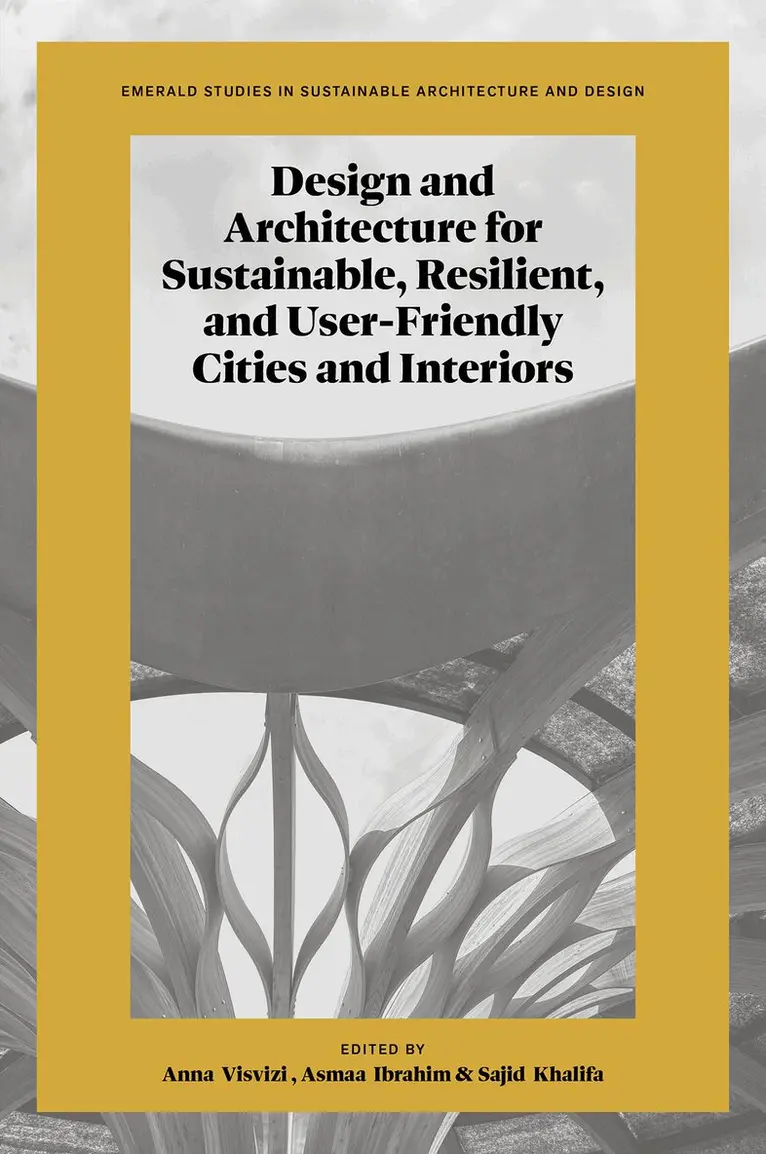
    Design and Architecture for Sustainable, Resilient, and User-Friendly Cities and Interiors

    AvAnna Visvizi,Asmaa Ibrahim

    Inbunden, Engelska, 2026

    Del i serien Emerald Studies in Sustainable Architecture and Design

    1 064 kr

    Beställningsvara. Skickas inom 5-8 vardagar. Fri frakt över 249 kr.

    Beskrivning

    As cities evolve to meet the demands of the 21st century, the concept of "smart cities" has gained significant traction. While much of the discourse focuses on digitalization and the role of information and communication technology (ICT), the fundamental impact of architecture and design in shaping sustainable and user-friendly environments is often overlooked. The built environment, which includes its structures, interiors, and public spaces, plays a crucial role in determining how livable and adaptable a city truly is.Design and Architecture for Sustainable, Resilient, and User-Friendly Cities and Interiors inserts itself into this ongoing debate by shifting the focus away from technology as the primary driver of smart urban development. Instead, this volume explores how architecture and design serve as the foundation for creating cities that are not only smart but also livable, sustainable, and adaptable to future challenges. Divided into three parts, the authors of this collected edtion examine contemporary design and architectural principles, innovative approaches to sustainable product development, and case studies that highlight the intersection of design, user experience, and urban resilience. By centering infrastructure and spatial planning in discussions on smart cities, this edited collection offers a fresh and necessary perspective that redefines the role of design in urban evolution.Bringing together scholars and practitioners from diverse disciplines, this volume is an essential resource for architects, urban planners, designers, and policymakers seeking to create cities that prioritize both technological advancement and human well-being. Addressing critical gaps in existing literature, this work provides a new framework for understanding how the built environment contributes to the future of sustainable urban living.

    Produktinformation

    • Utgivningsdatum:2026-03-23
    • Mått:152 x 229 x 15 mm
    • Vikt:372 g
    • Format:Inbunden
    • Språk:Engelska
    • Serie:Emerald Studies in Sustainable Architecture and Design
    • Antal sidor:216
    • Förlag:Emerald Publishing Limited
    • ISBN:9781805923701

    Utforska kategorier

    • Arkitektur inom Kultur

    Mer om författaren

    Anna Visvizi, Ph.D. (dr hab.), economist and political scientist, Professor at the SGH Warsaw School of Economics, and Visiting Professor at Effat University, Saudi Arabia. Seasoned editor, researcher, recognized author, and accomplished project manager, Professor Visvizi has extensive experience in academia, think-tank and government sectors in Europe and the US, including the OECD. Professor Visvizi’s expertise covers issues pertinent to the intersection of politics, economics and information and communication technology (ICT), which translates into her research and publications on applied aspects of ICT, in such domains as smart cities, knowledge & innovation management, as technology transfer, and governance. Professor Visvizi is the Editor-in-Chief of Transforming Government: People, Process and Policy (Emerald Publishing) as well as of Digital Policy, Regulation and Governance (Emerald Publishing).Asmaa Ibrahim, Ph.D., Professor, currently serving also as the Dean of the College of Architecture & Design at Effat University, Saudi Arabia. She is originally a Professor of urban development at the Arch. Dep. Faculty of Engineering, Cairo Univ. with 18 years of academic and professional experience. She was the Hubert H. Humphrey Fellow in the SPURS program at MIT, USA (2018/2019). She was the main coordinator in the Double Master Program with Cottbus University in Germany, and Alex. University. She has fourteen years of experience in strategic regional and urban planning projects in UN HABITAT, GOPP, and GIZ with a focus on community development, gender programming and regeneration policies in historic districts, and new urban expansions. She has received extensive training at the World Resource Institute in Washington DC and Oxfam America in Boston in 2018/2019. She has more than 20 international publications in the field of sustainable urbanism.Dr. Sajid Khalifa is an Assistant Professor of Industrial Design and Chair of the Design Department at Effat University in Jeddah, Saudi Arabia. His expertise spans design thinking, product development, innovation, creative processes, prototyping, and user experience. Dr. Khalifa’s research explores the intersections of design, technology, and education, with recent works focusing on fabrication laboratories as innovative learning environments, the evolution of Japanese design in product development, and sustainable urban design futures. He has also examined the role of makerspaces and accreditation in shaping engineering and design education. At Effat University, he is deeply involved in advancing educational innovation through initiatives such as the FabLab, which reflects his commitment to hands-on, creative, and technology-driven approaches to learning.

    Innehållsförteckning

    • Chapter 1. What is the Value of Architecture and Design for the Smart Cities’ Debate? An Outline of a Conversation; Anna Visvizi, Asmaa Ibrahim, and Sajid KhalifaPart 1. Designing (Smart) User-Friendly Urban SpacesChapter 2. Analyzing the Impact of Spatial Organization on Human Emotion in Public Open Spaces: A Neuroarchitecture Approach; Adiba ShafiqueChapter 3. Adaptive Physical Activity as a Measure of Healthy City Transformation: The Case of Jeddah; Tarek Saad RagabChapter 4. Green Spaces in Urban Design: Examining Its Influence on Quality of Life of City Residents—The Case of Jeddah; Tarek Saad Ragab, Sara Aljeshi, and Amani MirzaChapter 5. Challenges to Scaling Urban Farming in Saudi Cities: A Case Study of Jeddah; Tarek Saad RagabPart 2. User-Friendly Interior Design in Smart CitiesChapter 6. Accounting for Neurodiverse Users in the Practice of Interior Design: A Case for User-Friendly Hotels; Ahmed M. Abdelrazik and Aseel MoustafaChapter 7. Requirements and Specifications of Pets Care Centers: An Interior Design Perspective; Ahmed M. Abdelrazik and Shahd SalehChapter 8. Utilizing Animated Films as a Tool for Understanding the Tectonics of Architectural Works; Mohamed GhazalaPart 3. Product Design for Users’ Safety, Creativity, and Well-BeingChapter 9. Enhancing Swimming Safety and Experience: Development of a Smart Life Vest; Ahmed Kassab, Sajid Khalifa, Areej Alghonaim, and Doha ElMaamounChapter 10. Furniture Design as a Means of Boosting Creativity and Self-Expression in a Broadly Defined City Space; Ahmed Kassab, Sajid Khalifa, Layan Alhamed, and Dena ShehadahChapter 11. Comparison of Furniture History: Ancient China and Ancient Japan; Sajid Khalifa, Rayya Bakhash, and Saleha MahobChapter 12. A Survey Study of Design Teamwork in the Context of Professional Photography Studios; Mustafa Yousry MatboulyChapter 13. Arabic Calligraphy Museum: An Interior Design Perspective; Ahmed M. Abdelrazik and Nahhal Alsilani