• Fri frakt över 249 kr
  • •
  • Snabba leveranser
  • •
  • Billiga böcker
Kundservice

Du är på sajten för privatpersoner.

Företag, bibliotek eller offentlig verksamhet?

Du handlar på classic.bokus.com, där alla dina funktioner finns intakta.
Till classic.bokus.com
Bokus logotyp. Gå till startsidan.
  • Erbjudanden
  • Nyheter
  • Student
  • Topplistor
  • Barn & ungdom
  • Bokus Play
  • E-böcker
  • Pocketböcker
  • Spel & pussel

10% rabatt på allt med kod NYSTART10 →

Sidfot

Mina sidor

    Hjälp

    • Kundservice
    • Vanliga frågor och svar
    • Frakt och leverans
    • Retur vid ångerrätt
    • Reklamera vara
    • Betalning
    • Köpvillkor
    • Allmänna villkor
    • Information om webbplatsens tillgänglighet

    Om Bokus

    • Om oss
    • Pressrum
    • För studenter
    • För företag
    • För bibliotek och offentlig verksamhet
    • För leverantörer
    • Hållbarhet

    Populärt

    • Aktuella erbjudanden
    • Presentkort
    • Studentlitteratur
    • Nya böcker
    • Topplistor
    • Signerade böcker
    • Engelska böcker

    Inspiration

    • Boktips
    • BookTok
    • Populära bokserier
    • Barnbokskaraktärer
    • Populära författare
    Logotyp för Bokus
    Följ oss på Facebook (extern länk)Följ oss på Instagram (extern länk)Följ oss på YouTube (extern länk)Följ oss på TikTok (extern länk)
    bokus @ CookiesAnpassa cookiesIntegritetspolicyKöpvillkor
    Till Citymail hemsida (extern länk)Till Budbee hemsida (extern länk)Till Postnord hemsida (extern länk)Till Schenker hemsida (extern länk)Till Early Bird hemsida (extern länk)Till Walleys hemsida (extern länk)
    1. Historia och arkeologi
    2. Historia
    3. Historia: särskilda händelser och ämnen
    4. Kolonialism och imperialism

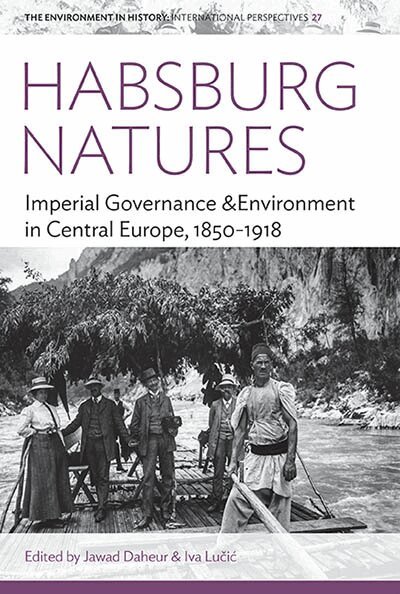
    Habsburg Natures

    Imperial Governance and Environment in Central Europe, 1850-1918

    AvJawad Daheur,Iva Lučić

    Inbunden, Engelska, 2025

    Del i serien Environment in History: International Perspectives

    2 239 kr

    Beställningsvara. Skickas inom 3-6 vardagar. Fri frakt över 249 kr.

    Beskrivning

    Within the Habsburg Empire of the late nineteenth century, nature became a central focus of political, economic, and scientific attention. A source of valuable natural resources and a platform for consolidating wider, territorial rule, its management and control was subsumed into a broader system of imperial governance. In this exacting analysis of the correlation between the environment and power, Habsburg Natures explores how the natural world fundamentally shaped the political and economic landscape within the Austro-Hungarian Empire from 1850 to 1918. Ranging from forestry and coal-mining to river politics and natural disasters, this volume spotlights how deeply intertwined the histories of environmentalism and empire are.

    Produktinformation

    • Utgivningsdatum:2025-11-01
    • Mått:229 x 152 x 24 mm
    • Vikt:672 g
    • Format:Inbunden
    • Språk:Engelska
    • Serie:Environment in History: International Perspectives
    • Antal sidor:390
    • Upplaga:1
    • Förlag:Berghahn Books
    • ISBN:9781836952275

    Utforska kategorier

    • Kolonialism och imperialism inom Historia och arkeologi
    • Miljövetenskap och miljöpolitik inom Naturvetenskap och teknik

    Mer om författaren

    Jawad Daheur is a senior researcher at the French National Centre for Scientific Research (CNRS), focusing on economic and environmental history. His main interest is the interaction between human societies and nature in nineteenth-century Central Europe, with a particular focus on the German-speaking regions (Prussia, Austria-Hungary) and Poland. His recent publications include a special issue of Global Environment, entitled ‘Extractive Peripheries in Europe: Quest for Resources and Changing Environments (15th-20th centuries)’ (2022), and the article ‘Cheap Labour on the Timber Frontier: Migration of Forestry Workers from Austria-Hungary to Southeast Europe, ca. 1880–1914’ (Jahrbuch für Wirtschaftsgeschichte 2024).

    Recensioner i media

    “[This] is the first book that I am aware of that explicitly intends to explore the relationship between the Habsburgs as an empire and environmental history. The synthesis of the new imperial history, new Habsburg history, and environmental history in the introduction is very useful and should serve as a departure point for future environmental histories of the Habsburg Empire.”  • Marc Landry, The University of New Orleans

    Innehållsförteckning

    • List of IllustrationsIntroduction: Towards the Writing of an Environmentally Inspired History of the Late Habsburg EmpireJawad Daheur and Iva LučićPart I: (Inter/Intra) Imperial EntanglementsChapter 1. Riparian Rivalries and River Politics: How the Danube Question Influenced Diplomatic Relations and Domestic Policies in the Late Habsburg MonarchyRobert Shields MevissenChapter 2. Improving Landscapes, Peoples and the Habsburg Empire: A Cooperative History of MeliorationJana OsterkampChapter 3. Logging the Borderlands: Transborder Forest Conflicts and Contestations in the Ottoman and Habsburg Empires in the Nineteenth CenturySelçuk DursunPart II: Cooperation and ConflictChapter 4. Natural Resources as the Empire’s (Dis)integrative Force: The Case of Bosnian Timber Exports in the Late Habsburg EmpireIva LučićChapter 5. Get Out of Our Forest! Rural Societies, National Mobilization, State-Building and Modern Forestry in Late-Habsburg and Post-Habsburg TransylvaniaGábor EgryChapter 6. The Demilitarization of the Croatian-Slavonian Military Border as an Example of Imperial State Forest ManagementRobert SkenderovićPart III: Engineering NatureChapter 7. A Natural History of the Global Habsburg Empire: Indian Mongooses and the Production, Circulation and Management of Animal Knowledge in the Adriatic PeripheryWolfgang GöderleChapter 8. The Golden Age of the Bark Beetle: Aristocratic Landowners, Imperial Governance and the Ips typographus in the Šumava Region (1868–1876)Kristýna KauckáPart IV: Managing ResourcesChapter 9. Resource Governance in Time of Drought: Conflicts over Fodder Exports in Austria-Hungary at the Turn of the Twentieth CenturyJawad DaheurChapter 10. Fuelling the Diversity: A Regional Perspective on Coal in the Late Austro-Hungarian EmpireSégolène PlyerChapter 11. The Industrialization of Forests: The 1852 Imperial Forest Act as an Intervention Towards a Modern Forest RegimeSimone Gingrich and Martin SchmidConclusion: Late Habsburg History RevisitedJawad Daheur and Iva LučićIndex