Häftad, Engelska, 2026
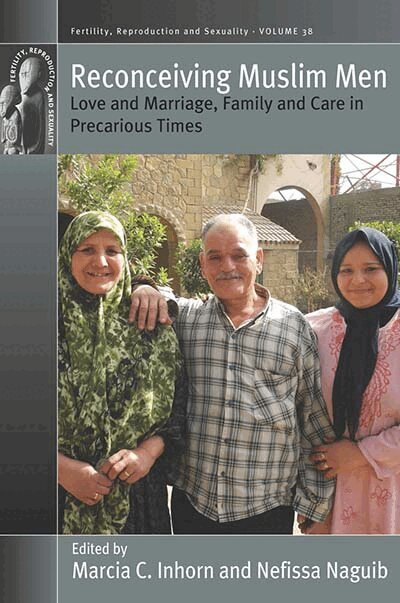
Reconceiving Muslim Men
Love and Marriage, Family and Care in Precarious Times
Av Marcia C. Inhorn, Nefissa Naguib
Del i serien Fertility, Reproduction and Sexuality: Social and Cultural Perspectives
392 kr
Skickas måndag 9/11. Fri frakt över 249 kr.
Beskrivning
Produktinformation
- Utgivningsdatum: 2026-06-15
- Mått: 152 x 229 x 20 mm
- Vikt: 496 g
- Format: Häftad
- Språk: Engelska
- Serie: Fertility, Reproduction and Sexuality: Social and Cultural Perspectives
- Antal sidor: 346
- Förlag: Berghahn Books
- ISBN: 9781836956969
Utforska kategorier
Mer om författaren
Marcia C. Inhorn is the William K. Lanman, Jr. Professor of Anthropology and International Affairs in the Department of Anthropology and Whitney and Betty MacMillan Center for International and Area Studies at Yale University. A specialist on Middle East gender, religion, and reproductive health issues, she is the author of six award-winning books, including The New Arab Man: Emergent Masculinities, Technologies, and Islam in the Middle East. She is also co-editor of this Berghahn Book series on Fertility, Reproduction, and Sexuality.
Recensioner i media
“Reconceiving Muslim Men makes a welcome addition to the growing body of literature on Muslim men, an excellent companion volume to the more theoretical discussions of masculinity, which largely focus on Western contexts, and a useful reminder of the need to differentiate between discourse and practice in exploring gender issues more broadly.” • JRAI (Journal of the Royal Anthropological Institute)“…a significant, highly interesting, and at times heartbreaking book… One of this book’s many strengths is that it foregrounds the ways in which Muslim men are normal. Having to show that Muslim men are human, and stressing it to resist their demonization, is highly important and timely, given current political discourse.” • Medical Anthropological Quarterly“This volume is an important correction to various types of literature, from within anthropology as well as from other disciplinary fields… it will become a significant contribution to the field of masculinity in general and to Muslim men in particular.” • Leif Manger, University of Bergen
Betyg & recensioner
0 recensioner
Inga recensioner tillgängliga.