• Fri frakt över 249 kr
  • •
  • Snabba leveranser
  • •
  • Billiga böcker
Kundservice

Du är på sajten för privatpersoner.

Företag, bibliotek eller offentlig verksamhet?

Du handlar på classic.bokus.com, där alla dina funktioner finns intakta.
Till classic.bokus.com
Bokus logotyp. Gå till startsidan.
  • Erbjudanden
  • Nyheter
  • Student
  • Topplistor
  • Barn & ungdom
  • Bokus Play
  • E-böcker
  • Pocketböcker
  • Spel & pussel

10% rabatt på allt med kod: NYSTART10 →

Sidfot

Mina sidor

    Hjälp

    • Kundservice
    • Vanliga frågor och svar
    • Frakt och leverans
    • Retur vid ångerrätt
    • Reklamera vara
    • Betalning
    • Köpvillkor
    • Allmänna villkor
    • Information om webbplatsens tillgänglighet

    Om Bokus

    • Om oss
    • Pressrum
    • För studenter
    • För företag
    • För bibliotek och offentlig verksamhet
    • För leverantörer
    • Hållbarhet

    Populärt

    • Aktuella erbjudanden
    • Presentkort
    • Studentlitteratur
    • Nya böcker
    • Topplistor
    • Signerade böcker
    • Engelska böcker

    Inspiration

    • Boktips
    • BookTok
    • Populära bokserier
    • Barnbokskaraktärer
    • Populära författare
    Logotyp för Bokus
    Följ oss på Facebook (extern länk)Följ oss på Instagram (extern länk)Följ oss på YouTube (extern länk)Följ oss på TikTok (extern länk)
    bokus @ CookiesAnpassa cookiesIntegritetspolicyKöpvillkor
    Till Citymail hemsida (extern länk)Till Budbee hemsida (extern länk)Till Postnord hemsida (extern länk)Till Schenker hemsida (extern länk)Till Early Bird hemsida (extern länk)Till Walleys hemsida (extern länk)
    1. Samhälle och politik
    2. Samhälle och kultur

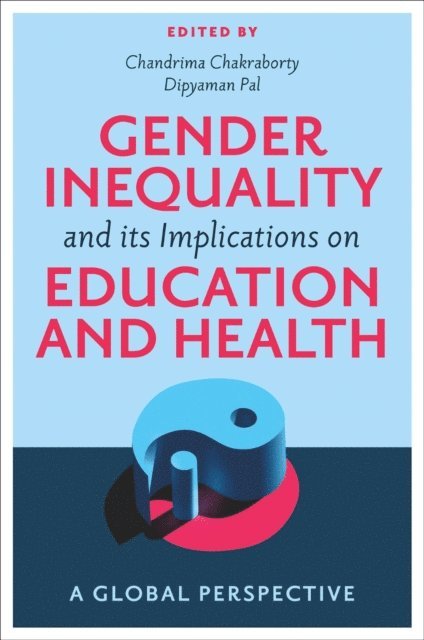
    Gender Inequality and its Implications on Education and Health

    A Global Perspective

    AvDipyaman Pal,Chandrima Chakraborty

    Inbunden, Engelska, 2023

    762 kr

    Skickas . Fri frakt över 249 kr.

    Beskrivning

    Gender inequality has wide-ranging and adverse implications for all of society. For this reason, the United Nations has made it a top priority to address this issue through the Sustainable Development Goals, which state that gender equality is not only a fundamental human right but a necessary foundation for a peaceful, prosperous, and sustainable world.Gender Inequality and its Implications on Education and Health explains the different implications of gender inequality and finds solutions to our most pressing issues. The authors of these collected studies show that though in various contexts around the globe, girls and women are discouraged and prevented from receiving quality education, proper health care, women empowerment and social justice, if this exclusion is eliminated it produces many additional socio-economic gains that benefit entire societies. Focusing largely on India to explore firstly the implications of gender inequality on education and health and then gender inequality and its implications to other SDGs, the chapters extend globally to analyse countries from Asia, Australia, Africa, and Europe.Raising awareness among stakeholders and institutions to recognise the importance of gender inequality throughout the world and its various implications – especially on education and health – Gender Inequality and its Implications on Education and Health provides strategies to achieve gender equality.

    Produktinformation

    • Utgivningsdatum:2023-08-14
    • Mått:152 x 229 x 22 mm
    • Vikt:595 g
    • Format:Inbunden
    • Språk:Engelska
    • Antal sidor:320
    • Förlag:Emerald Publishing Limited
    • ISBN:9781837531813

    Utforska kategorier

    • Samhälle och kultur inom Samhälle och politik
    • Genusvetenskap inom Samhälle och politik
    • Sociala grupper och identitet inom Samhälle och politik

    Mer om författaren

    Chandrima Chakraborty is Assistant Professor of Economics at Vidyasagar University, West Bengal, India. Her research interests include Econometrics, Empirical-studies-on-Gender/Education/Productivity/Efficiency/Environmental and Health economics.Dipyaman Pal is Assistant Professor of Economics at Bethune College, West Bengal, India. His research interests include Econometrics, Empirical-studies-on-Gender/Volatility/Productivity/Efficiency/Environmental and Health economics.

    Innehållsförteckning

    • Section I. Implications of Gender Inequality on Education and HealthChapter 1. Adverse Child Sex Ratio in India: The Role of Women’s Agency An Empirical Analysis; Antara Bhattacharyya and Sushil Kr. Haldar Chapter 2. Do Government Expenditures on Education and Health Reduce Gender Inequality? The case of the Least Developed and Developing Countries; Gizem Kaya AydinChapter 3. Is there any relationship between gender inequality and nutrition? Experience from India; Kavitha Kasala, Rudra Prosad Roy, and Abhishek DasChapter 4. Gender Discrimination in Education Expenditure in Public Primary School in Rural India among Religious Groups: An Oaxaca-Blinder Decomposition Analysis; Puja Biswas and Amit KunduChapter 5. Can gender inequality in school enrolment hinder the efficiency of education sector?; Sangita Choudhury and Arpita GhoseChapter 6. Understanding Gender Through an Educational Construct; Manisha SubbaChapter 7. Gender inequality in India intertwined between education and employment; Dyuti Chatterjee and Pallabi BanerjeeChapter 8. A Critique of Gender Inequality: Study of Education and Health in North Bengal Region; Bishal RaiChapter 9. Gender Bias in Child Deprivation: A Study in the context of West Bengal, India; Satyanarayan Kumbhakar and Pinaki DasChapter 10. Is Dropout in Schools related to Gender and Birth Order?; Chayanika Mitra and Indrani SenguptaChapter 11. Investigating the role of air quality and the nexus between female health status and their labour force participation rate: Evidence from rural India; Kaushiki Banerjee and Arpita GhoseSection II: Gender Inequality and its implications to Other SDGsChapter 12. Only Development or Gender Norm? Explaining Gender Inequality in Emerging Market Economies; Amrita ChatterjeeChapter 13. Women Empowerment as A Key to Support Achievement of the Sustainable Development Goals and Global Sustainable Development; Begum SertyesilisikChapter 14. Linkage Between Women Empowerment and Gender-Based Violence in India: Evidence from NFHS-5 Data; Susobhan Maiti, Tanushree Gupta, and Govind Singh RajpalChapter 15. Public Social Expenditures and Outcomes in Nigeria: A Look Through Gender Lens; Nkechinyere Rose Uwajumogu, Ebele Stella Nwokoye, Kingsley Chike Okoli, and Mgbodichimma K. OkoroChapter 16. Equitable pathways for a Sustainable Future:The Case for Mainstreaming Gender across Sustainable Development Goals (SDGs); Ananya Chakraborty and Sreerupa SenguptaChapter 17. Sustainable Environment and Urbanization Policies to Enhance Gender Equality and Women Empowerment; Egemen SertyesilisikChapter 18. Understanding Gender, Poverty and Social Justice: A New Look from the Perspectives of Indian Experience; Asim K. Karmakar, Sebak K. Jana, and Sovik MukherjeeChapter 19. Twitter imparting and reinforcing gendered based identities of the Aboriginal Australia women; Ali SahaChapter 20. The Impact of Pandemic on the Female Unorganized Sector Workers: A Study in Rural Backdrop of West Bengal; Srimoyee Datta and Tarak Nath SahuChapter 21. A Gender Sustainable Development Index for Italian Regions; Marianna Bartiromo and Enrico IvaldiChapter 22. Association between Crime Against Women and Income Inequality: A Study on Indian States; Debarati Nandigrami and Ramesh Chandra DasChapter 23. Gender Responsive Budgeting Approach to Combating Climate Change; Gamze Yıldız Şeren