• Fri frakt över 249 kr
  • •
  • Snabba leveranser
  • •
  • Billiga böcker
Kundservice

Du är på sajten för privatpersoner.

Företag, bibliotek eller offentlig verksamhet?

Du handlar på classic.bokus.com, där alla dina funktioner finns intakta.
Till classic.bokus.com
Bokus logotyp. Gå till startsidan.
  • Erbjudanden
  • Nyheter
  • Student
  • Topplistor
  • Barn & ungdom
  • Bokus Play
  • E-böcker
  • Pocketböcker
  • Spel & pussel

10% rabatt på allt med kod NYSTART10 →

Sidfot

Mina sidor

    Hjälp

    • Kundservice
    • Vanliga frågor och svar
    • Frakt och leverans
    • Retur vid ångerrätt
    • Reklamera vara
    • Betalning
    • Köpvillkor
    • Allmänna villkor
    • Information om webbplatsens tillgänglighet

    Om Bokus

    • Om oss
    • Pressrum
    • För studenter
    • För företag
    • För bibliotek och offentlig verksamhet
    • För leverantörer
    • Hållbarhet

    Populärt

    • Aktuella erbjudanden
    • Presentkort
    • Studentlitteratur
    • Nya böcker
    • Topplistor
    • Signerade böcker
    • Engelska böcker

    Inspiration

    • Boktips
    • BookTok
    • Populära bokserier
    • Barnbokskaraktärer
    • Populära författare
    Logotyp för Bokus
    Följ oss på Facebook (extern länk)Följ oss på Instagram (extern länk)Följ oss på YouTube (extern länk)Följ oss på TikTok (extern länk)
    bokus @ CookiesAnpassa cookiesIntegritetspolicyKöpvillkor
    Till Citymail hemsida (extern länk)Till Budbee hemsida (extern länk)Till Postnord hemsida (extern länk)Till Schenker hemsida (extern länk)Till Early Bird hemsida (extern länk)Till Walleys hemsida (extern länk)

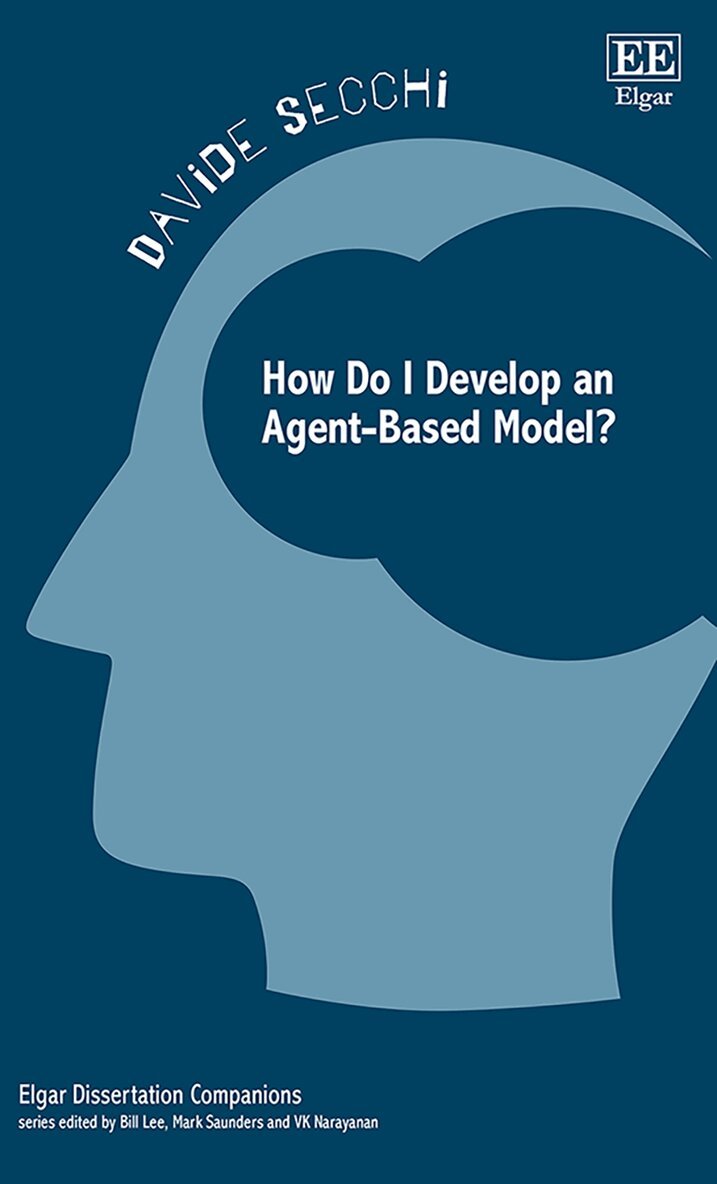
    How Do I Develop an Agent-Based Model?

    AvDavide Secchi

    Häftad, Engelska, 2022

    Del i serien Elgar Dissertation Companions

    431 kr

    Beställningsvara. Skickas inom 5-8 vardagar. Fri frakt över 249 kr.

    Fler format och utgåvor

    Inbunden

    1 617 kr

    E-bok

    366 kr

    Beskrivning

    This clear and coherent book introduces agent-based modelling (ABM) to those who are not familiar with nor have been previously exposed to computational simulation. Featuring examples, cases and models, the book illustrates how ABM can, and should, be considered as a useful approach and technique for the study of management and organisational systems.Davide Secchi begins by explaining what ABM has to offer as opposed to other techniques, emphasising its suitability to the study of complex social systems. While dissecting the core components of the approach, he introduces key elements and mechanisms with a practice oriented approach rather than insisting solely on logic and theory. With an emphasis on applications and using examples from NetLogo — one of the most widely used agent-based software platforms — the book guides the reader through a step-by-step process on how to develop a computational simulation.Featuring a hands-on applied approach that makes a difficult topic easy for non-modellers, How Do I Develop an Agent-Based Model? will be a key resource for business and management Masters-level students embarking on a dissertation project. It will also be a useful reference for PhD students in the field, as well as a starting point for academics who would like to begin using ABM in their research.

    Produktinformation

    • Utgivningsdatum:2022-04-22
    • Mått:138 x 216 x undefined mm
    • Format:Häftad
    • Språk:Engelska
    • Serie:Elgar Dissertation Companions
    • Förlag:Edward Elgar Publishing Ltd
    • ISBN:9781839105210

    Mer om författaren

    Davide Secchi, Associate Professor, Research Centre for Computational and Organisational Cognition, Department of Language and Communication, University of Southern Denmark

    Recensioner i media

    ‘With How Do I Develop an Agent-Based Model? there is finally a suitable textbook that I can recommend to students and prospective researchers in business administration and management who want to apply agent-based modeling.’

    Innehållsförteckning

    • Contents: 1. A short history of computational simulation in management 2. Understanding agent-based computational simulation 3. Basic components of agent-based modelling 4. Planning and programming an agent-based model 5. Examples of models 6. Further research opportunities with ABM References Glossary Index