• Fri frakt över 249 kr
  • •
  • Snabba leveranser
  • •
  • Billiga böcker
Kundservice

Du är på sajten för privatpersoner.

Företag, bibliotek eller offentlig verksamhet?

Du handlar på classic.bokus.com, där alla dina funktioner finns intakta.
Till classic.bokus.com
Bokus logotyp. Gå till startsidan.
  • Erbjudanden
  • Nyheter
  • Student
  • Topplistor
  • Barn & ungdom
  • Bokus Play
  • E-böcker
  • Pocketböcker
  • Spel & pussel

10% rabatt på allt med kod: NYSTART10 →

Sidfot

Mina sidor

    Hjälp

    • Kundservice
    • Vanliga frågor och svar
    • Frakt och leverans
    • Retur vid ångerrätt
    • Reklamera vara
    • Betalning
    • Köpvillkor
    • Allmänna villkor
    • Information om webbplatsens tillgänglighet

    Om Bokus

    • Om oss
    • Pressrum
    • För studenter
    • För företag
    • För bibliotek och offentlig verksamhet
    • För leverantörer
    • Hållbarhet

    Populärt

    • Aktuella erbjudanden
    • Presentkort
    • Studentlitteratur
    • Nya böcker
    • Topplistor
    • Signerade böcker
    • Engelska böcker

    Inspiration

    • Boktips
    • BookTok
    • Populära bokserier
    • Barnbokskaraktärer
    • Populära författare
    Logotyp för Bokus
    Följ oss på Facebook (extern länk)Följ oss på Instagram (extern länk)Följ oss på YouTube (extern länk)Följ oss på TikTok (extern länk)
    bokus @ CookiesAnpassa cookiesIntegritetspolicyKöpvillkor
    Till Citymail hemsida (extern länk)Till Budbee hemsida (extern länk)Till Postnord hemsida (extern länk)Till Schenker hemsida (extern länk)Till Early Bird hemsida (extern länk)Till Walleys hemsida (extern länk)
    1. Samhälle och politik
    2. Samhälle och kultur
    3. Kultur och medier
    4. Referensverk och tvärvetenskap

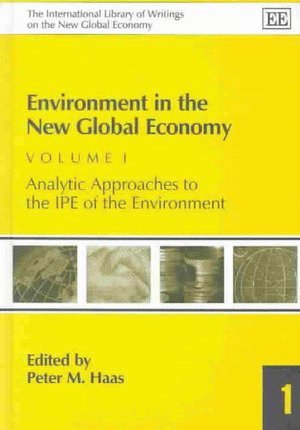
    Environment in the New Global Economy

    AvPeter M. Haas

    Inbunden, Engelska, 2003

    Del 1 i serien The International Library of Writings on the New Global Economy series

    10 446 kr

    Beställningsvara. Skickas inom 5-8 vardagar. Fri frakt över 249 kr.

    Beskrivning

    International environmental threats have commanded widespread attention since the late 1960s. A number of unprecedented environmental disasters have galvanized public concern, and have reached the international political agenda in part through the activities of new environmental social movements in the industrialized countries.Environment in the New Global Economy is designed as a reference source for both students, researchers and policymakers concerned with the political dimension of international environmental problems. Peter Haas has selected those previously published articles which are seminal in the development of this new field and which have either generated widespread debate or represent a clear application of major approaches to the understanding of these new issues. He has also provided an authoritative introduction to complement his selection.

    Produktinformation

    • Utgivningsdatum:2003-10-29
    • Mått:169 x 244 x undefined mm
    • Format:Inbunden
    • Språk:Engelska
    • Serie:The International Library of Writings on the New Global Economy series
    • Förlag:Edward Elgar Publishing Ltd
    • ISBN:9781840640755

    Utforska kategorier

    • Referensverk och tvärvetenskap inom Samhälle och politik
    • Miljöekonomi inom Ekonomi och Ledarskap

    Mer om författaren

    Edited by Peter M. Haas, Professor of Political Science, University of Massachusetts, Amherst, US

    Innehållsförteckning

    • Contents:Volume I: Analytic Approaches to the IPE of the EnvironmentAcknowledgementsIntroduction Peter M. HaasPART IWHAT IS “THE ENVIRONMENT?” 1. Clive Ponting (1990), ‘Historical Perspectives on Sustainable Development’2. Robert W. Kates, B.L. Turner II and William C. Clark (1990), ‘The Great Transformation’3. William C. Clark (1989), ‘The Human Ecology of Global Change’PART IITRAGEDY OF THE COMMONS 4. H. Scott Gordon (1954), ‘The Economic Theory of a Common-Property Resource: The Fishery’5. Garrett Hardin (1968), ‘The Tragedy of the Commons’6. Susan Jane Buck Cox (1985), ‘No Tragedy of the Commons’7. David Feeny, Fikret Berkes, Bonnie J. McCay and James M. Acheson (1990), ‘The Tragedy of the Commons: Twenty-two Years Later’8. Elinor Ostrom (2001), ‘Reformulating the Commons’PART IIIPOWER AND LEADERSHIP 9. Daniel Deudney (2000), ‘Geopolitics as Theory: Historical Security Materialism’10. George F. Kennan (1970), ‘To Prevent a World Wasteland: A Proposal’11. Matthew Connelly and Paul Kennedy (1994), ‘Must it be the Rest Against the West?’PART IVINTERNATIONAL INSTITUTIONS 12. Detlef Sprinz and Tapani Vaahtoranta (1994), ‘The Interest-based Explanation of International Environmental Policy’13. Oran R. Young (1989), ‘The Politics of International Regime Formation: Managing Natural Resources and the Environment’14. Oran R. Young (1991), ‘Political Leadership and Regime Formation: On the Development of Institutions in International Society’15. Marc A. Levy, Peter M. Haas and Robert O. Keohane (1992), ‘Institutions for the Earth: Promoting International Environmental Protection’PART VRADICAL POLITICAL ECONOMY 16. Joao Augusto de Araujo Castro (1972), ‘Environment and Development: The Case of the Developing Countries’17. Johan Galtung (1973), ‘“The Limits to Growth” and Class Politics’18. Wolfgang Sachs (1991), ‘Environment and Development: The Story of a Dangerous Liaison’PART VIDOMESTIC POLITICS 19. Robert L. Paarlberg (1999), ‘Lapsed Leadership: U.S. International Environmental Policy Since Rio’20. Elisabeth R. DeSombre (1995), ‘Baptists and Bootleggers for the Environment: The Origins of the United States Unilateral Sanctions’21. William Ascher (2000), ‘Understanding Why Governments in Developing Countries Waste Natural Resources’22. Ruth Greenspan Bell (2000), ‘Building Trust: Laying a Foundation for Environmental Regulation in the Former Soviet Bloc’23. Riley E. Dunlap and Angela G. Mertig (1997), ‘Global Environmental Concern: An Anomaly for Postmaterialism’PART VIINGOs AND CIVIL SOCIETY 24. Sheila Jasanoff (1997), ‘NGOs and the Environment: From Knowledge to Action’25. Margaret E. Keck and Kathryn Sikkink (1999), ‘Transnational Advocacy Networks in International and Regional Politics’PART VIIIECOLOGICAL IDEAS ADoctrines and Their Consequences26. Harold and Margaret Sprout (1972), ‘The Ecological Viewpoint – and Others’27. Frederick H. Buttell, Ann P. Hawkins and Alison G. Power (1990), ‘From Limits to Growth to Global Change: Constraints and Contradictions in the Evolution of Environmental Science and Ideology’BEpistemic Communities28. Peter M. Haas (1999), ‘Social Constructivism and the Evolution of Multilateral Environmental Governance’29. Peter M. Haas and Ernst B. Haas (1995), ‘Learning to Learn: Improving International Governance’30. Peter M. Haas (1989), ‘Do Regimes Matter? Epistemic Communities and Mediterranean Pollution Control’CCritical Constructivism31. Ken Conca (1994), ‘Rethinking the Ecology-Sovereignty Debate’32. Eric Laferrière (1996), ‘Emancipating International Relations Theory: An Ecological Perspective’33. Karen T. Litfin (1997), ‘Sovereignty in World Ecopolitics’34. Peter Doran (1995), ‘Earth, Power, Knowledge: Towards a Critical Global Environmental Politics’Name IndexVolume II: Applications AcknowledgementsAn introduction by the editor to both volumes appears in Volume IPART ISOCIAL CHOICE/POLITICAL ECONOMY 1. Ronald Coase (1960), ‘The Problem of Social Cost’2. Giulio M. Gallarotti (1995), ‘It Pays to be Green: The Managerial Incentive Structure and Environmentally Sound Strategies’3. Kenneth A. Oye and James H. Maxwell (1994), ‘Self-interest and Environmental Management’4. Ronald B. Mitchell (1994), ‘Regime Design Matters: Intentional Oil Pollution and Treaty Compliance’5. Scott Barrett (1990), ‘The Problem of Global Environmental Protection’6. Jennifer Clapp (1998), ‘The Privatization of Global Environmental Governance: ISO 14000 and the Developing World’7. Kathryn Harrison (1999), ‘Talking with the Donkey. Cooperative Approaches to Environmental Protection’8. Peter Dauvergne (1997), ‘A Model of Sustainable International Trade in Tropical Timber’PART IISUSTAINABLE DEVELOPMENT DOCTRINES 9. W.I. Vernadsky (1944), ‘Problems of Biogeochemistry’10. World Commission on Environment and Development (1987), ‘From One Earth to One World: An Overview by the World Commission on Environment and Development’11. Sharachchandra M. Lélé (1991), ‘Sustainable Development: A Critical Review’12. Robert Costanza, Herman E. Daly and Joy A. Bartholomew (1991), ‘Goals, Agenda, and Policy Recommendations for Ecological Economics’PART IIIFREE TRADE AND THE ENVIRONMENT 13. Herman E. Daly (2000), ‘Globalization and Its Discontents’14. Eric Neumayer (2000), ‘Trade and the Environment: A Critical Assessment and Some Suggestions for Reconciliation’15. Gene M. Grossman and Alan B. Krueger (1995), ‘Economic Growth and the Environment’PART IVENVIRONMENTAL AND ECOLOGICAL SECURITY 16. Jessica Tuchman Mathews (1989), ‘Redefining Security’17. Thomas F. Homer-Dixon (1994), ‘Environmental Scarcities and Violent Conflict: Evidence from Cases’18. Daniel Deudney (1990), ‘The Case Against Linking Environmental Degradation and National Security’PART VCOMPLIANCE, IMPLEMENTATION AND EFFECTIVENESS 19. Arild Underdal (1992), ‘The Concept of Regime “Effectiveness”’20. Ronald B. Mitchell (1993), ‘Compliance Theory: A Synthesis’21. David G. Victor and Eugene B. Skolnikoff (1999), ‘Translating Intent into Action: Implementing Environmental Commitments’22. Harold K. Jacobson and Edith Brown Weiss (1995), ‘Strengthening Compliance with International Environmental Accords: Preliminary Observations from a Collaborative Project’23. Peter M. Haas (1998), ‘Compliance with EU Directives: Insights from International Relations and Comparative Politics’24. Arild Underdal (1998), ‘Explaining Compliance and Defection: Three Models’Name Index