• Fri frakt över 249 kr
  • •
  • Snabba leveranser
  • •
  • Billiga böcker
Kundservice

Du är på sajten för privatpersoner.

Företag, bibliotek eller offentlig verksamhet?

Du handlar på classic.bokus.com, där alla dina funktioner finns intakta.
Till classic.bokus.com
Bokus logotyp. Gå till startsidan.
  • Erbjudanden
  • Nyheter
  • Student
  • Topplistor
  • Barn & ungdom
  • Bokus Play
  • E-böcker
  • Pocketböcker
  • Spel & pussel

10% rabatt på allt med kod: NYSTART10 →

Sidfot

Mina sidor

    Hjälp

    • Kundservice
    • Vanliga frågor och svar
    • Frakt och leverans
    • Retur vid ångerrätt
    • Reklamera vara
    • Betalning
    • Köpvillkor
    • Allmänna villkor
    • Information om webbplatsens tillgänglighet

    Om Bokus

    • Om oss
    • Pressrum
    • För studenter
    • För företag
    • För bibliotek och offentlig verksamhet
    • För leverantörer
    • Hållbarhet

    Populärt

    • Aktuella erbjudanden
    • Presentkort
    • Studentlitteratur
    • Nya böcker
    • Topplistor
    • Signerade böcker
    • Engelska böcker

    Inspiration

    • Boktips
    • BookTok
    • Populära bokserier
    • Barnbokskaraktärer
    • Populära författare
    Logotyp för Bokus
    Följ oss på Facebook (extern länk)Följ oss på Instagram (extern länk)Följ oss på YouTube (extern länk)Följ oss på TikTok (extern länk)
    bokus @ CookiesAnpassa cookiesIntegritetspolicyKöpvillkor
    Till Citymail hemsida (extern länk)Till Budbee hemsida (extern länk)Till Postnord hemsida (extern länk)Till Schenker hemsida (extern länk)Till Early Bird hemsida (extern länk)Till Walleys hemsida (extern länk)
    1. Juridik
    2. Särskilda rättsområden
    3. Författningsrätt och förvaltningsrätt

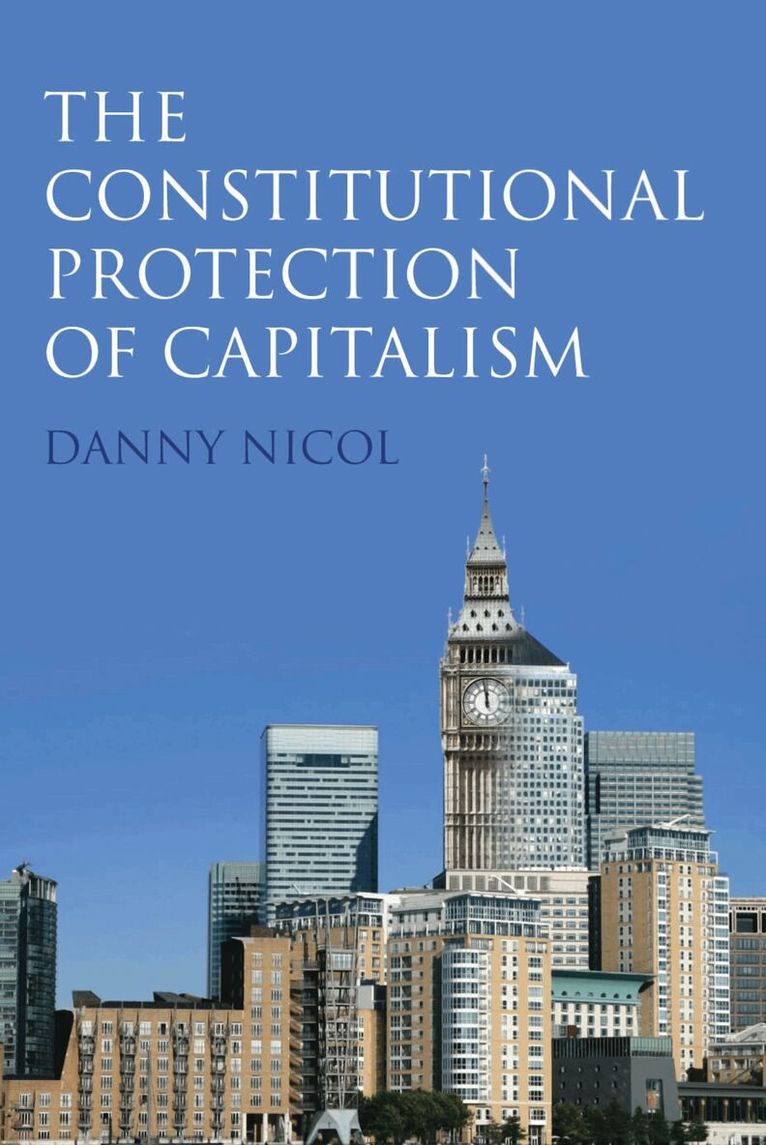
    Constitutional Protection of Capitalism

    AvDanny Nicol

    Inbunden, Engelska, 2010

    1 092 kr

    Beställningsvara. Skickas inom 10-15 vardagar. Fri frakt över 249 kr.

    Fler format och utgåvor

    E-bok

    1 180 kr

    Beskrivning

    In 1945 a Labour government deployed Britain's national autonomy and parliamentary sovereignty to nationalise key industries and services such as coal, rail, gas and electricity, and to establish a publicly-owned National Health Service. This monograph argues that constitutional constraints stemming from economic and legal globalisation would now preclude such a programme. It contends that whilst no state has ever, or could ever, possess complete freedom of action, nonetheless the rise of the transnational corporation means that national autonomy is now siginificantly restricted. The book focuses in particular on the way in which these economic constraints have been nurtured, reinforced and legitimised by the creation on the part of world leaders of a globalised constitutional law of trade and competition. This has been brought into existence by the adoption of effective enforcement machinery, sometimes embedded within the nation states, sometimes formed at transnational level.With Britain enmeshed in supranational economic and legal structures from which it is difficult to extricate itself, the British polity no longer enjoys the range and freedom of policymaking once open to it. Transnational legal obligations constitute not just law but in effect a de facto supreme law entrenching a predominantly neoliberal political settlement in which the freedom of the individual is identified with the freedom of the market. The book analyses the key provisions of WTO, EU and ECHR law which provide constitutional protection for private enterprise. It dwells on the law of services liberalisation, public monopolies, state aid, public procurement and the fundamental right of property ownership, arguing that the new constitutional order compromises the traditional ideals of British democracy.

    Produktinformation

    • Utgivningsdatum:2010-01-29
    • Mått:156 x 234 x 17 mm
    • Vikt:502 g
    • Format:Inbunden
    • Språk:Engelska
    • Antal sidor:220
    • Förlag:Bloomsbury Publishing PLC
    • ISBN:9781841138596

    Utforska kategorier

    • Författningsrätt och förvaltningsrätt inom Juridik

    Mer om författaren

    Danny Nicol is Professor of Public Law at the University of Westminster.

    Recensioner i media

    The book's findings are of general interest [and] we cannot but hail the book as an interesting contribution to the study of the consequences of economic integration for democracy, as well as to the growing debate about transnational democracy, to which, highlighting the national point of view, it constitutes a counterpoint. Fernando Losada Fraga Global Law Books Dec 2010 We cannot but hail the book as an interesting contribution to the study of the consequences of economic integration for democracy, as well as to the growing debate about transnational democracy, to which, highlighting the national point of view, it constitutes a counterpoint. Fernando Losada Fraga The European Journal of International Law Volume 22, No. 1

    Innehållsförteckning

    • 1 Transnational Regimes and the Constitution Two Conceptions of Neoliberalism The Idea of a Constitution A Revolution from Above Transnational Constitutionalism as Insurance The Criterion of Democracy The British Model and Contestability The British Model and Relative Ideological Neutrality The British Model and Accountability Limited Democracy: The Triumph of Hayek Transnational Democracy: Hayek's Heirs? Markets as Democracy? British Exceptionalism? Britain, France and the Ratchet Effect The Ambit of the Argument 2 The World Trade Organisation and the Sanctity of Private Enterprise Assessing the WTO Britain and GATT 1947 GATT: Evolving towards Bindingness From GATT to WTO The World Trade Organization WTO: The Dispute Settlement Understanding The Terms of WTO GATT and Related Agreements GATS Public Procurement Subsidies Conclusion 3 The European Union: A Faithful Expression of the Capitalist Ideal? The Original Indeterminacy of the European Project: Article 345 TFEU Resolving the Indeterminacy EU Law as British Constitutional Law The Free Movement of Goods: Control of Imports Cassis de Dijon Goods, Regulation and the Corporate Role in Constitution-Building Standardisation: A Privatisation of Governance? Free Movement Rights versus Social Rights From Free Movement to a European Economic Policy Public Monopolies and Privatisation Article 106 TFEU EU Legislation Public Procurement State Aid Defining State Aid: Article 107(1) TFEU Justifying State Aid: Article 107(3) TFEU State Aid and the Credit Crunch Neoliberalism and the Open Method of Co-ordination Conclusion 4 'The Fundamental Right of the Well-to-Do': Property as a Human Right Human Rights at the Service of Neoliberalism Property and Democracy: Four Possibilities Disagreements over the Right of Property Ownership, 1950-51 Predominant Purpose of the Property Right: The Protection of Existing Entitlements Transforming the Property Right The Concept of 'Fair Balance' 'Fair Balance' Fused with Proportionality Proportionality and Compensation The Elasticity of 'General Principles of International Law' Compliance: The Evolution of Effective Enforcement Conclusion 5 Neoliberalism as the Constitution The Binding of Parliament Dismantling the Teleological State